
Suggested tools for you
Quick trust line
Tools reviewed: 100 AI agent frameworks and adjacent platforms
Last checked: September 4, 2026
Reviewed by: aitop10.ai software rankings editor
What we checked: Agent orchestration, developer workflow, integrations, free access, pricing signals, usability, and practical fit
Choosing among the top ai agent frameworks is less about finding the longest feature list and more about matching the framework to the job. We compared 100 tools across agent building, orchestration, customer service, developer productivity, infrastructure, and LLM operations, then shortlisted the 10 most useful options for a closer look. OpenAgents takes the podium for large-scale orchestration, while Jotform AI Agents and Google Antigravity are more focused choices for customer operations and software development.
The list also includes several broader agentic platforms. That matters because many teams do not need a pure framework: they need a working agent, a reliable development environment, or the infrastructure around an agent. Use the rankings below as a fast buying guide, then check vendor pricing and model availability before committing.
OpenAgents

- AI developers building large agent networks
- Open source
- Starts at Check vendor pricing
- Usage signal: 11.2K
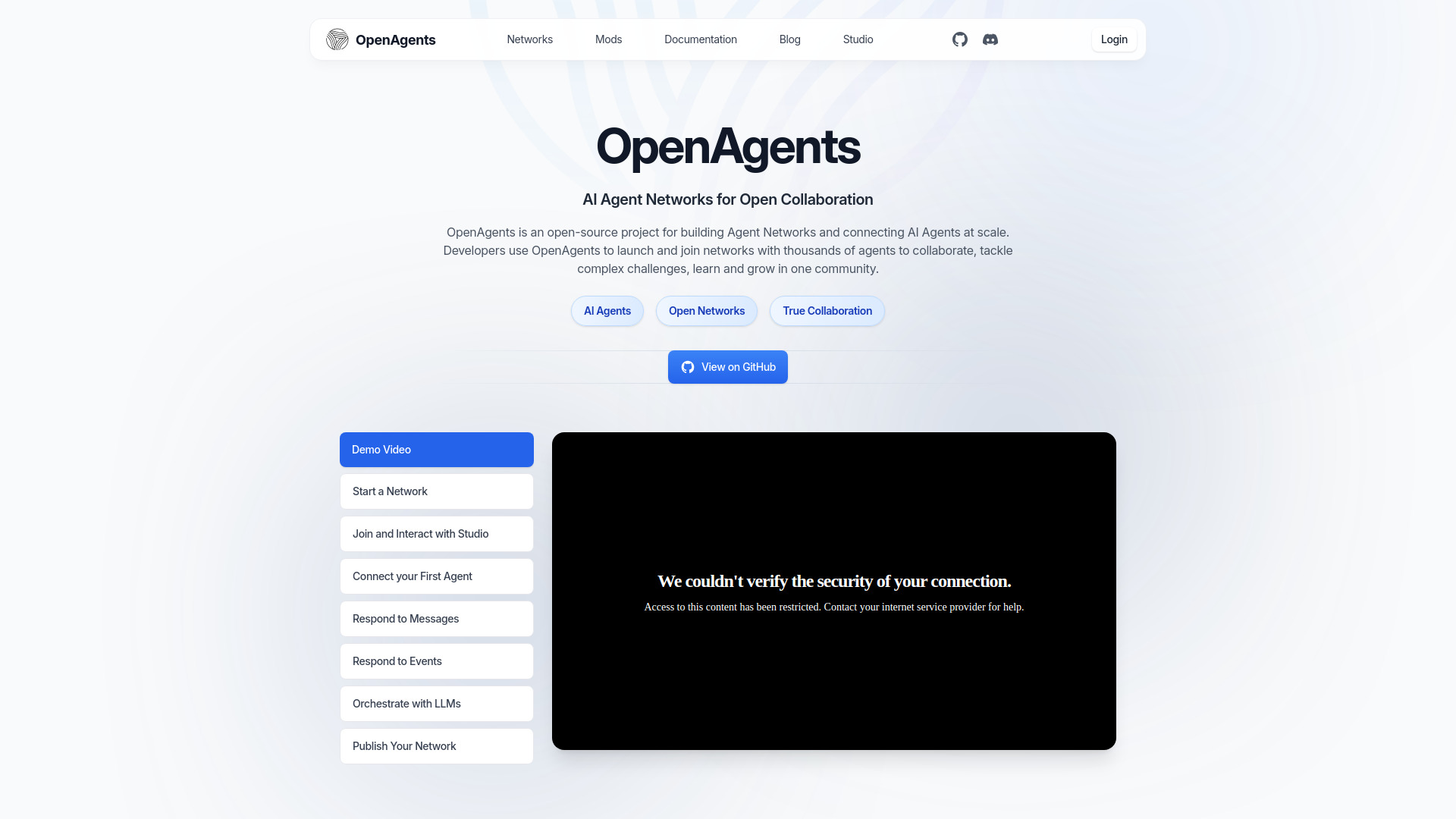
OpenAgents earns the top spot because it addresses the hardest version of the agent problem: connecting many agents into a coordinated network. Its open protocols are designed for large-scale orchestration, and the framework is intended to work across diverse LLMs, protocols, and agent frameworks. That interoperability gives experienced teams room to build beyond a single-vendor workflow.
The trade-off is equally clear. This is an open-source, community-driven project rather than a packaged enterprise service. We would choose it for a technical team that wants architectural control, not for a business user who expects guided setup and professional support.
Why it ranks first
| Scoring area | Assessment |
|---|---|
| Agent orchestration | Excellent for large-scale networks |
| Interoperability | Strong support for diverse LLMs and frameworks |
| Developer control | Open-source and protocol-oriented |
| Practical friction | High complexity; community-led support |
Best fit
Developers designing multi-agent systems at significant scale.
Teams that need open protocols and interoperability across models.
Research or infrastructure projects where control matters more than polish.
Limitations
There is no direct professional support; the model is community-driven.
Orchestrating thousands of agents introduces substantial architectural complexity.
It is a poor first framework for a nontechnical team seeking a ready-made agent.
Jotform AI Agents

- Customer service teams automating support
- 5 AI agents
- Starts at Check vendor pricing
- Usage signal: 44.9M
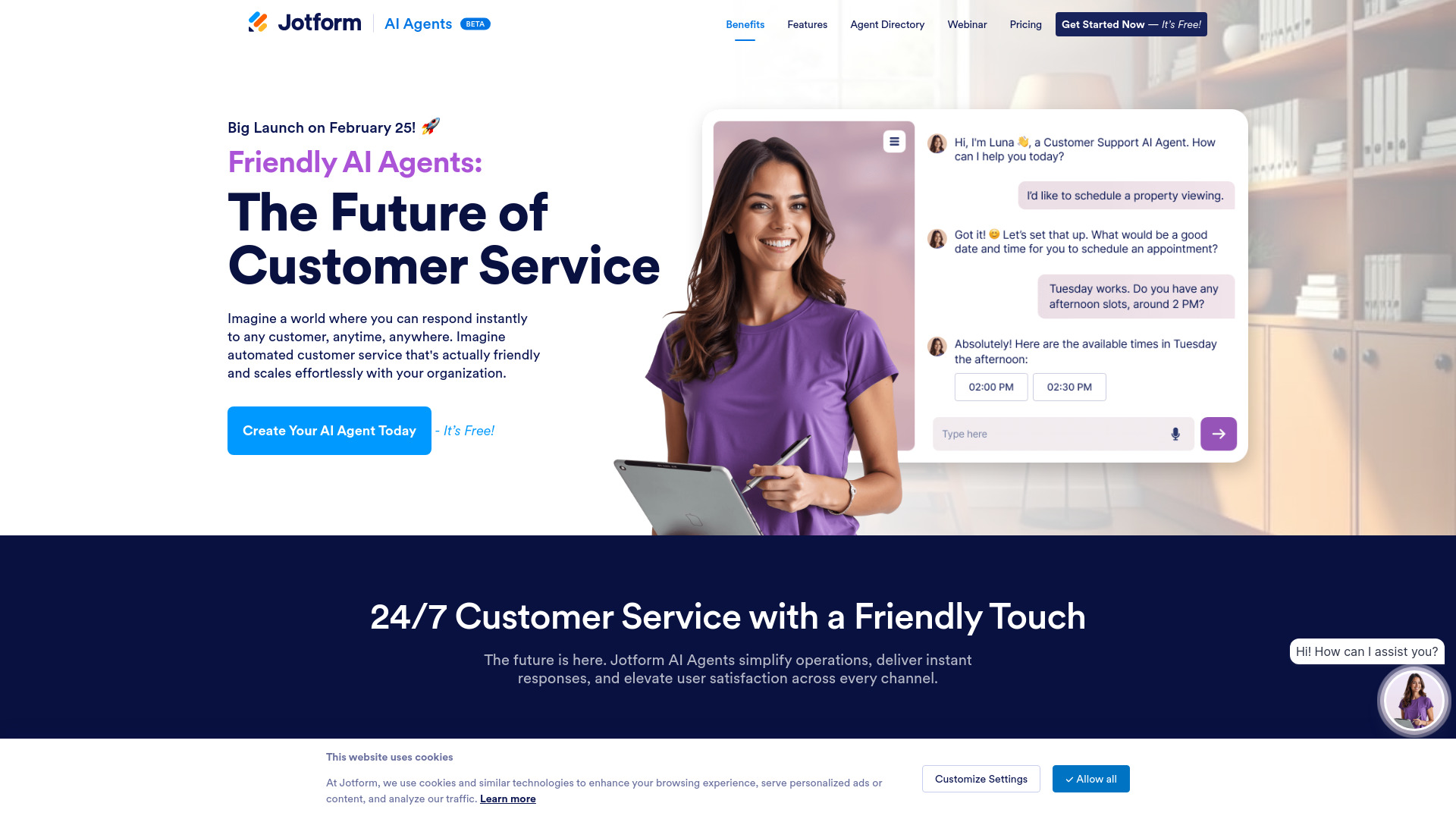
Customer service teams usually do not want to assemble an agent runtime from scratch. Jotform AI Agents takes the opposite approach from OpenAgents: it emphasizes agent creation, templates, and multi-channel support, with 24/7 customer service as the central workflow. That makes it one of the easiest recommendations here to understand and pilot.
The template library is the useful detail. It can shorten the path from an idea to a support agent, particularly for teams already organizing customer interactions through forms and automated workflows. Still, automated replies can miss context or misunderstand a request, and some customers will notice the lack of a human touch.
Why it is near the top
| Scoring area | Assessment |
|---|---|
| Agent creation | Strong, with a template-led workflow |
| Customer support fit | Excellent for always-on service use cases |
| Deployment breadth | Multi-channel support |
| Practical friction | Requires quality control for AI responses |
Best fit
Customer service teams that need an agent without building infrastructure.
Businesses handling repeat questions across several channels.
Operators who prefer templates and a guided creation process.
Limitations
AI interactions can lack the human touch needed for sensitive cases.
Responses may contain errors or misunderstand customer intent.
It is less suitable for developers seeking a highly configurable orchestration layer.
Google Antigravity

- Professional developers using an agent-first IDE
- Individual plan: $0/month
- Starts at Individual plan: $0/month
- Usage signal: 14.4M
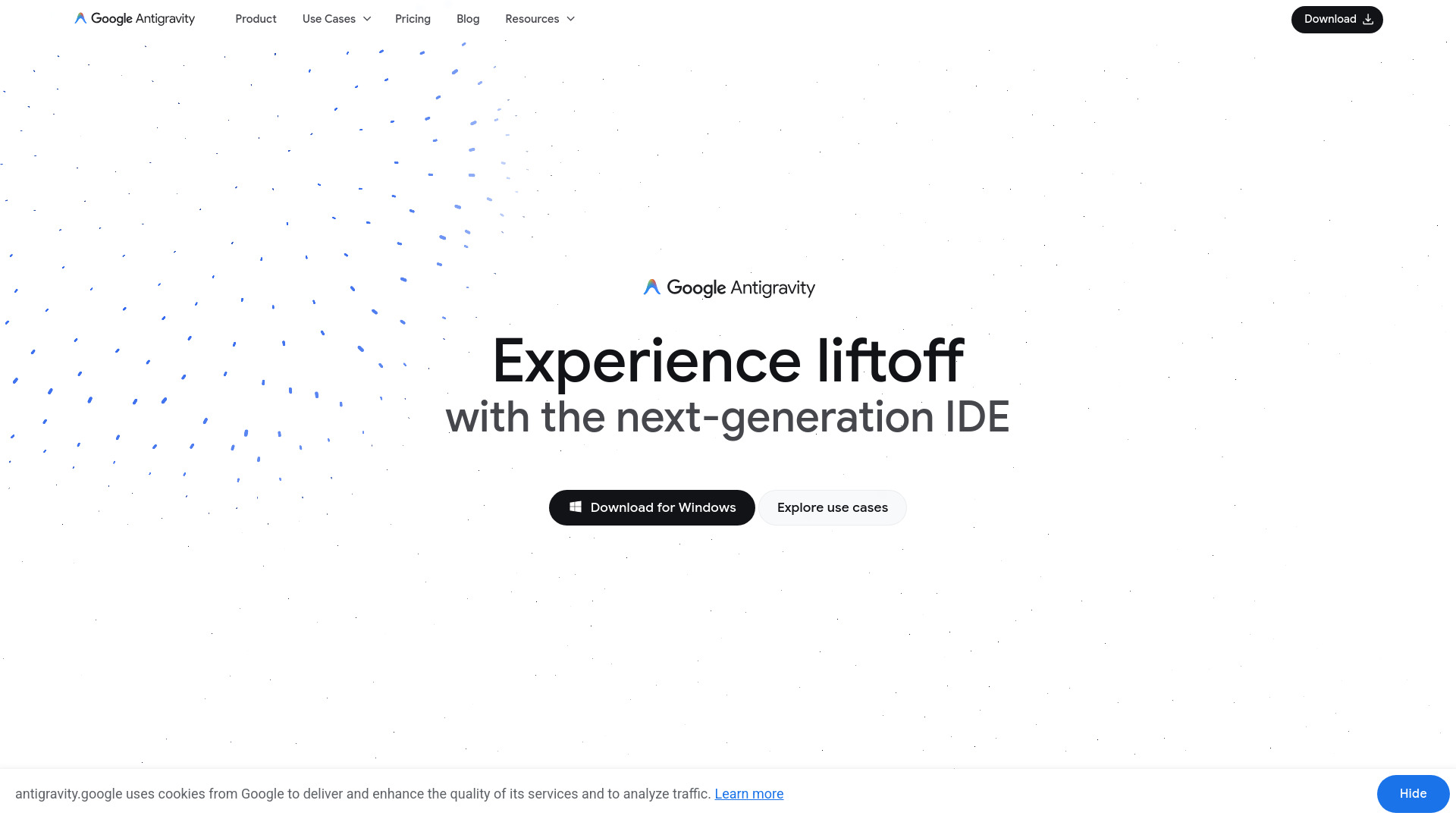
Google Antigravity is the most compelling choice on this podium for developers who want agents inside the coding environment rather than bolted on as a separate chatbot. Its AI IDE Core combines tab autocompletion with natural-language code commands, while the configurable, context-aware agent can handle a broader development workflow.
The higher-level abstractions for monitoring agent activity and verification are particularly important. Agentic coding is useful only when developers can inspect what the agent did and verify the result. Google account access is required, and team and enterprise plans are still marked as coming soon, so larger organizations should treat this as an individual-developer-first option for now.
Best fit
Professional developers who want natural-language commands in an IDE.
Individual builders experimenting with agent-first development workflows.
Teams evaluating agent activity and verification concepts before wider rollout.
Limitations
Team and Enterprise plans are coming soon, limiting current organizational options.
A Google account is required to get started.
It is not the right pick for customer service or general-purpose agent networks.
Hermes Agent

- Developers running private self-hosted agents
- Free
- Starts at Check vendor pricing
- Usage signal: 4.3M
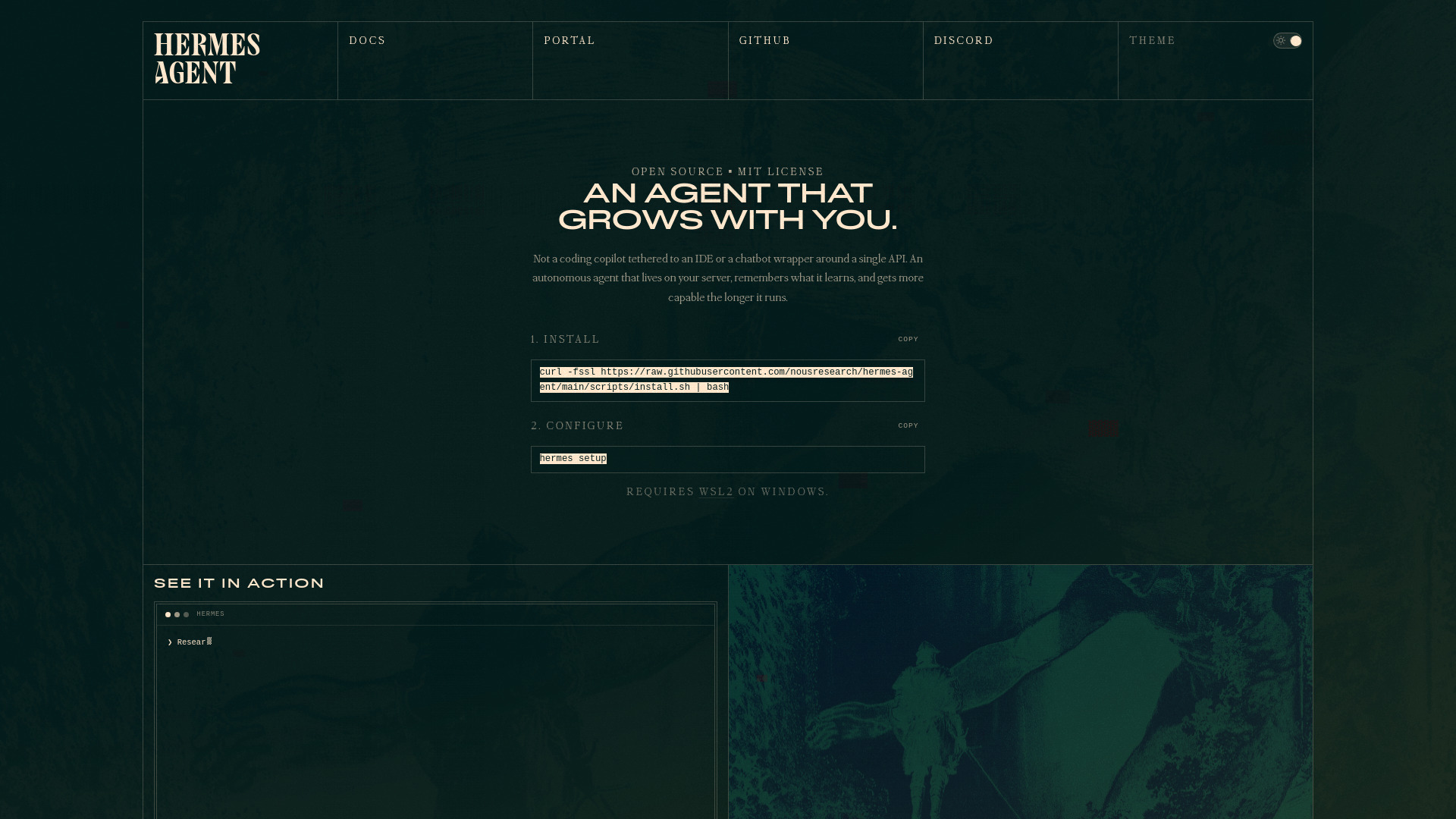
Privacy and control are the headline reasons to consider Hermes Agent. It is open-source and MIT licensed, and it lives on your own server. The framework also reaches beyond a single interface with integrations for Telegram, Discord, Slack, and other platforms. Persistent memory, auto-generated skills, and natural-language cron scheduling make it feel designed for ongoing personal or team automation.
That flexibility comes with real operational work. Installation requires technical knowledge and CLI setup, while self-hosting means maintaining server resources. Hermes Agent is a strong option for developers who want ownership of the environment, but it is not a low-maintenance SaaS shortcut.
Best fit
Developers who need control over where an agent runs.
Teams connecting automations across messaging platforms.
Technical users who value persistent memory and scheduled tasks.
Limitations
Installation and CLI setup require developer knowledge.
Self-hosting transfers server maintenance to your team.
Nontechnical users may find the operational model demanding.
Agnes AI

- Software developers building multimodal AI workflows
- Free API access to frontier models
- Starts at Free API: Free
- Usage signal: 1.6M
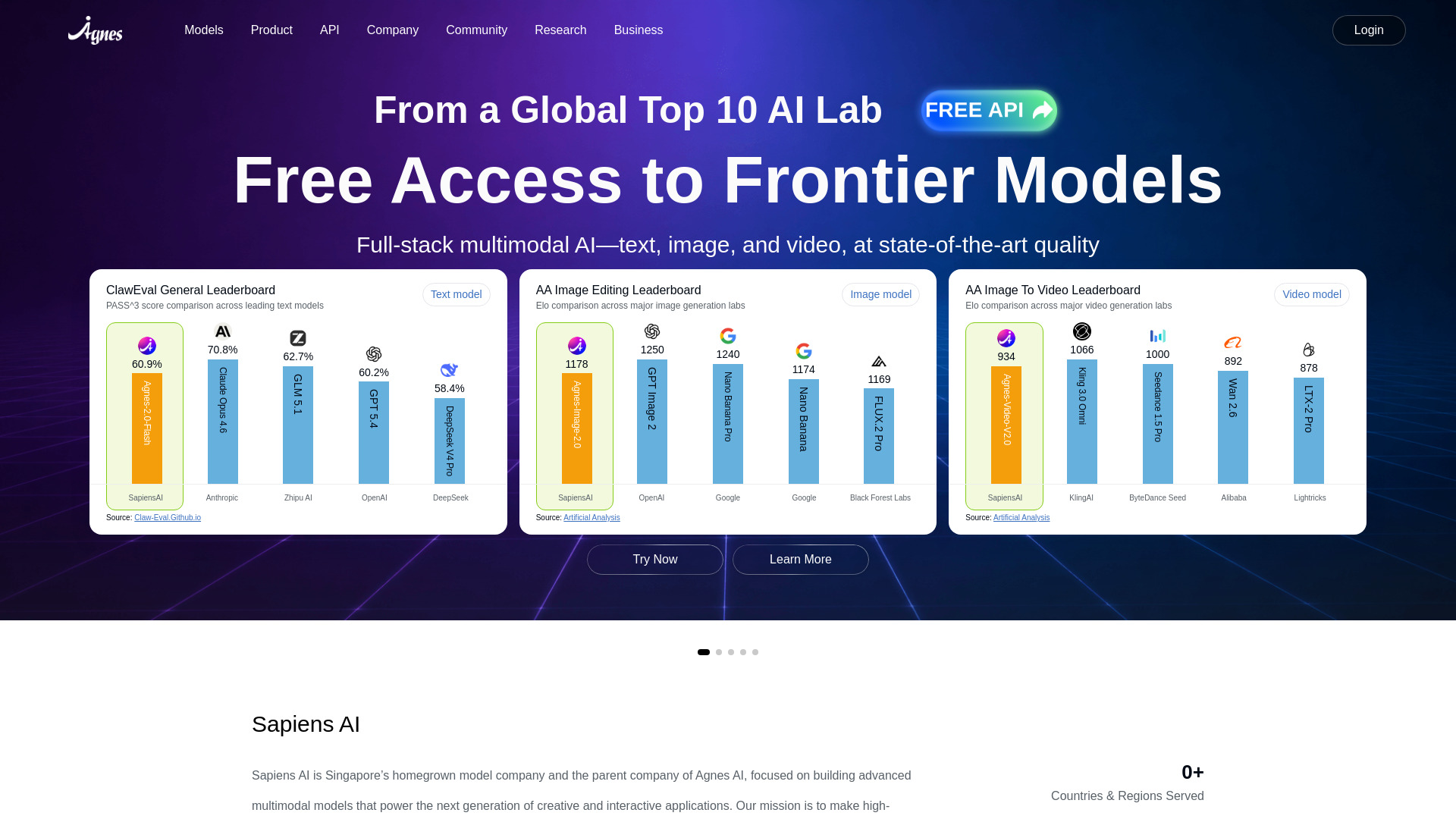
Agnes AI approaches agents from the model and API layer. Its unified AI gateway brings multiple AI applications and workflows together, with capabilities spanning text, image, and video generation. The Agnes-2.0-Flash model is positioned as a high-performance option with speeds of up to 150 TPS, and the free API tier lowers the barrier to experimentation.
This is a practical fit when a developer wants one gateway for multimodal work rather than a narrowly defined chat agent. Image and video models rank below leading options such as OpenAI and Kling on Elo leaderboards, and paid request quotas are tied to specific five-hour windows. Check those limits against expected traffic before designing around the service.
Best fit
Software developers testing multimodal APIs.
Teams combining text, image, and video generation in one workflow.
Builders who want a free API entry point and a unified gateway.
Limitations
Image and video quality trails some industry leaders on Elo leaderboards.
Paid request quotas apply within defined five-hour windows.
It is more API-centric than a turnkey business-agent product.
OiiOii.ai

- Directors managing AI animation production
- Free plan available
- Starts at Check vendor pricing
- Usage signal: 892.9K
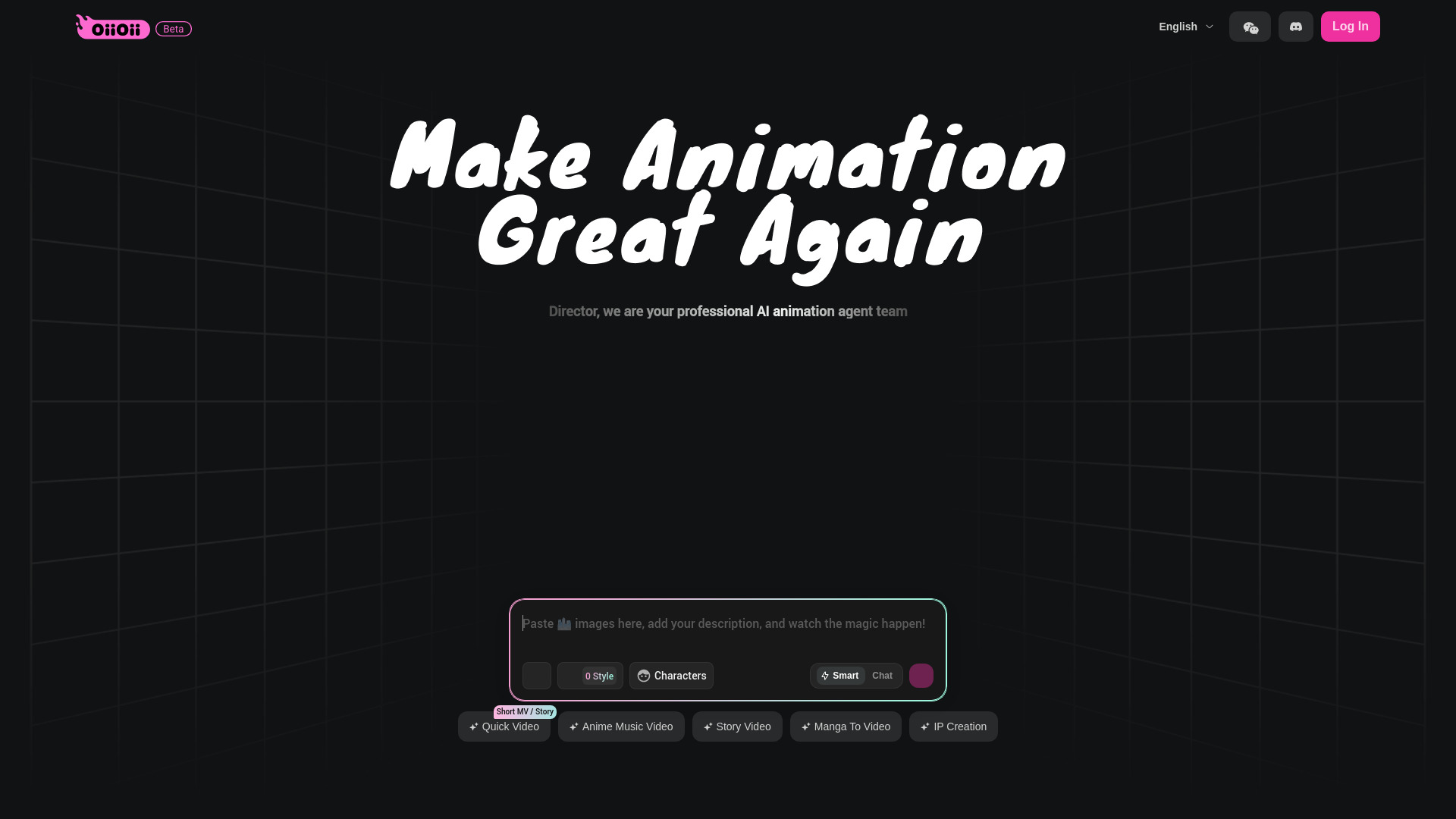
OiiOii.ai is an unexpected but useful entry in a framework comparison because it packages a team of specialized creative agents rather than exposing a developer toolkit. The lineup covers roles such as art director, scene designer, scriptwriter, IP designer, character designer, and storyboard artist. A managed, one-click process keeps the user focused on direction instead of agent plumbing.
The chat interface for precise execution is the key workflow detail. Directors can refine an idea conversationally while the platform coordinates the creative roles behind it. We would shortlist it for animation development and creative prototyping, not for teams building reusable agent infrastructure.
Best fit
Directors developing animation concepts and storyboards.
Creative teams that want managed coordination across specialist roles.
Users who value one-click results over technical configuration.
Limitations
It is a specialized creative studio, not a general orchestration framework.
The managed workflow offers less infrastructure control to developers.
Pricing should be confirmed before planning a larger production.
ATXP

- AI developers adding agent infrastructure
- Free to create
- Starts at Check vendor pricing
- Usage signal: 610.2K
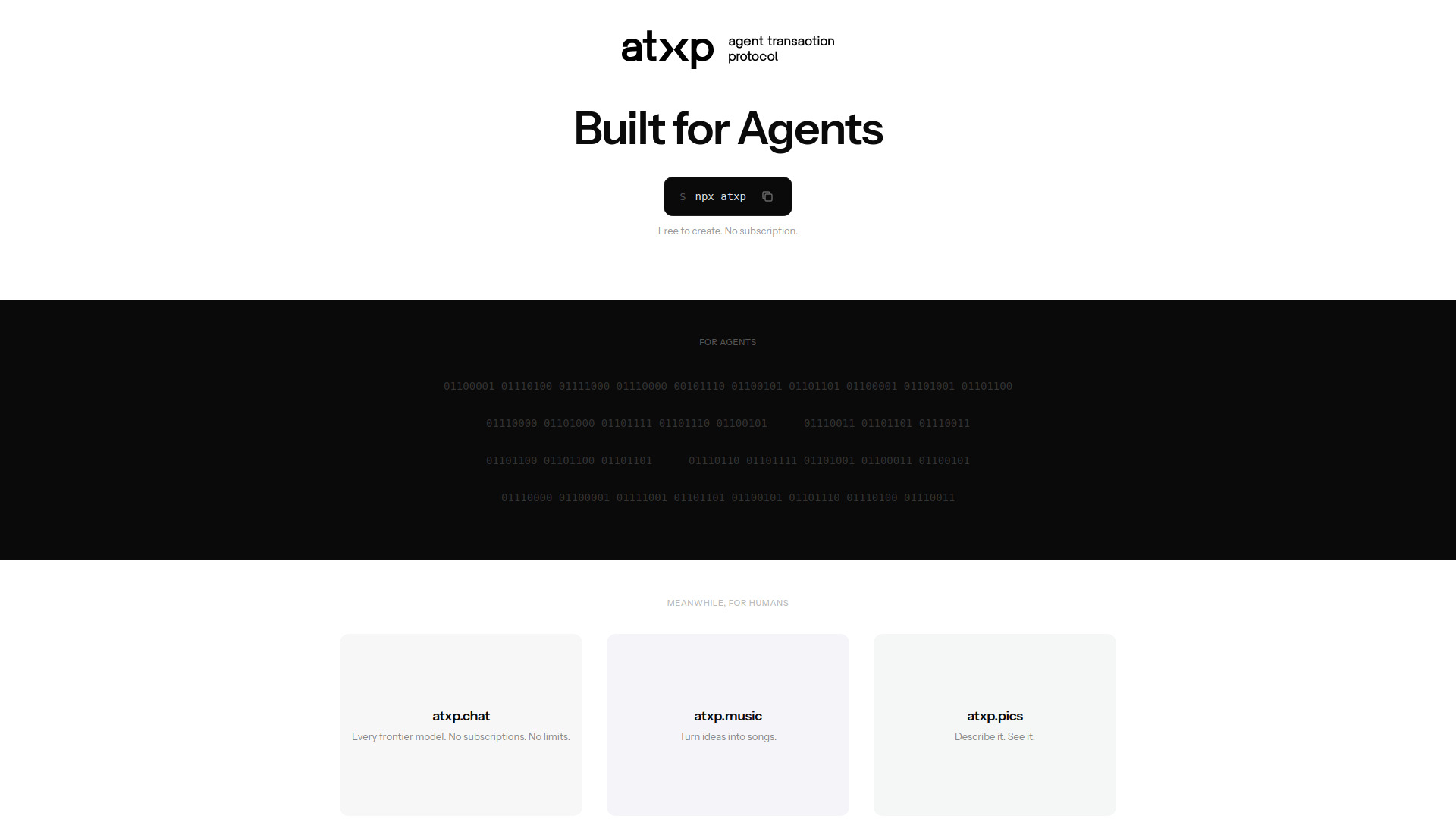
ATXP focuses on the pieces an autonomous agent needs to operate as a service: identity, payments, email, and SMS. That makes it a broader infrastructure layer rather than a framework for prompting or coordinating agents. The pay-as-you-go model and lack of monthly subscriptions are appealing for developers who want to connect usage costs to actual activity.
The catch is maturity across the product surface. Video, Cloud, and Deputy features are still in beta, and agent integration requires comfort with CLI tools and documentation. ATXP belongs on a technical shortlist when identity and transactions are central to the product, not when the goal is simply to prototype a conversational bot.
Best fit
Developers building agents that need identity or payment functionality.
Products requiring dedicated agent email and SMS services.
Teams that prefer pay-as-you-go infrastructure over subscriptions.
Limitations
Some features, including video, Cloud, and Deputy, remain in beta.
CLI and documentation work require developer knowledge.
It solves infrastructure needs more than agent reasoning or evaluation.
Agent Skills Marketplace (SkillsMP)

- Developers discovering reusable agent skills
- Free plan available
- Starts at Check vendor pricing
- Usage signal: 701.7K
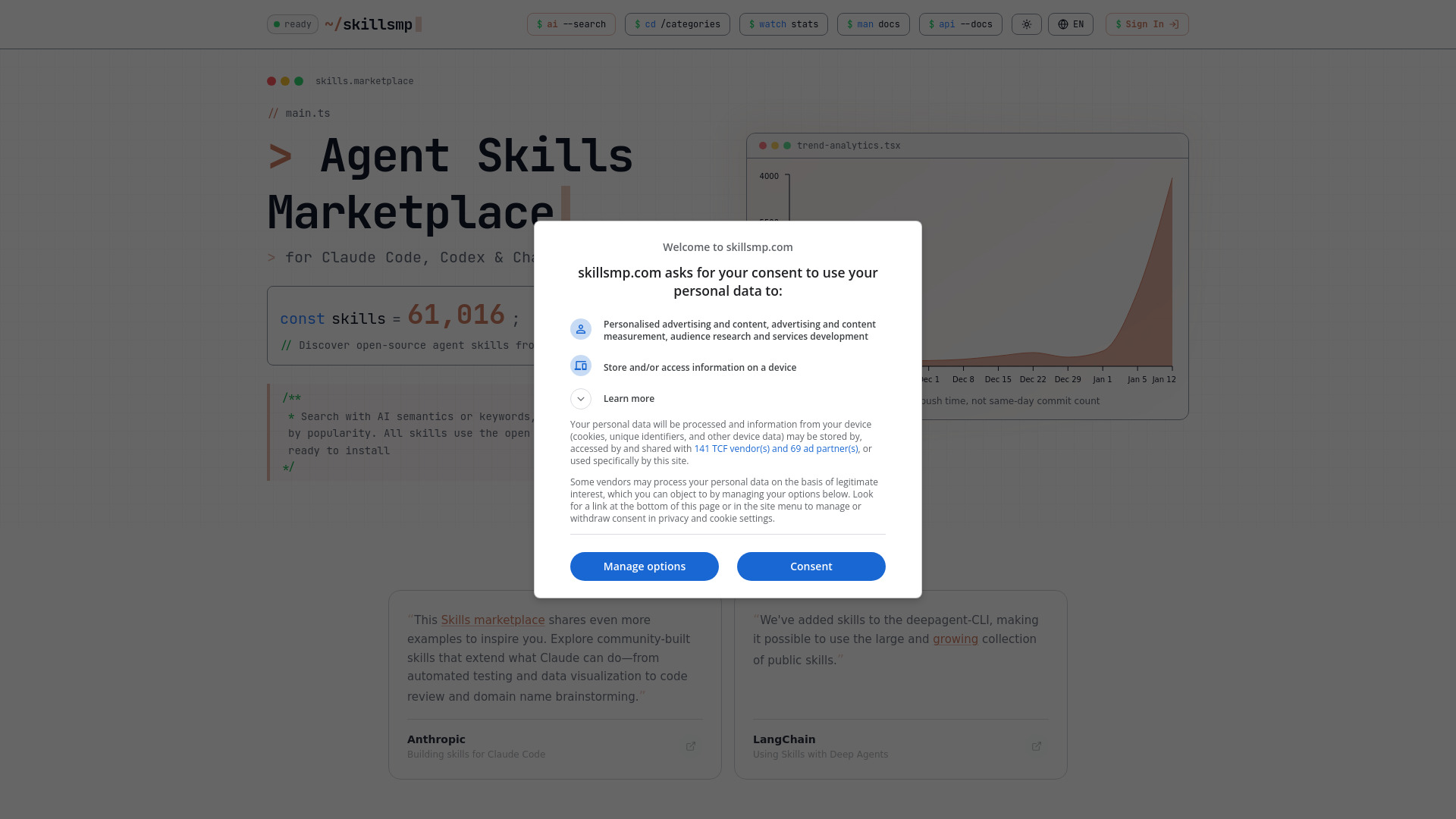
SkillsMP is best understood as a discovery layer for agents. It aggregates more than 61,000 open-source skills and lets developers search them through AI semantics and keywords. Filtering across 12 categories, including Tools, Development, and Data & AI, is more useful than browsing an unstructured repository when you are looking for a starting point.
The skills work with major AI coding assistants such as Claude Code, Codex, and ChatGPT. But public code needs inspection before installation. SkillsMP is not officially affiliated with Anthropic or OpenAI, so teams should review provenance and behavior rather than treating a listing as a security guarantee.
Best fit
Developers looking for reusable skills for coding assistants.
Teams exploring the open SKILL.md standard.
Builders who want semantic search across a large public catalog.
Limitations
Public GitHub skills must be reviewed before installation.
The marketplace is not officially affiliated with Anthropic or OpenAI.
Discovery is its strength; it does not replace a complete runtime or control plane.
ai sdk agents

- Full-stack developers using Vercel AI SDK patterns
- Free Plan: $0 one-time
- Starts at Free Plan: $0 one-time
- Usage signal: 45.6K
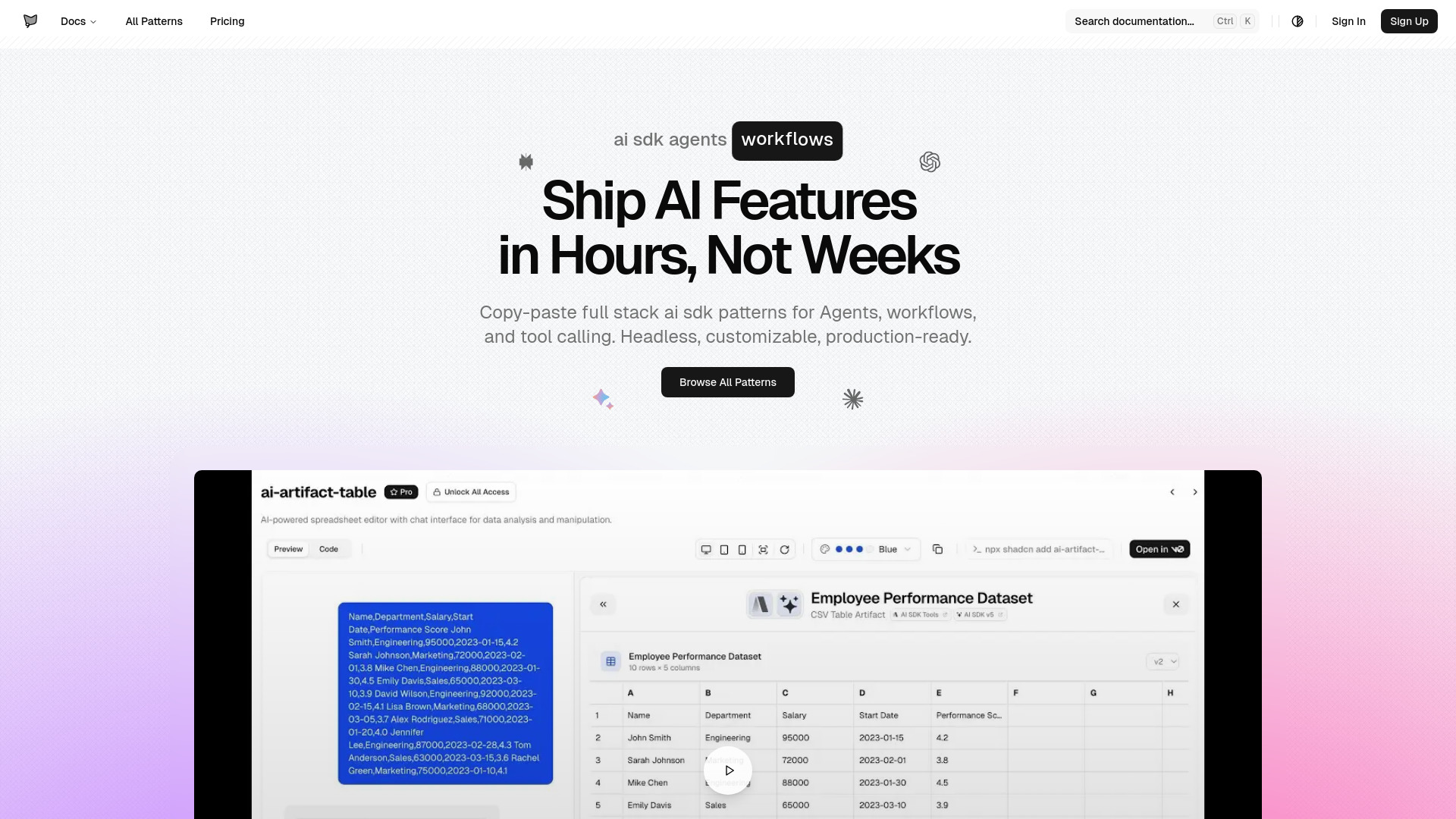
For developers who would rather start from a working application pattern than a blank repository, ai sdk agents provides full-stack Vercel AI SDK patterns. Tool calling and streaming responses are the practical center of the offering, while Tailwind CSS and shadcn/ui support customization of the front end.
This is a focused resource, not a complete organization-wide platform. The free plan has limited access and basic blocks, and the Pro Team Plan is still coming soon. It makes the most sense for a developer who already understands the stack and wants to accelerate implementation.
Best fit
Full-stack developers building agent interfaces with Vercel AI SDK.
Teams that need tool calling and streaming response patterns.
Product engineers who want customizable UI foundations.
Limitations
The free plan is limited and includes only basic blocks.
The Pro Team Plan is currently coming soon.
It assumes technical familiarity rather than offering a no-code build path.
Agenta

- Developers operating and evaluating LLM applications
- 2 users and 5k traces/month
- Starts at Hobby: Free /month
- Usage signal: 29.1K
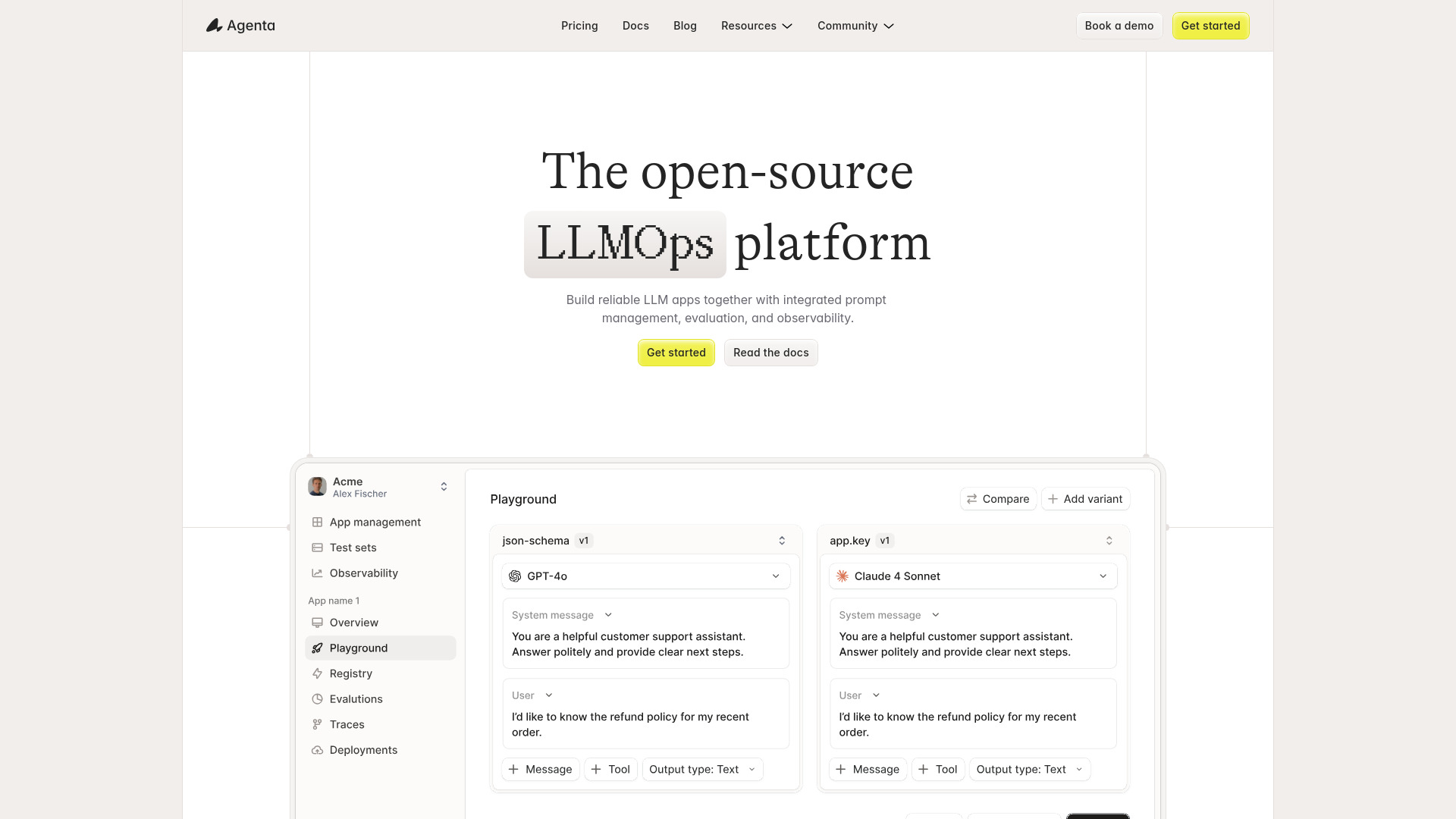
Agenta rounds out the list by concentrating on what happens after an agent prototype exists. Its open-source LLMOps platform combines prompt management, versioning, a unified playground, automated and human evaluation, tracing, debugging, monitoring, and feedback loops. That is a valuable counterweight to frameworks that focus almost entirely on creation.
The free Hobby plan supports two users and 5,000 traces per month, which is a useful starting signal for a small team. Before adopting it for a production program, verify that its current evaluation and observability workflow matches your application and scale needs.
Best fit
Developers managing prompts and versions across AI applications.
Teams that need evaluation, tracing, and observability together.
Small LLMOps groups starting with a free workspace.
Limitations
Fit, pricing, and workflow limits should be checked for your deployment.
It supports the operations layer more than initial agent creation.
Larger teams should validate the free plan's two-user and trace limits.
More tools to compare
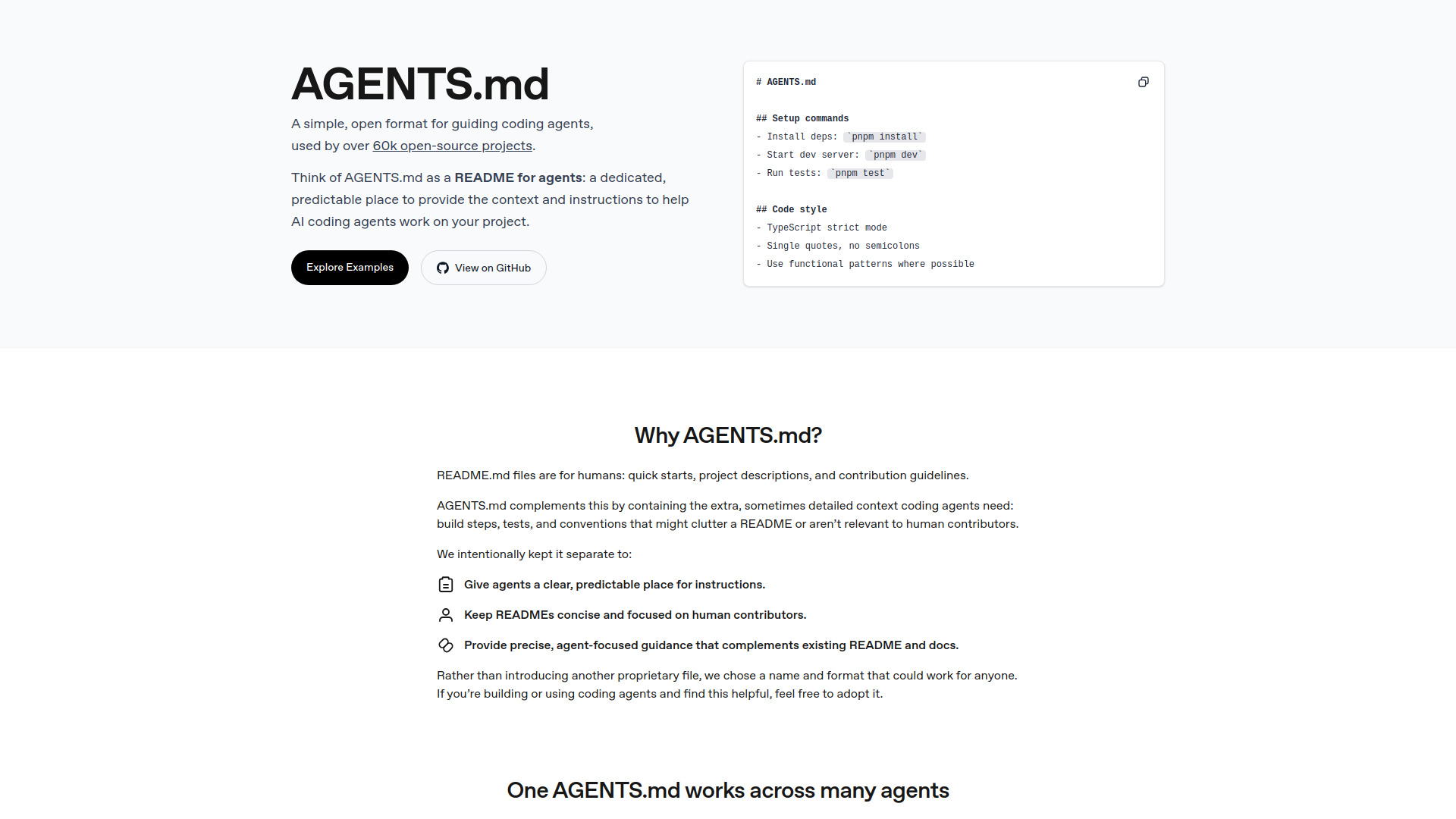
AGENTS.md

- Coding-agent project instructions
- Starts at Check vendor pricing
- Usage signal: 281.0K
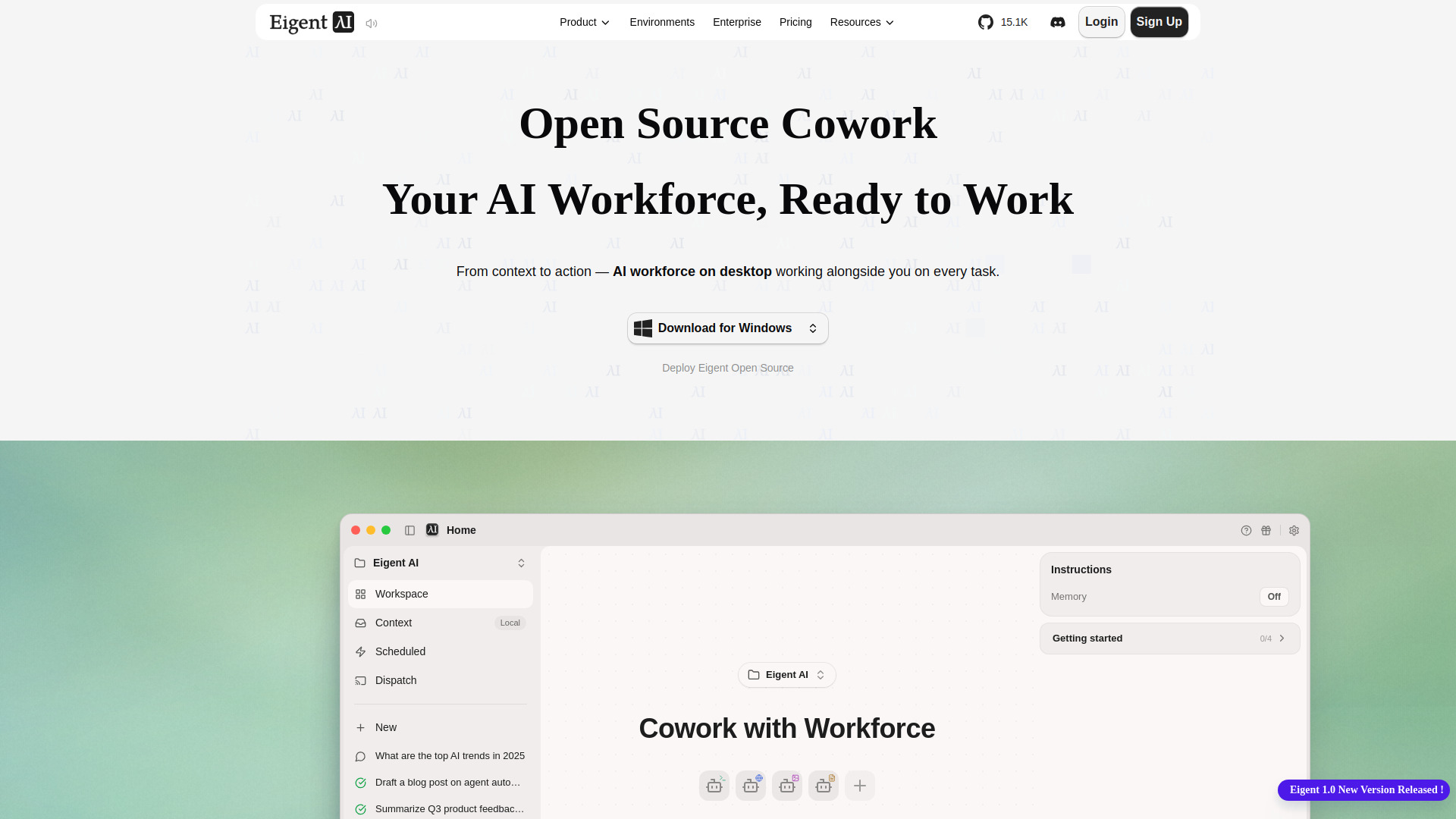
Eigent AI
- Desktop multi-agent workforce automation
- 500 free registration credits
- Starts at $19.90/month
- Usage signal: 373.2K
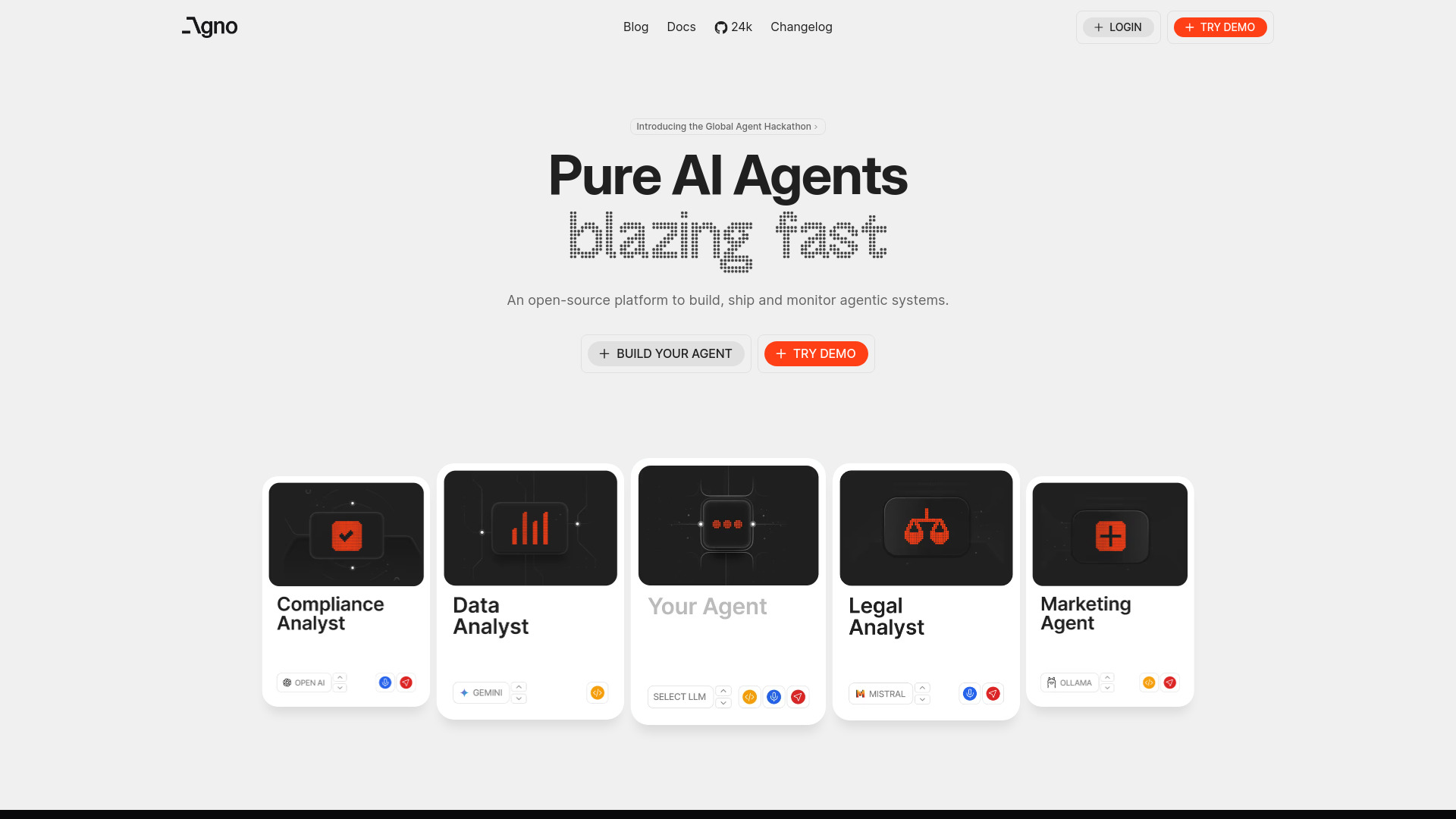
Agno
- Model-agnostic AI agent development
- Free plan available
- Starts at Free
- Usage signal: 187.9K
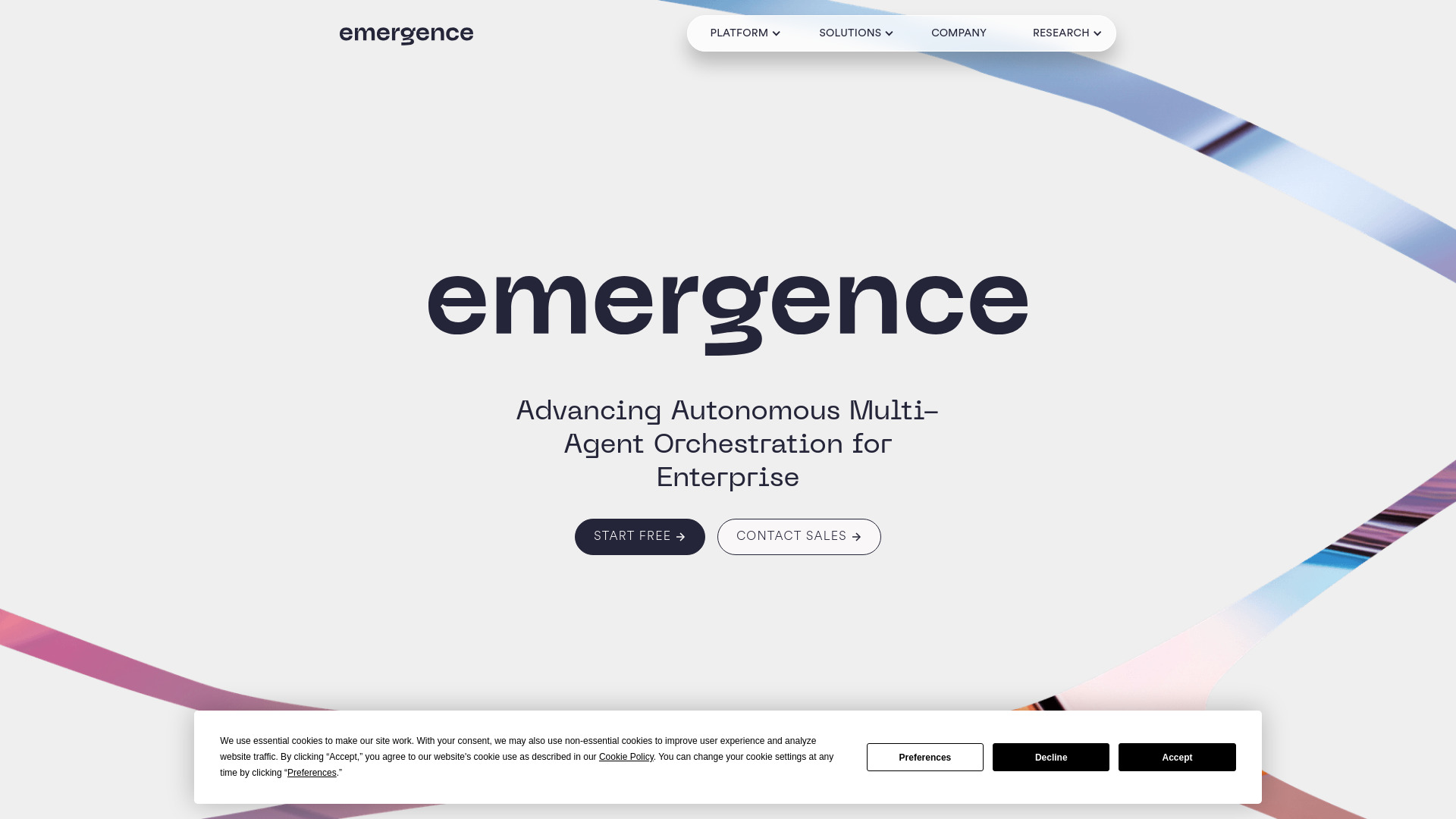
Emergence AI

- Enterprise multi-agent workflow automation
- Starts at Check vendor pricing
- Usage signal: 137.0K
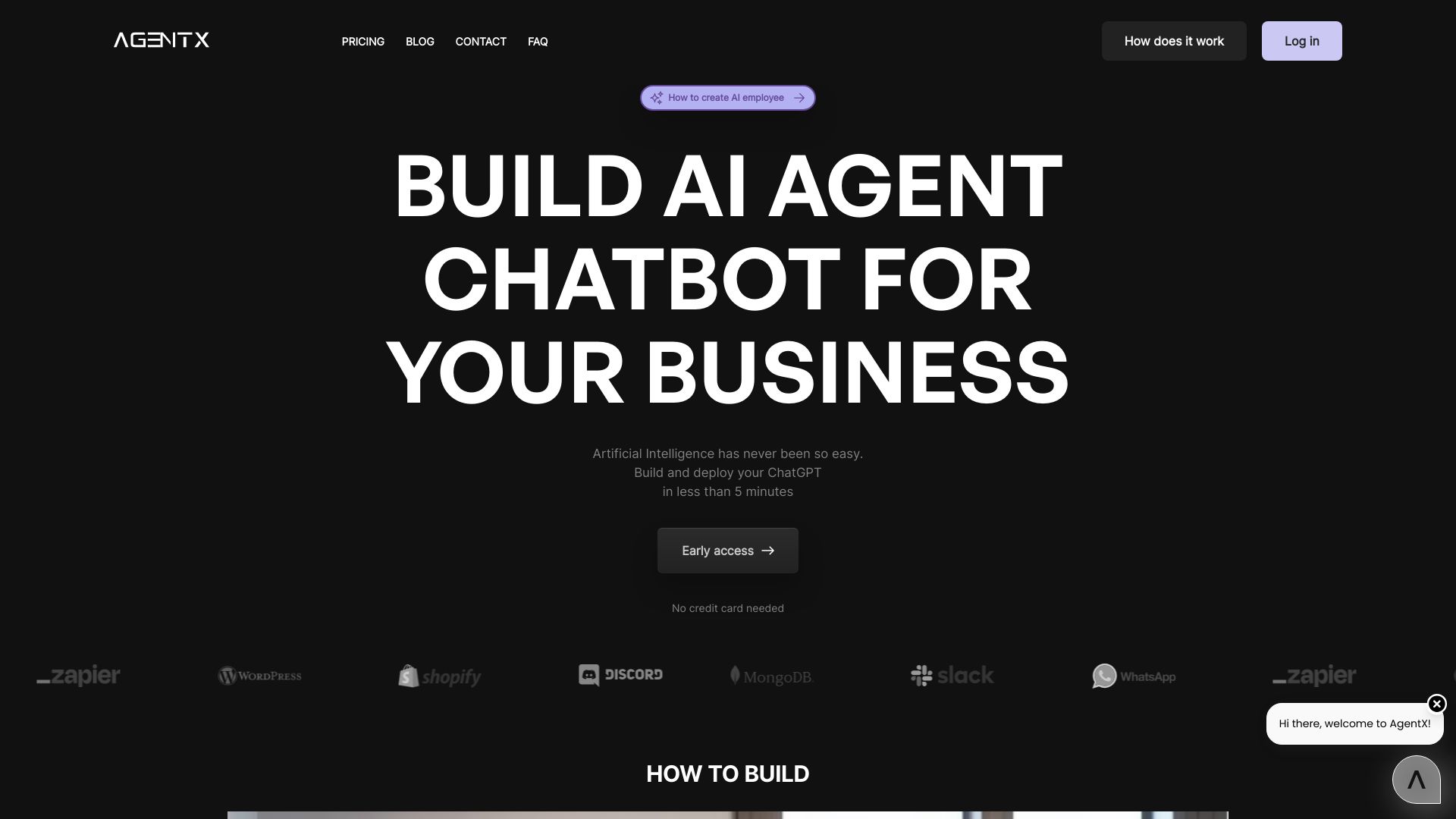
AgentX

- No-code business AI agents
- Starts at Check vendor pricing
- Usage signal: 65.1K
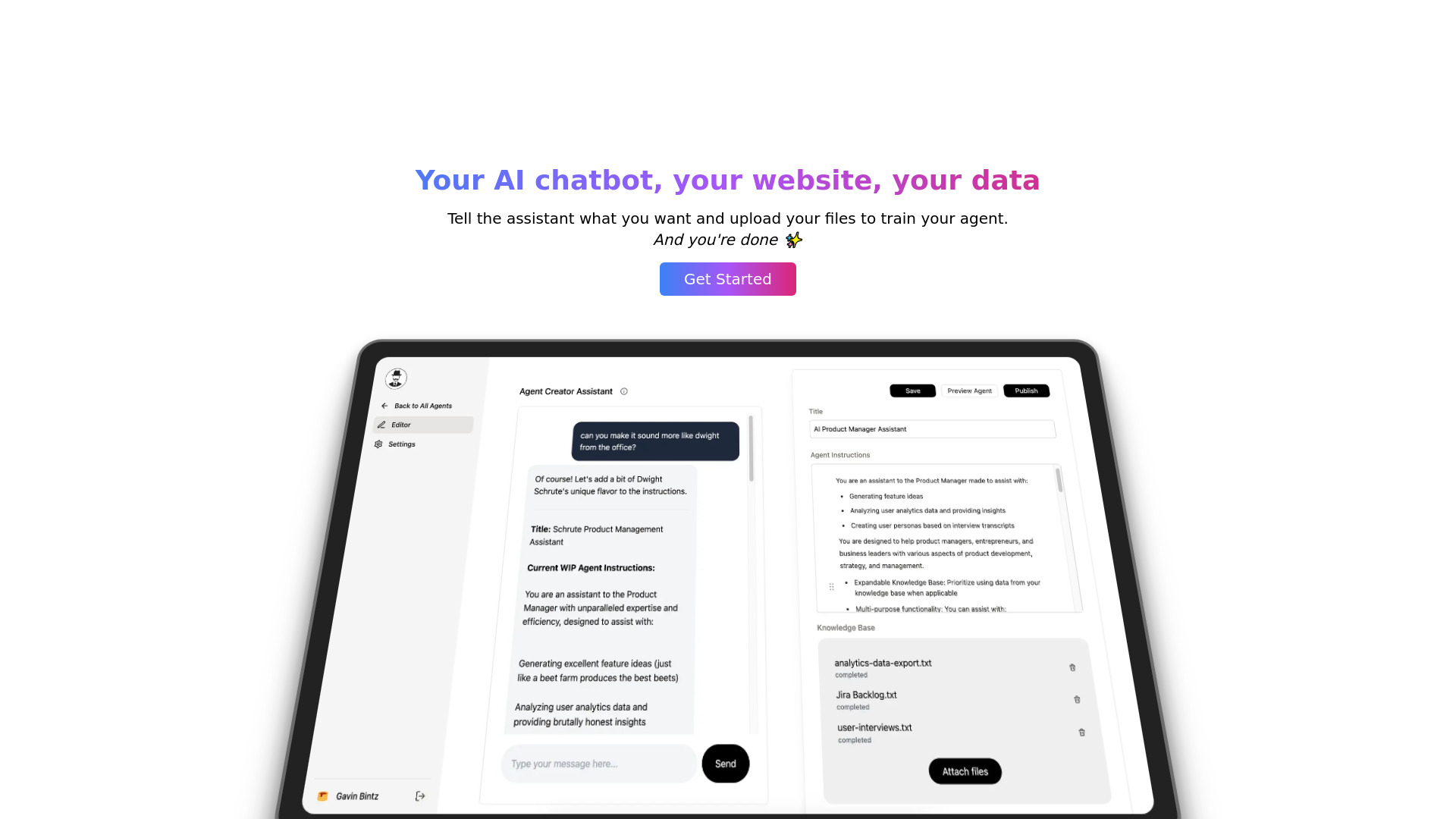
Agent One

- No-code customer-support AI agents
- Free plan available
- Starts at Check vendor pricing
- Usage signal: 29.2K
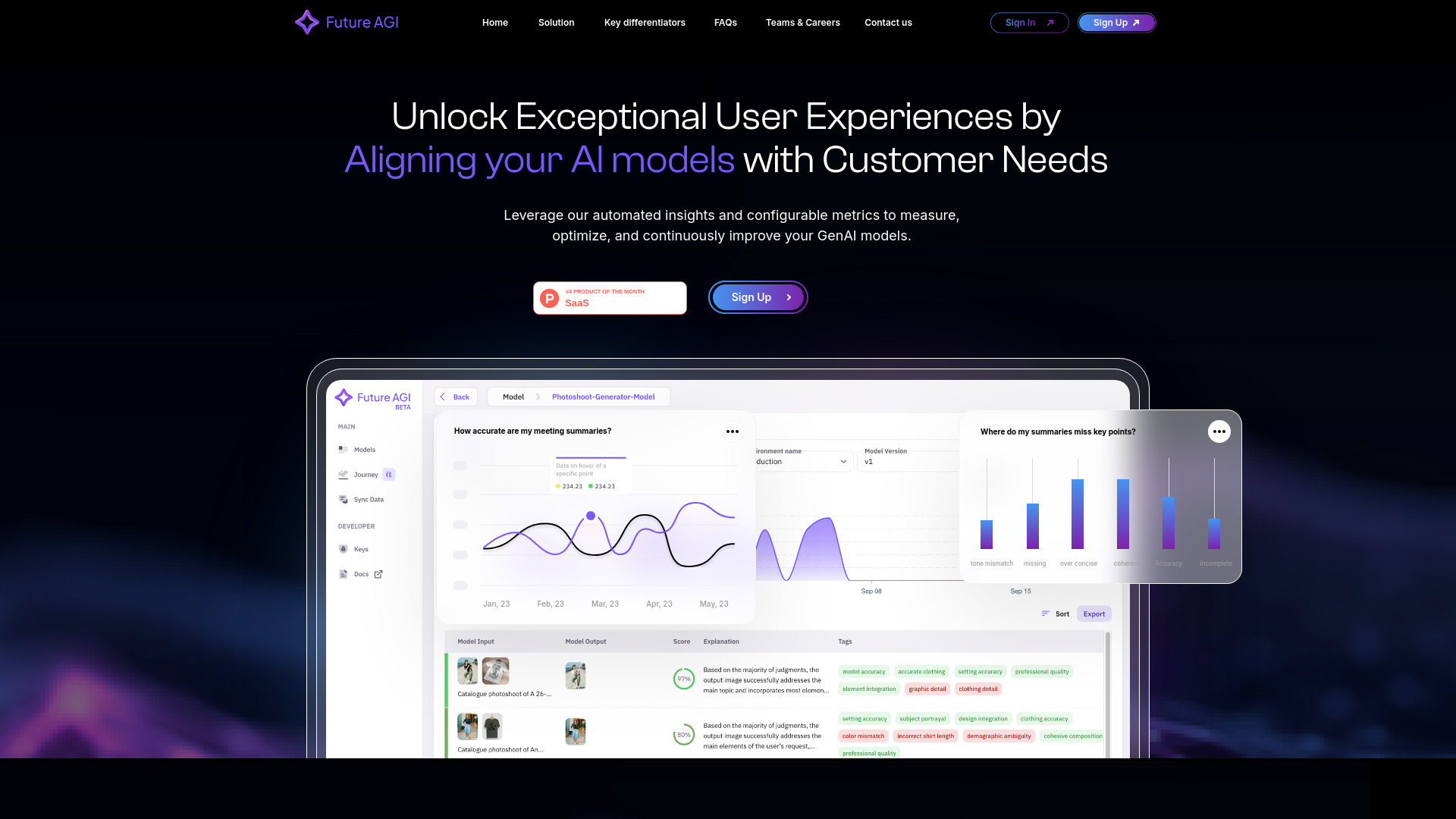
Future AGI

- AI model and agent evaluation
- Starts at Check vendor pricing
- Usage signal: 81.6K
Ara AI

- Product development with autonomous coding agents
- Starts at Check vendor pricing
- Usage signal: 48.4K

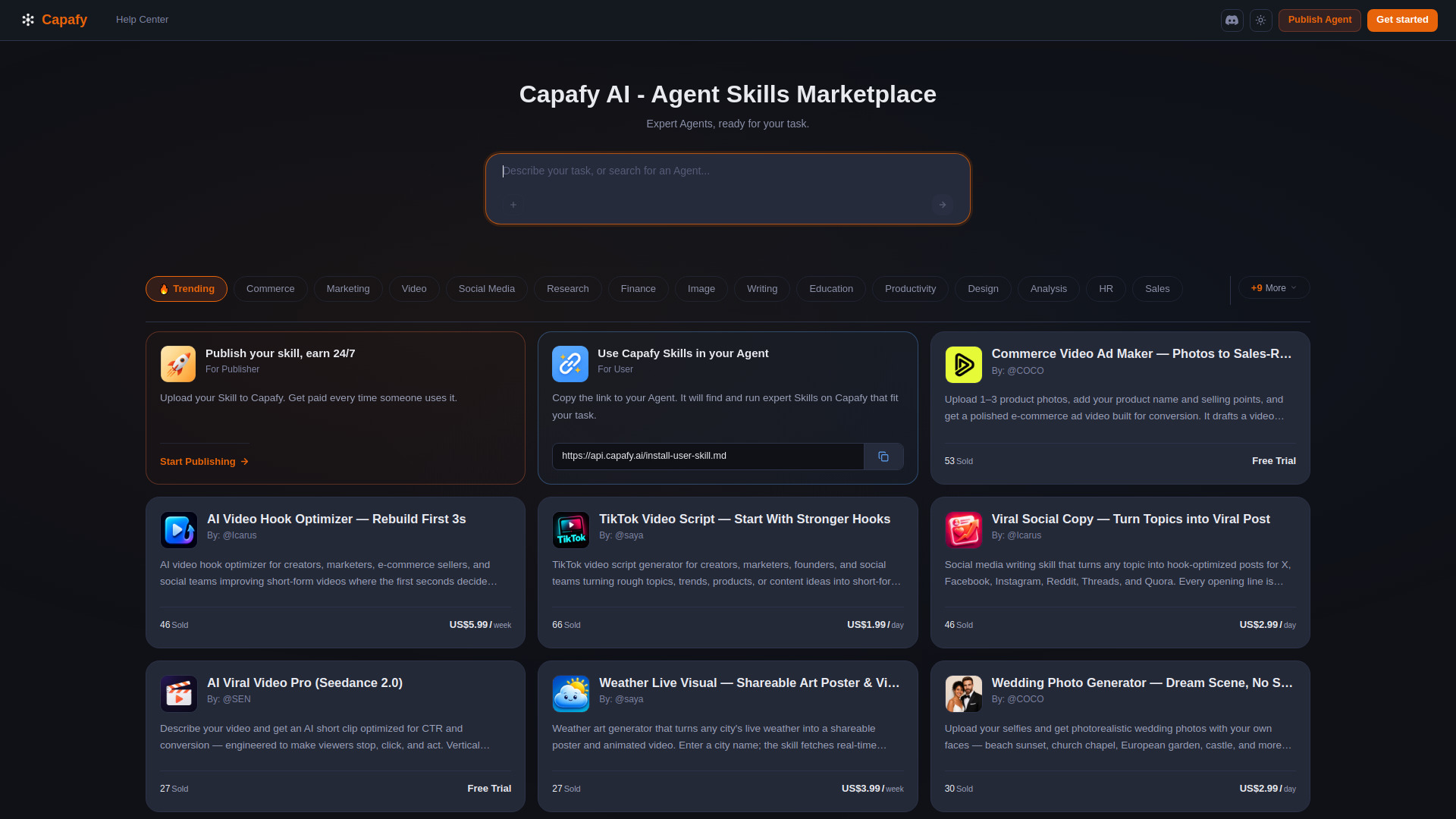
Capafy AI

- Claude Code, Codex & OpenClaw skills
- Free trial available
- Starts at $6/hour
- Usage signal: 164.2K
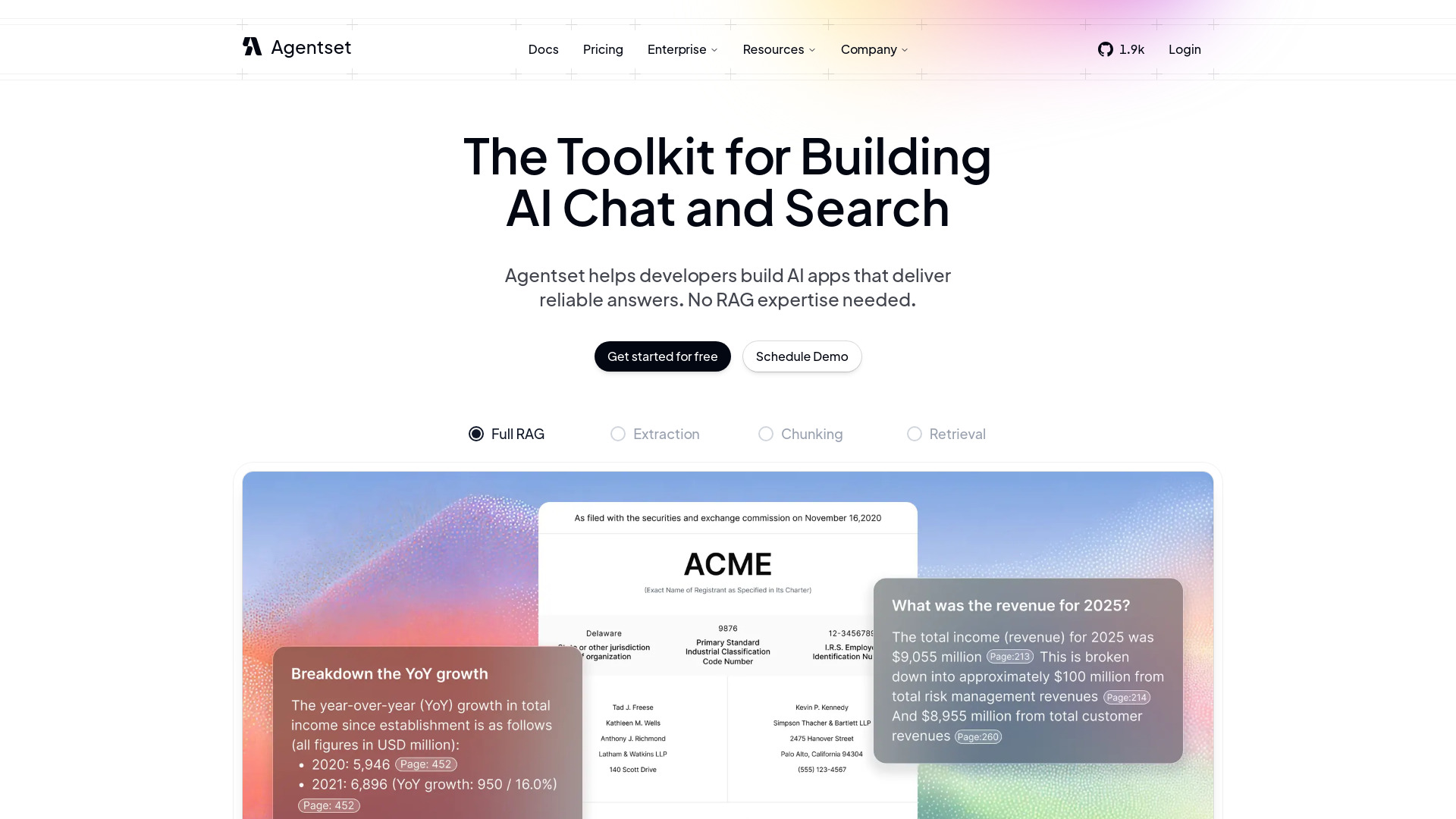
Agentset

- Production-ready RAG infrastructure
- 1,000 pages and 10,000 retrievals
- Starts at $49/month
- Usage signal: 18.3K
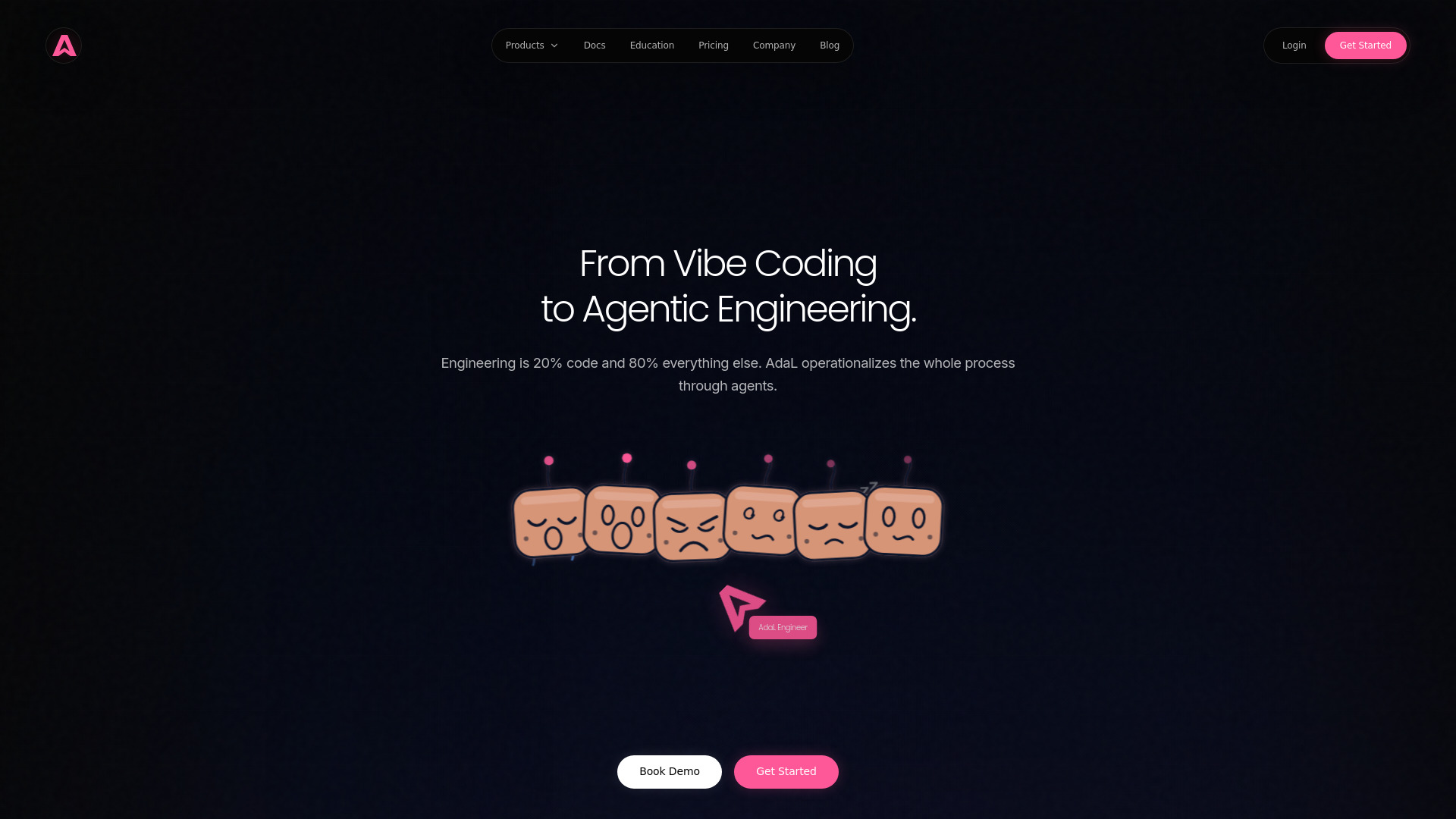
AdaL

- Teams building with multi-agent workflows
- 7-day free trial available
- Starts at $20/month
- Usage signal: 15.2K
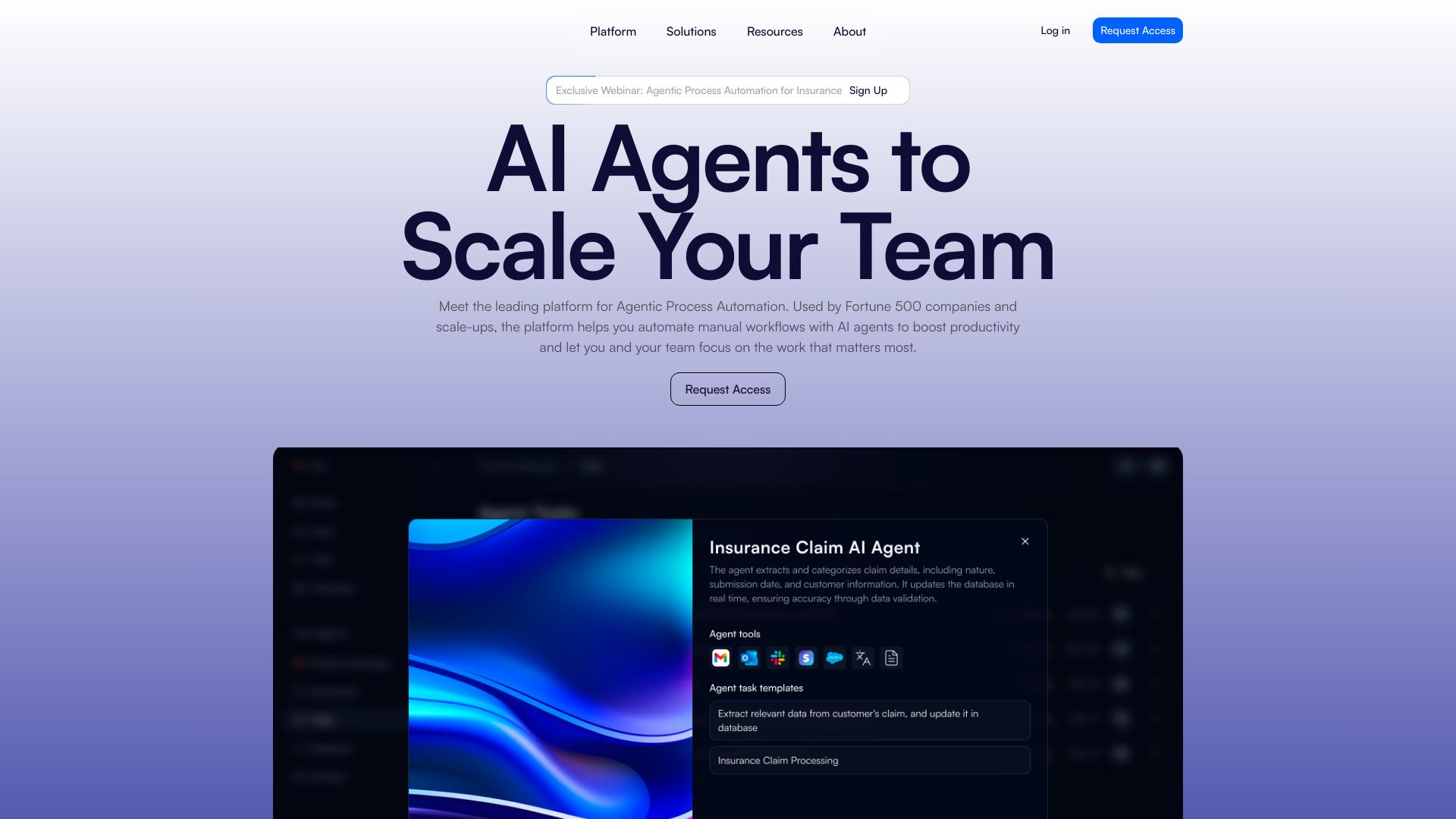
Beam AI
- Enterprise workflow automation
- Starts at Check vendor pricing
- Usage signal: 119.3K
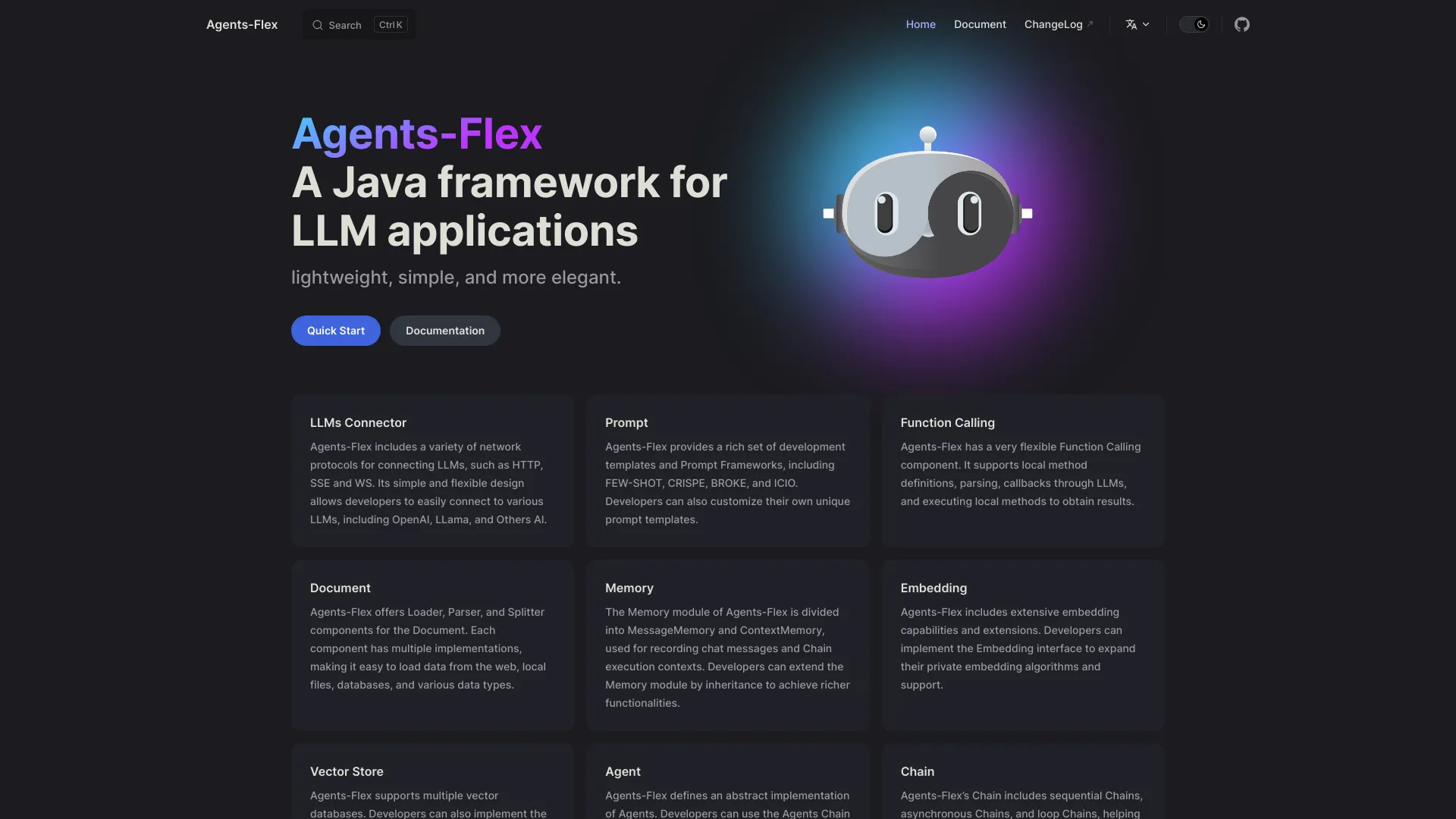
Agents-Flex

- Java-based LLM application development
- Starts at Check vendor pricing
- Usage signal: 3.8K
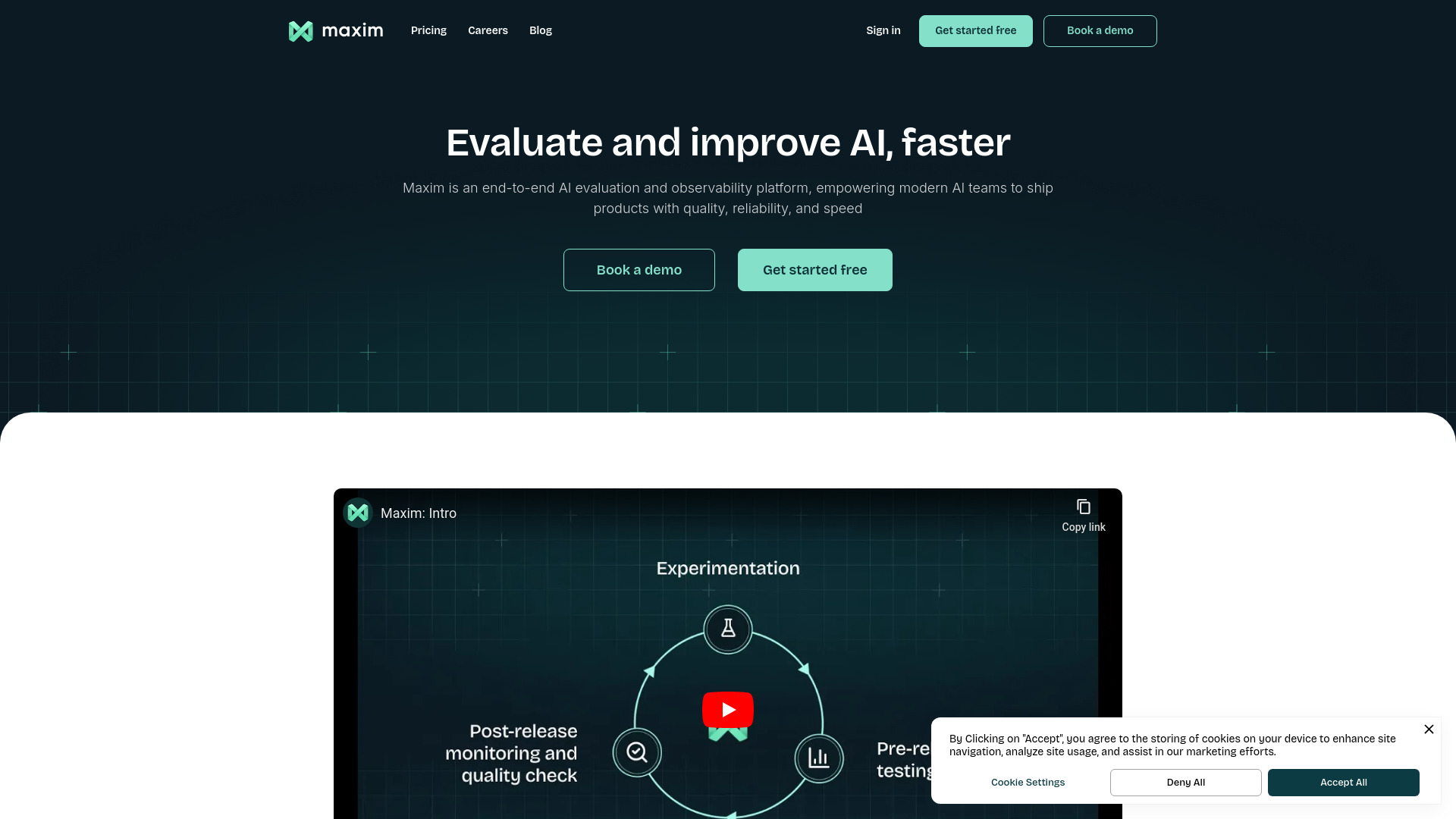
Maxim
- AI agent evaluation and observability
- Starts at Check vendor pricing
- Usage signal: 117.2K
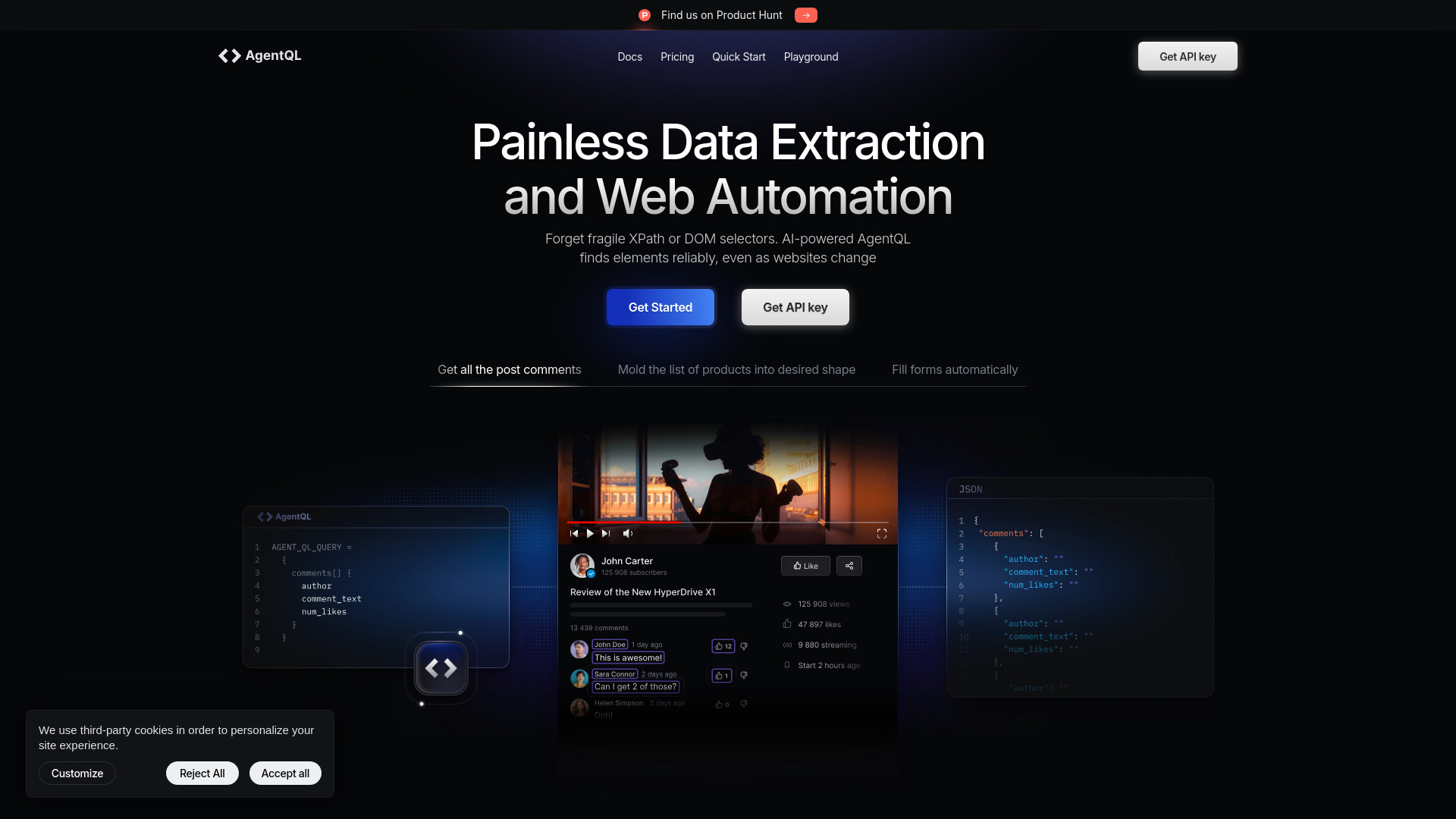
AgentQL

- Web data extraction and AI agent automation
- 300 free API calls
- Starts at $0/month
- Usage signal: 20.1K
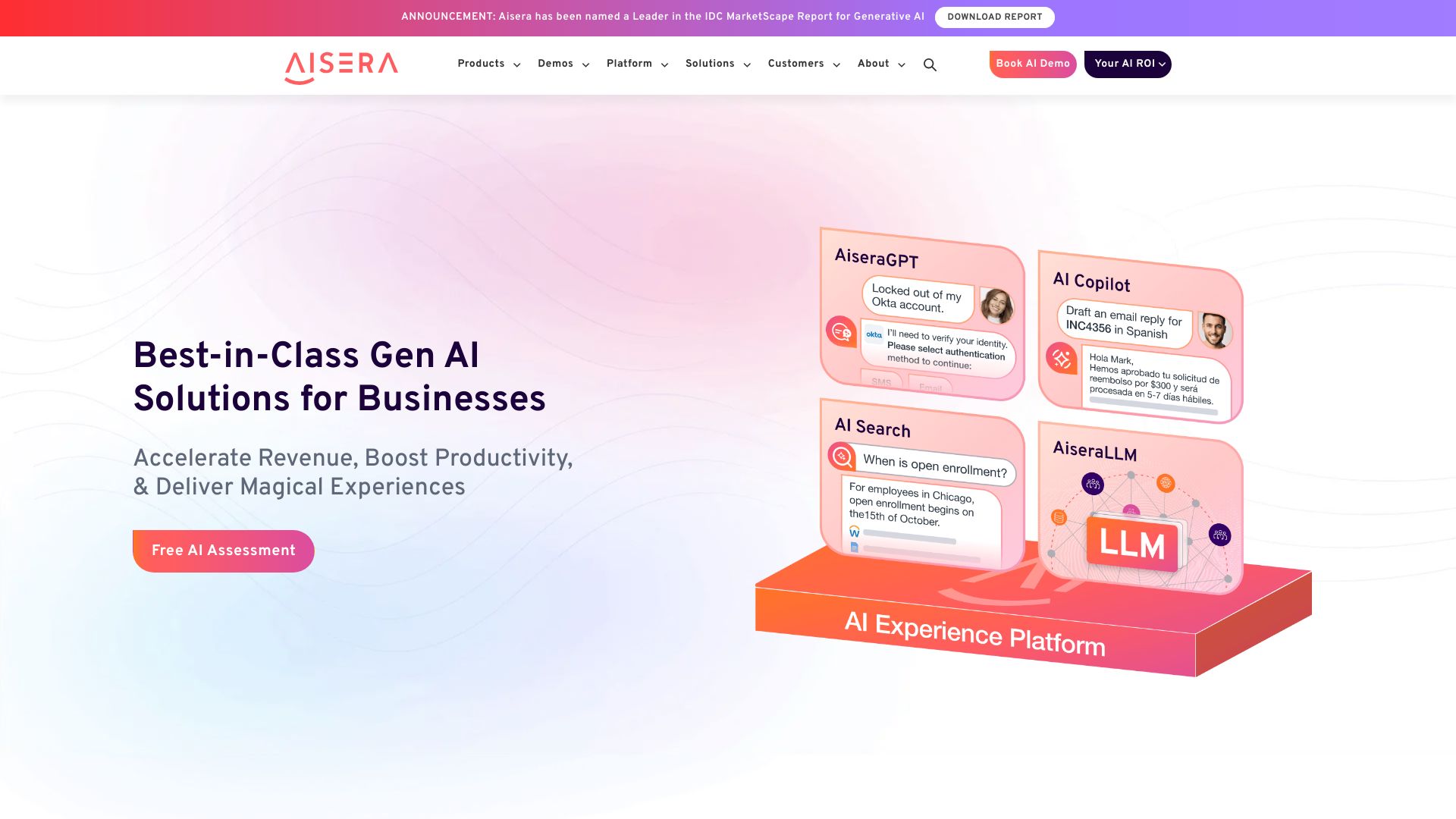
Aisera

- Enterprise service and workflow automation
- Starts at Check vendor pricing
- Usage signal: 46.7K
Hermes Agent
- Self-hosted autonomous AI agents
- Free plan available
- Starts at Check vendor pricing
- Usage signal: 42.3K
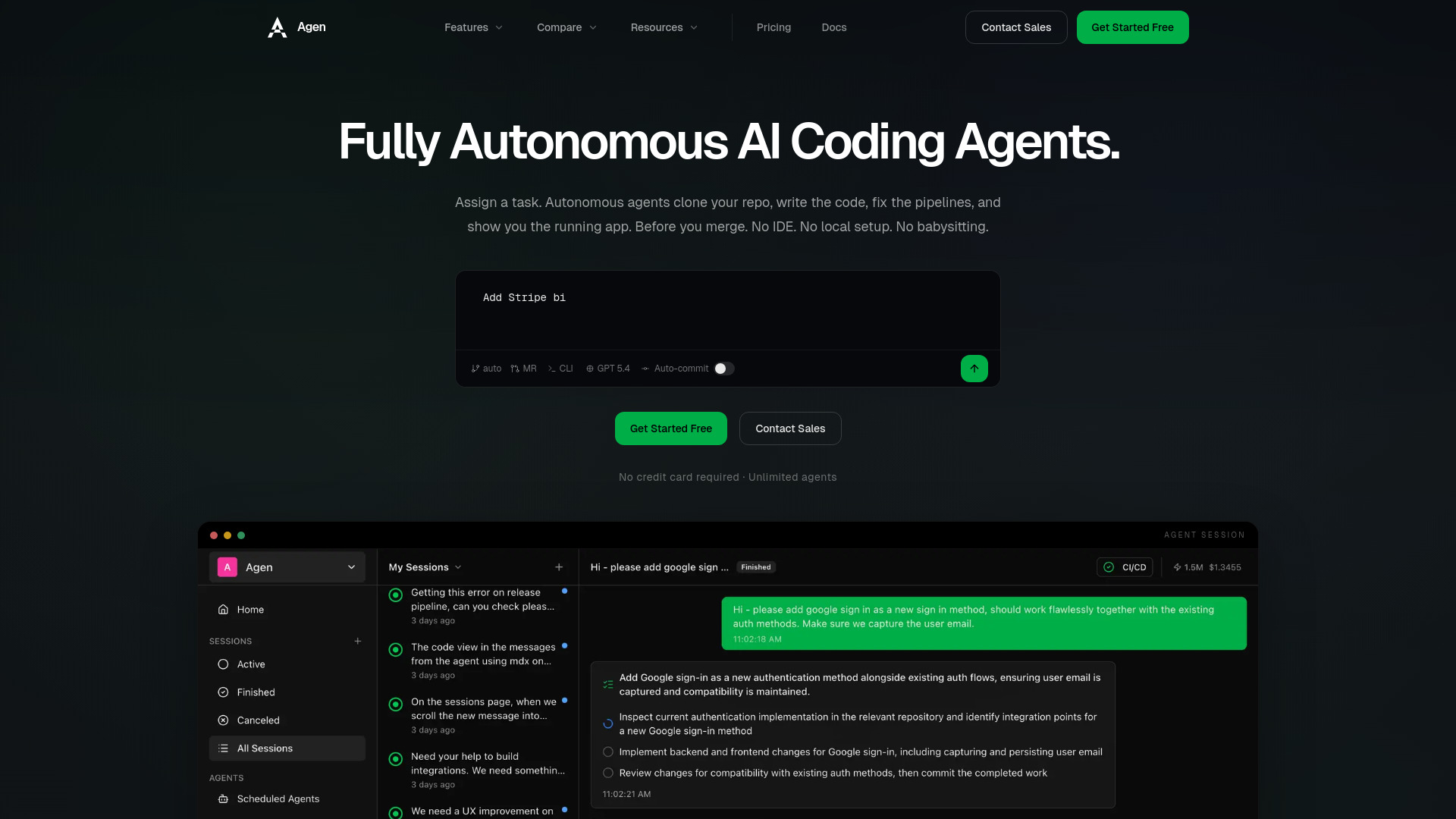
Agen

- Autonomous cloud coding agents
- $20 free credits
- Starts at $59/mo
- Usage signal: 3K
GitAgent
- Git-native AI agent versioning
- Starts at Check vendor pricing
- Usage signal: 6.8K

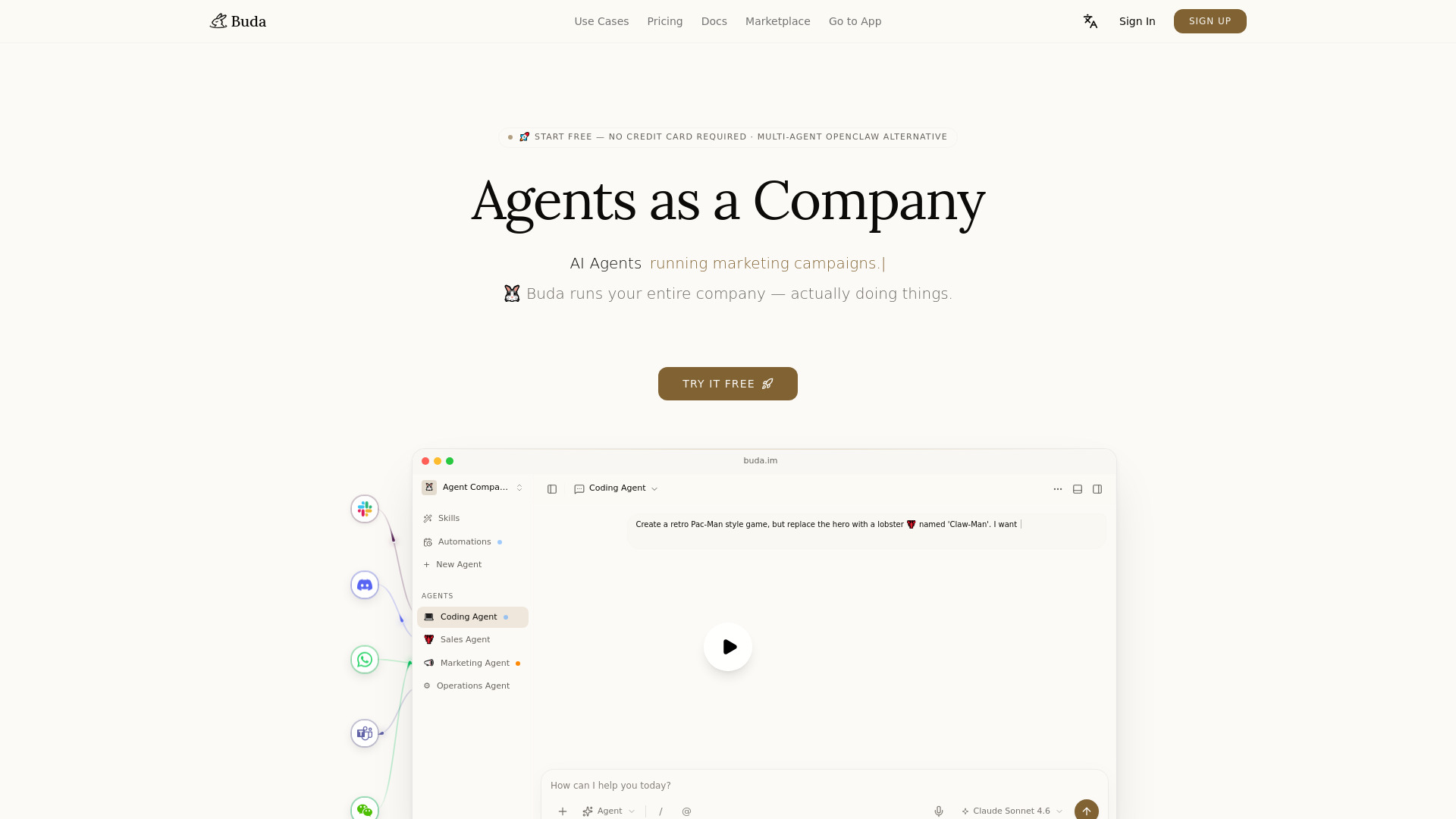
Buda AI

- Cloud-based multi-agent AI workforces
- 300 credits/day
- Starts at $20/mo/agent
- Usage signal: 57.2K
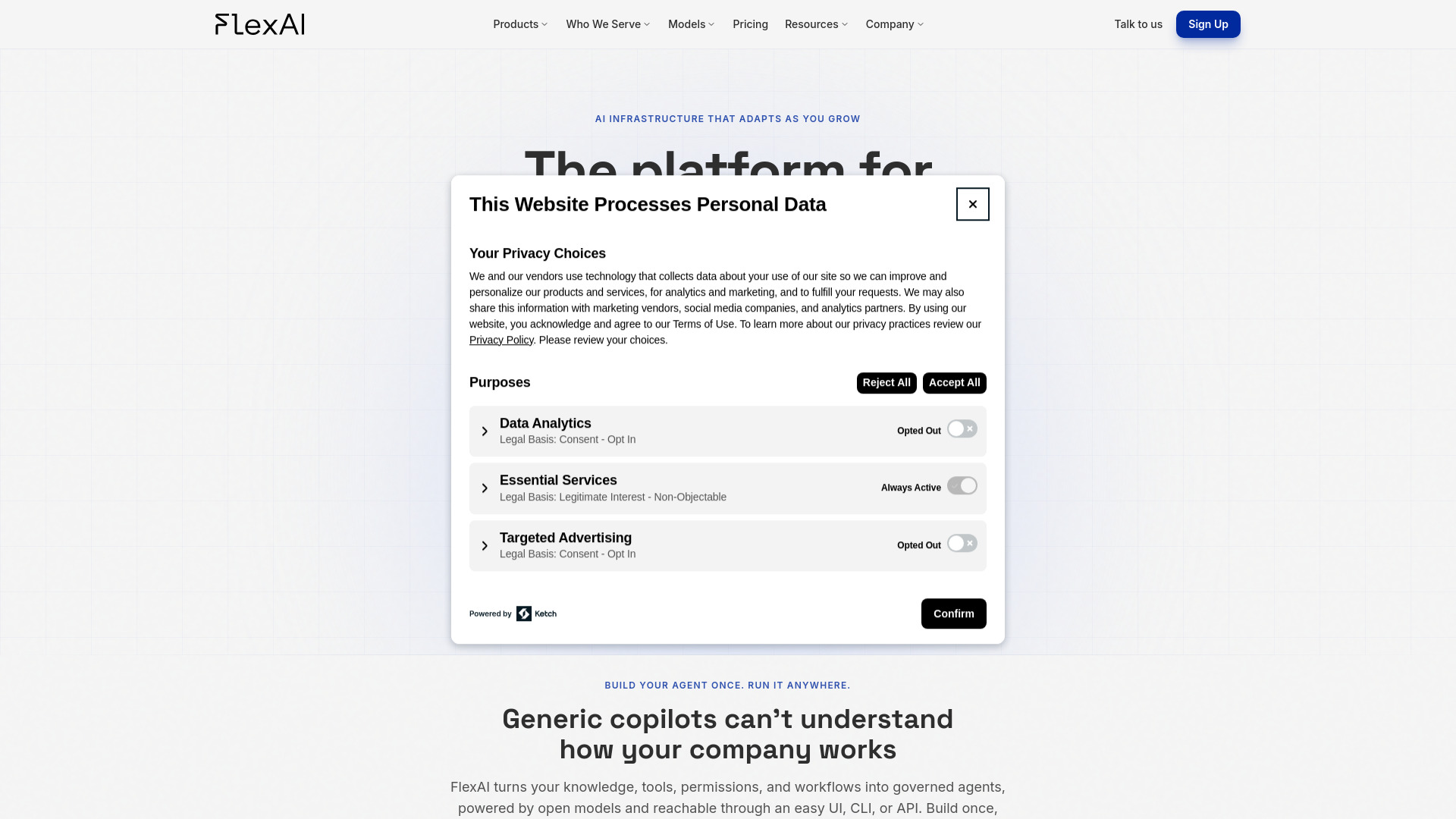
FlexAI

- Open-model agent infrastructure
- $10/month in credits for 3 months
- Starts at From $0.01/M tokens
- Usage signal: 38.7K
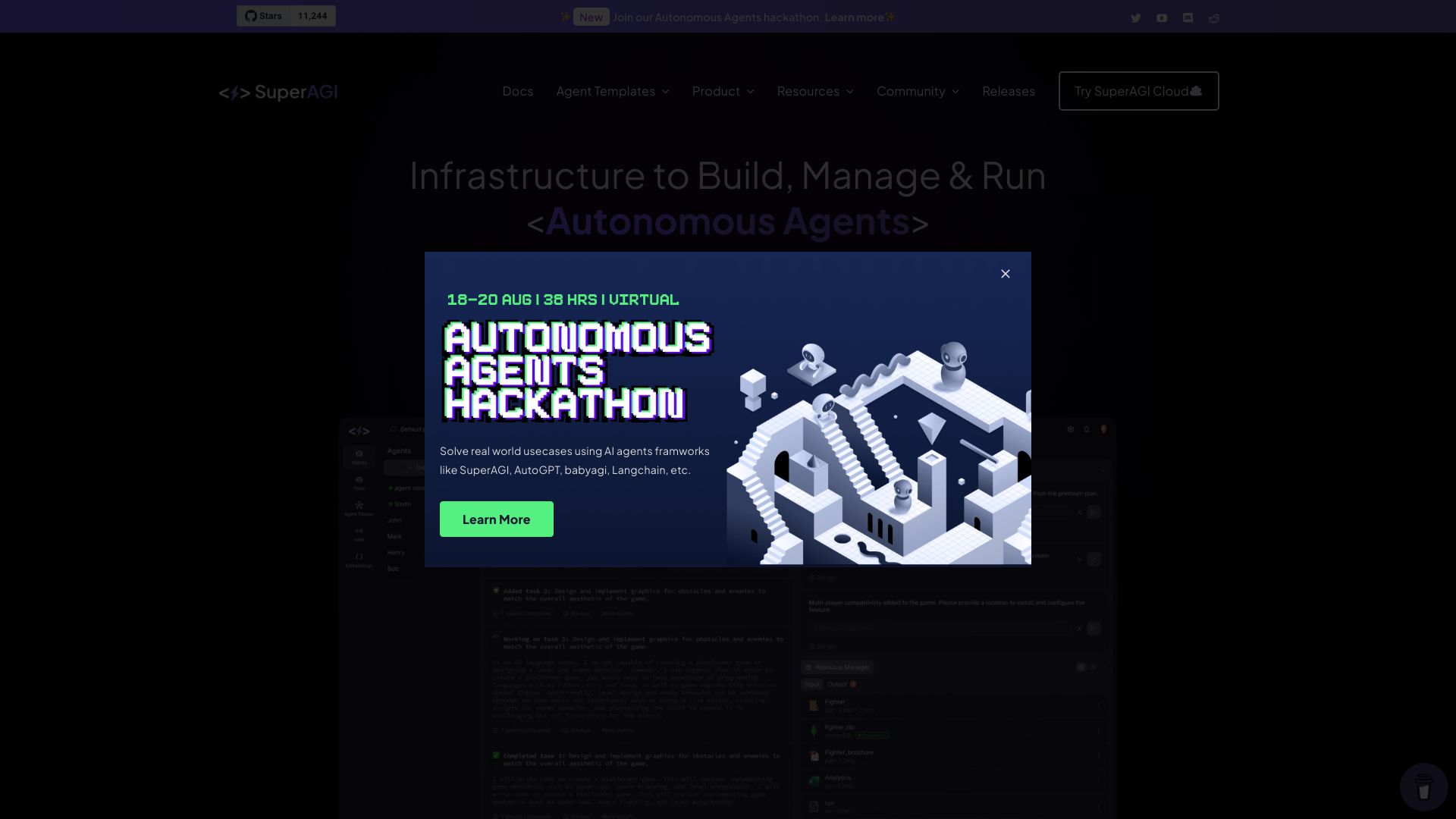
SuperAGI

- Developers building autonomous agents
- Starts at Check vendor pricing
- Usage signal: 27.3K
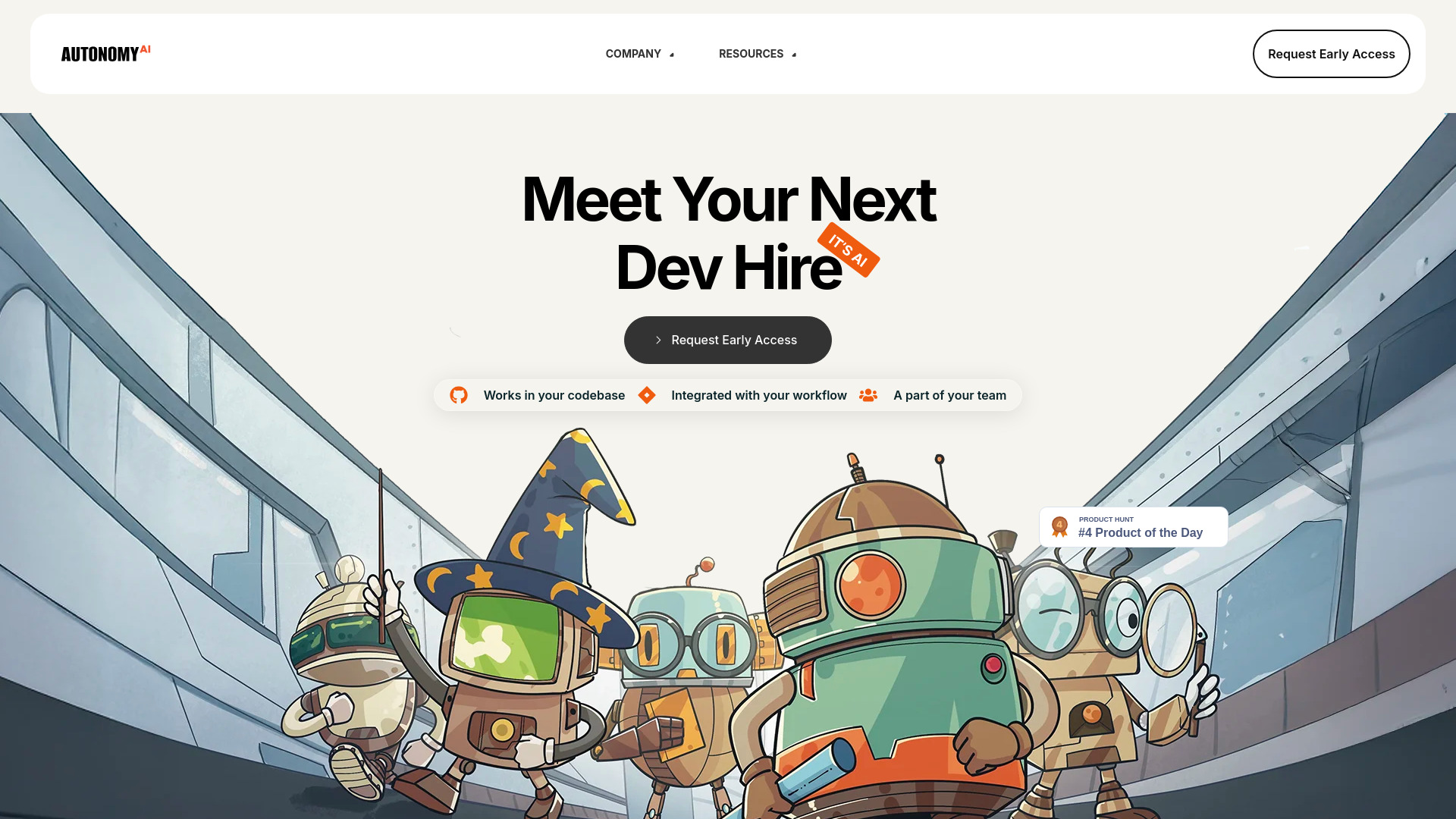
Autonomy AI

- Frontend development teams
- Starts at Check vendor pricing
- Usage signal: 12.3K
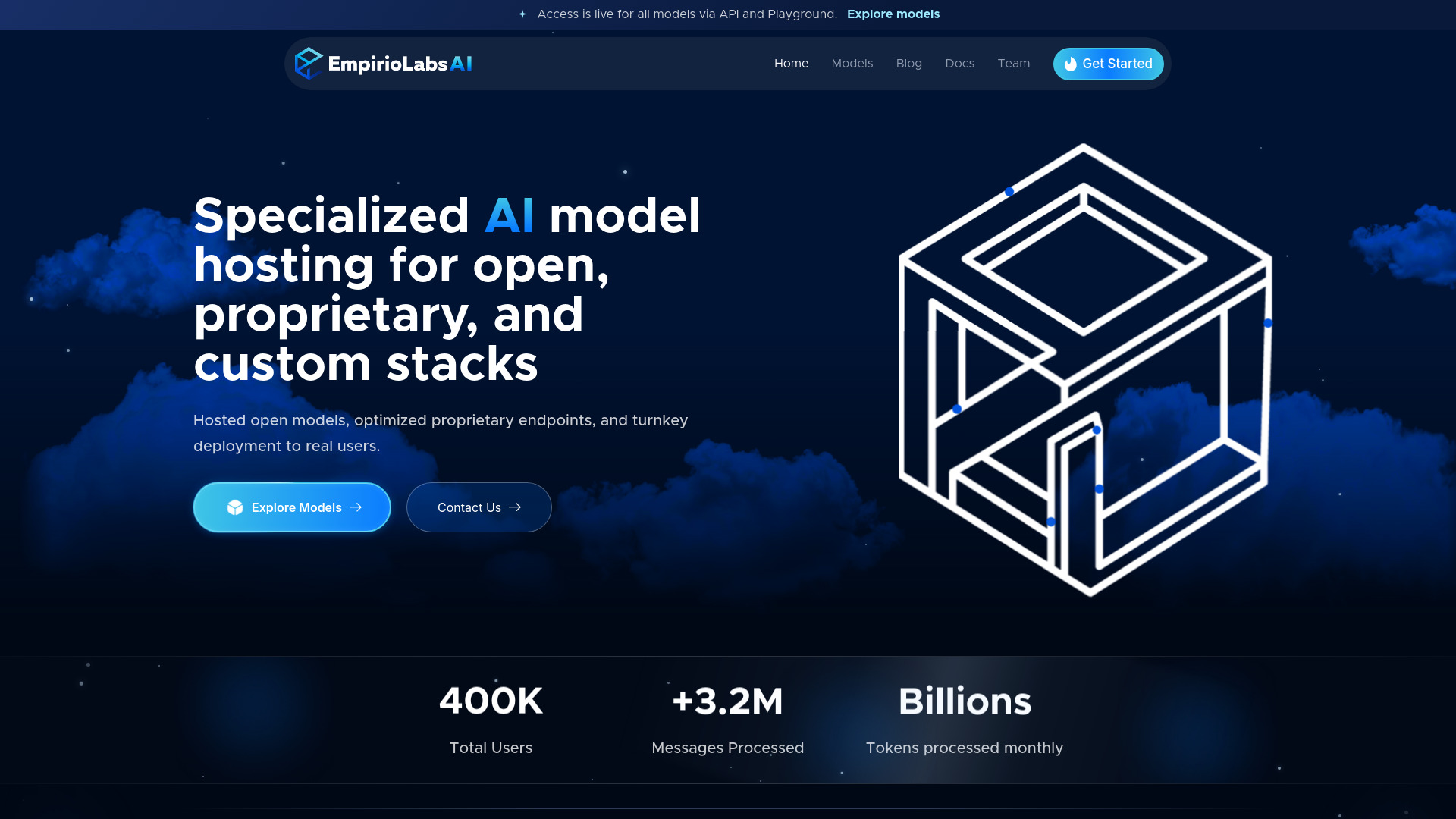
EmpirioLabs AI

- Open and proprietary model hosting
- Starts at From $0.004 per message
- Usage signal: 26.7K
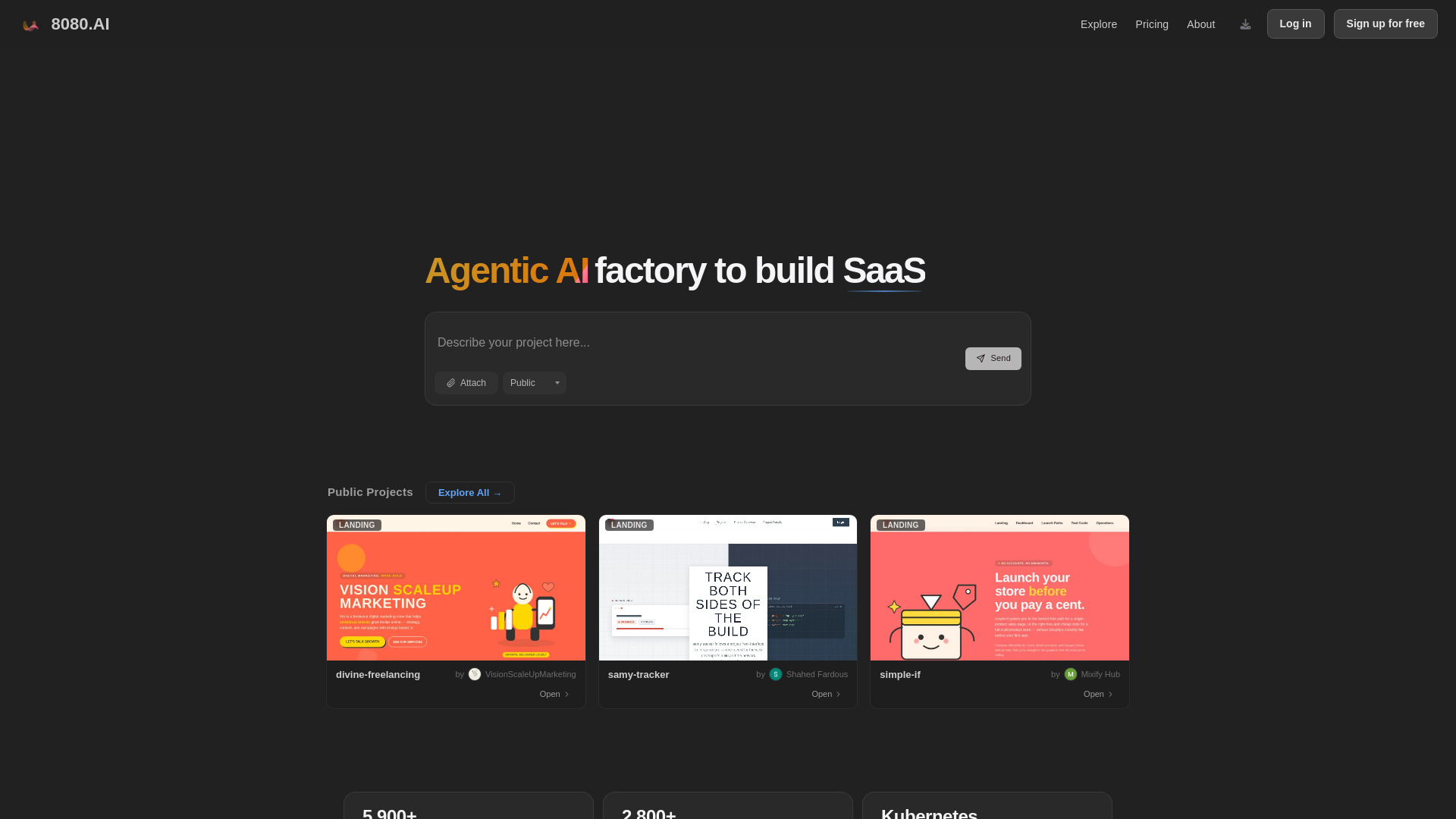
8080.AI

- Production-grade AI app building
- 10 credits on sign-up
- Starts at $4.49/month
- Usage signal: 34.0K
Clean Agent

- AI coding QA and orchestration
- 10 free searches/month
- Starts at $20/month
- Usage signal: 18.4K
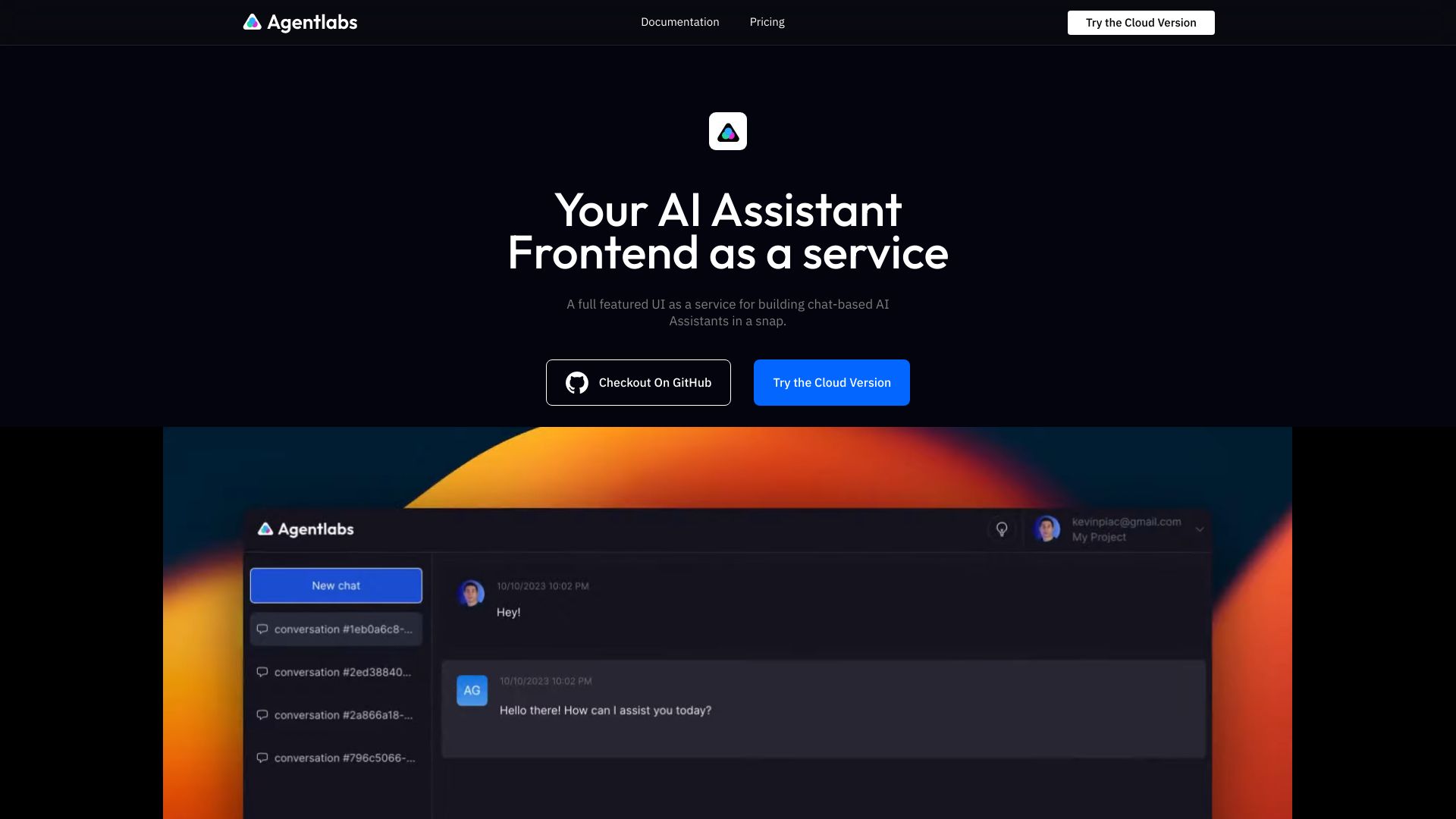
AgentLabs
- Open-source AI assistant frontends
- Starts at Check vendor pricing
- Usage signal: 2.6K
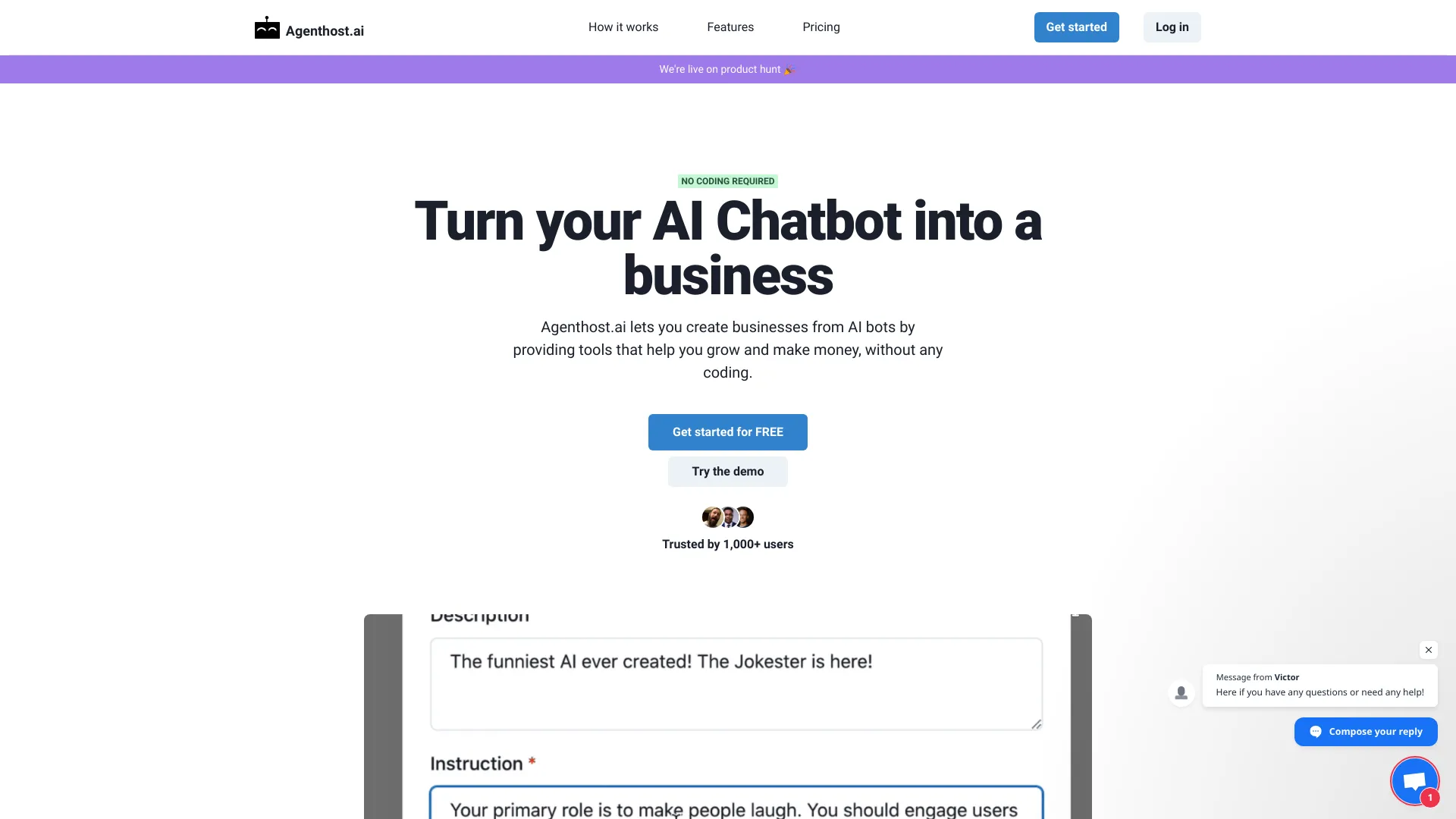
Agenthost
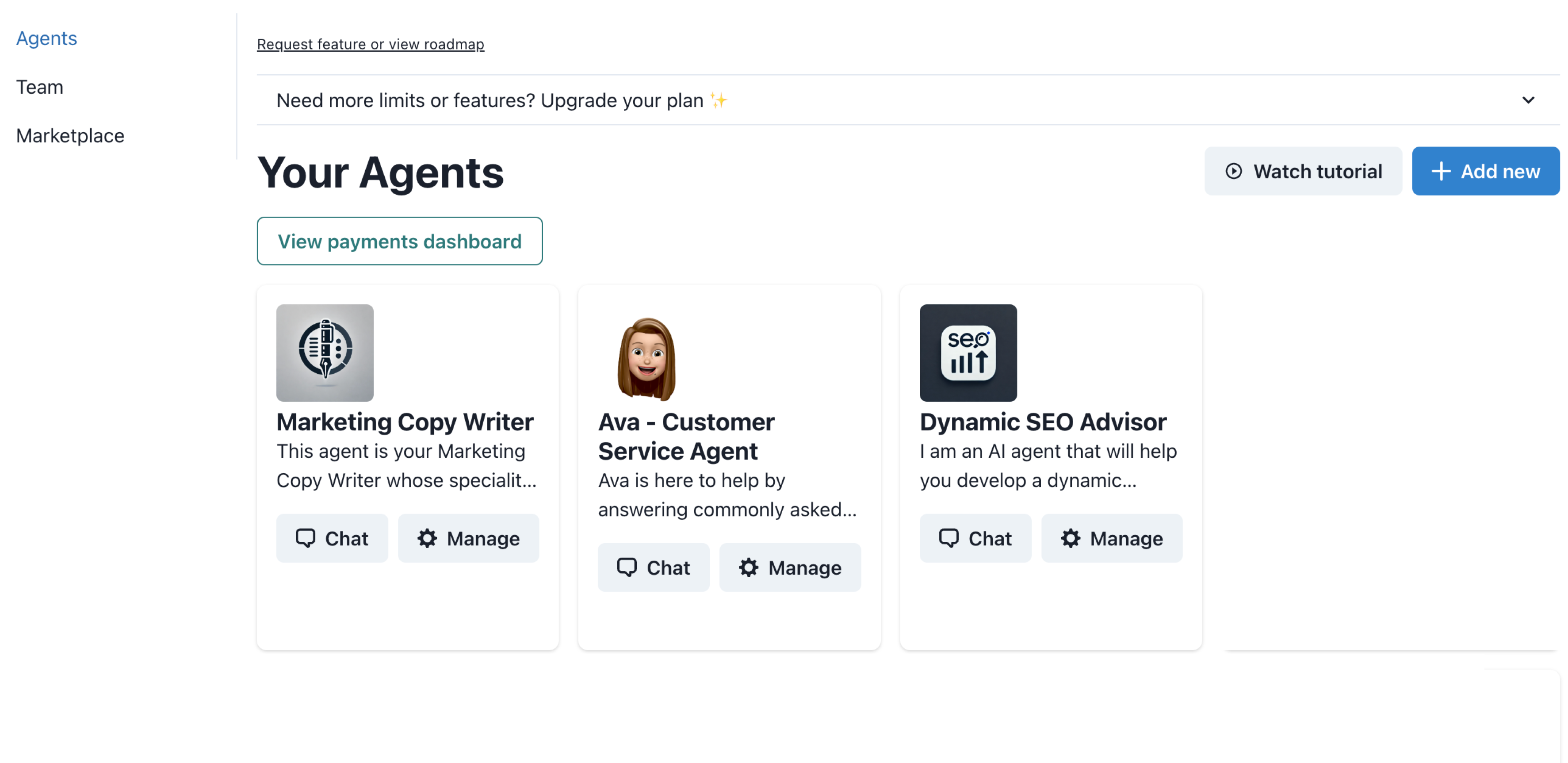
- No-code AI agent monetization
- 50 message credits/month
- Starts at $29.99/month
- Usage signal: 13.3K
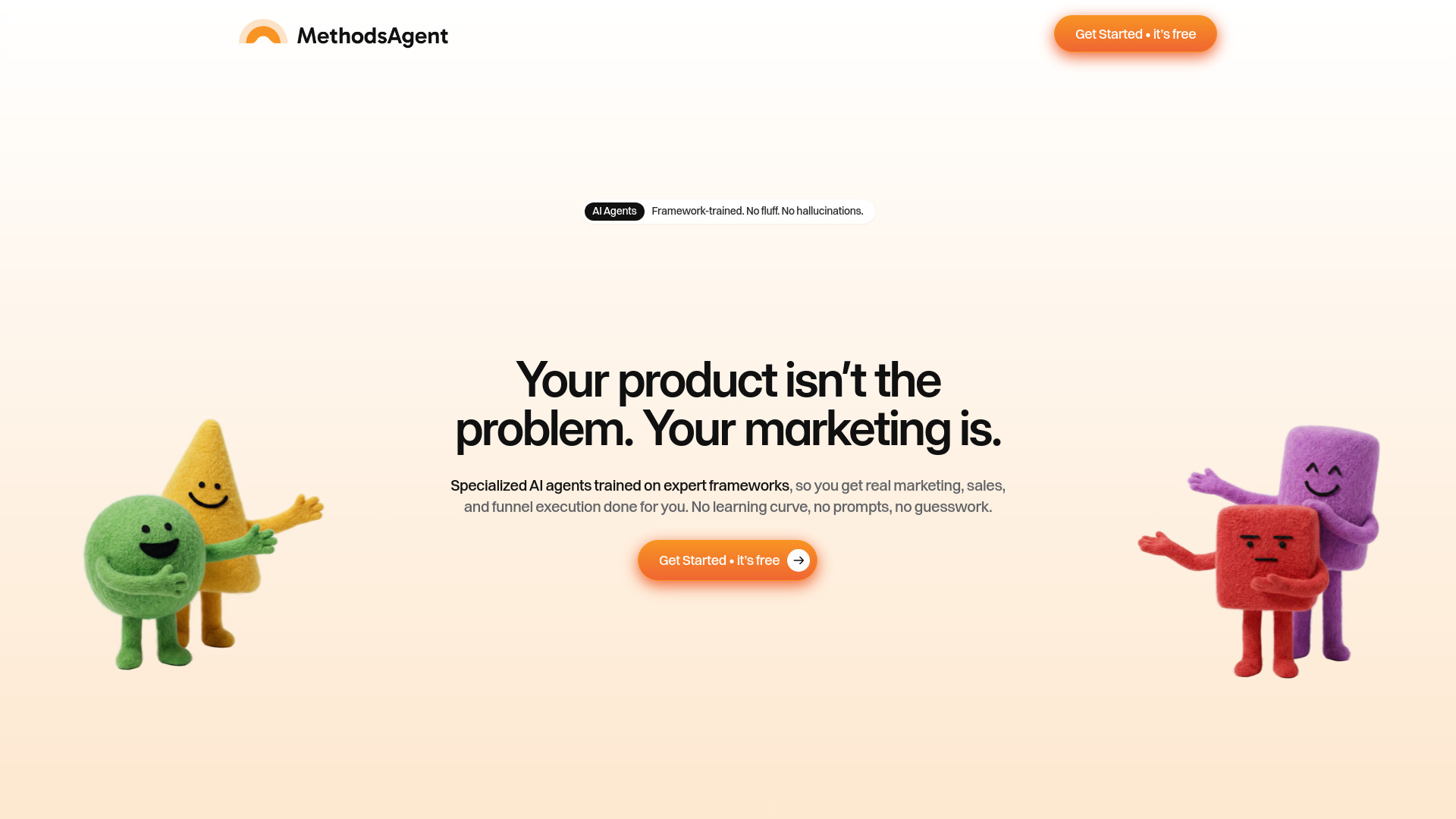
MethodsAgent

- Framework-based marketing and sales guidance
- Free plan available
- Starts at Check vendor pricing
- Usage signal: 459
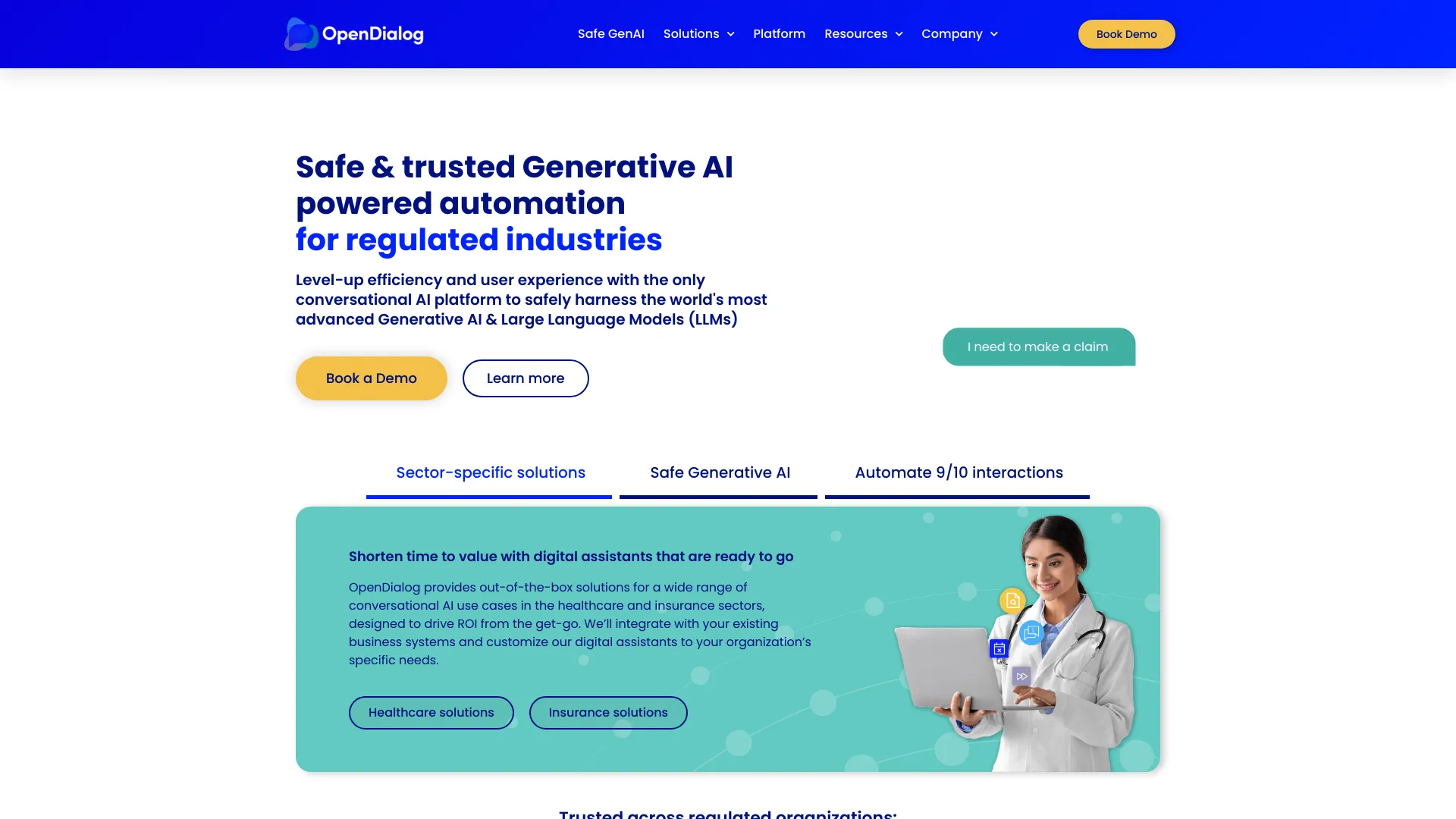
OpenDialog

- Regulated industries building AI agents
- Free plan available
- Starts at Check vendor pricing
- Usage signal: 4.5K
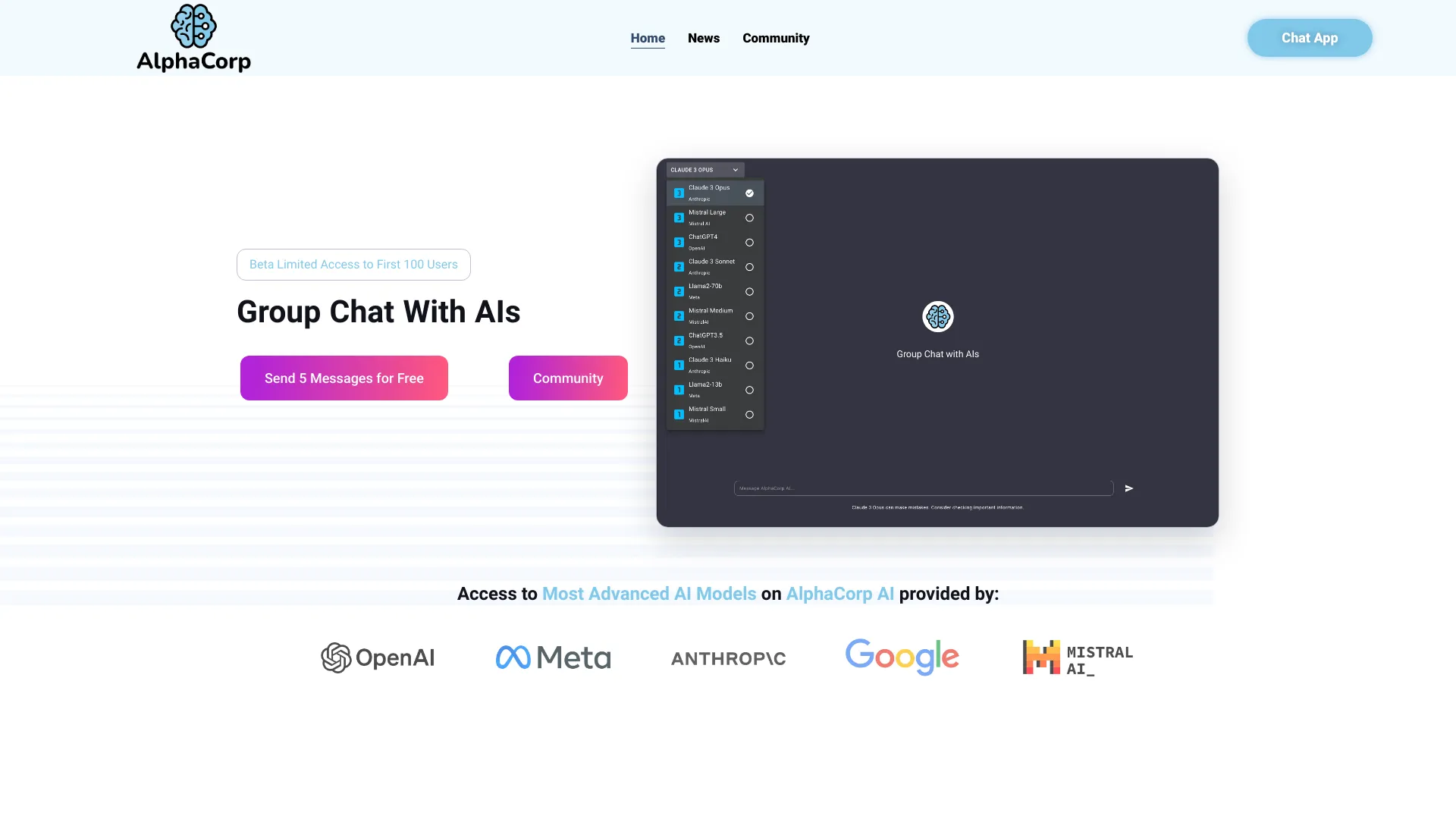
AlphaCorp AI

- Multi-model AI comparisons
- Starts at Check vendor pricing
- Usage signal: 8.2K
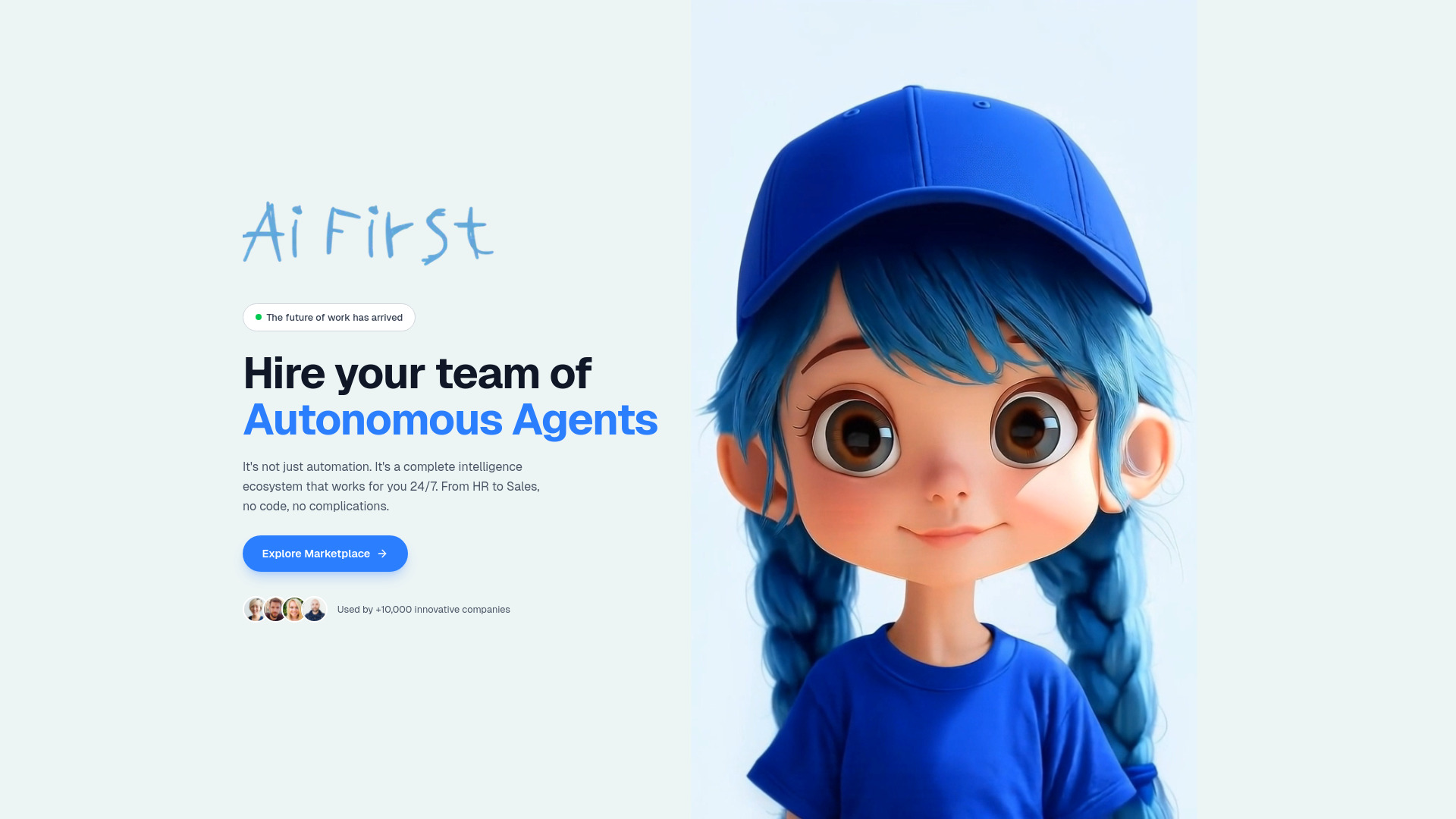
AI FIRST

- Autonomous agent creation
- Starts at Check vendor pricing
- Usage signal: 1.5K
Foundry

- Browser agent evaluation and testing
- Starts at Check vendor pricing
- Usage signal: 2.7K

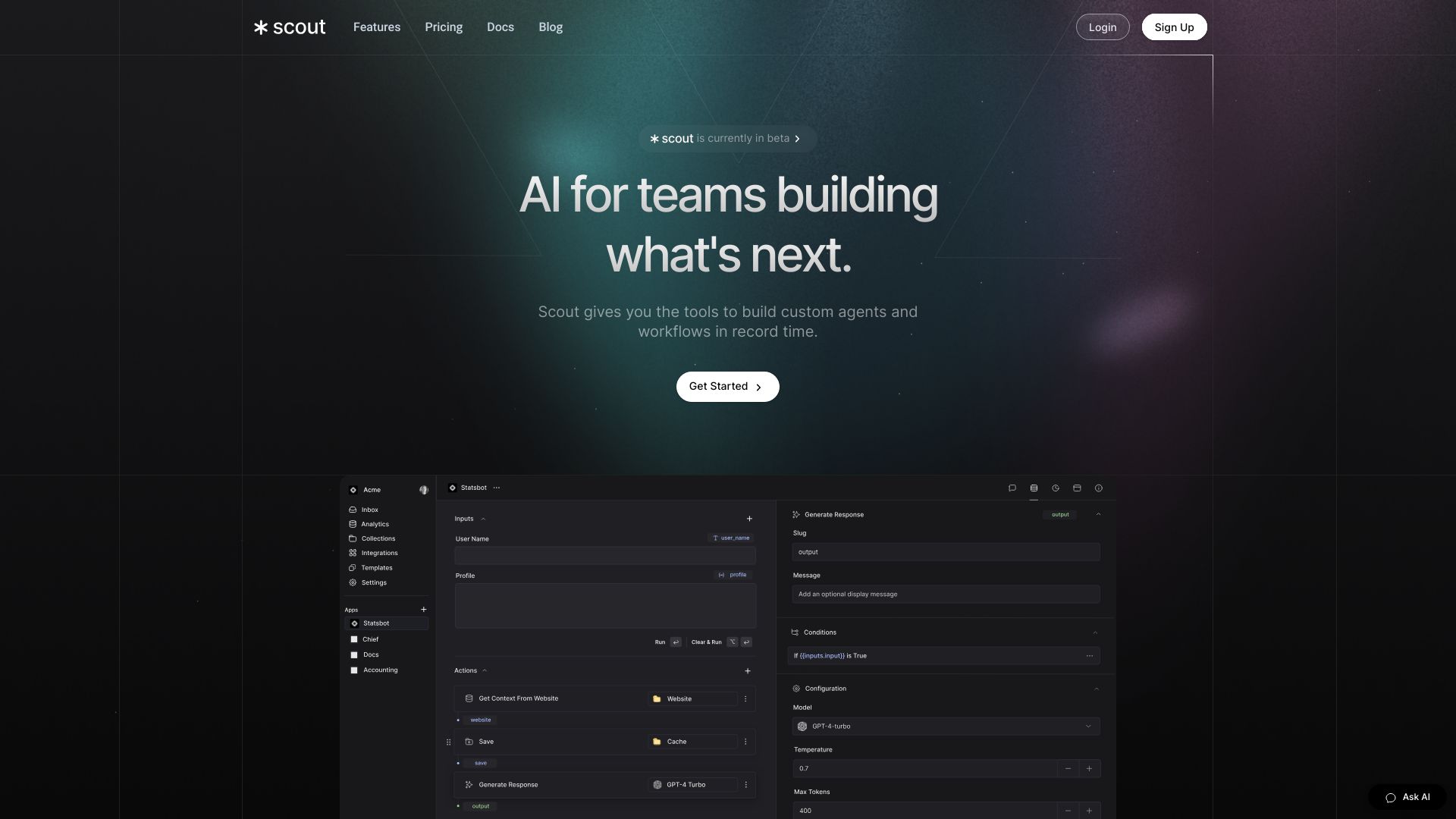
Scout
- Teams scaling AI workflows
- Free plan available
- Starts at Check vendor pricing
- Usage signal: 10.1K
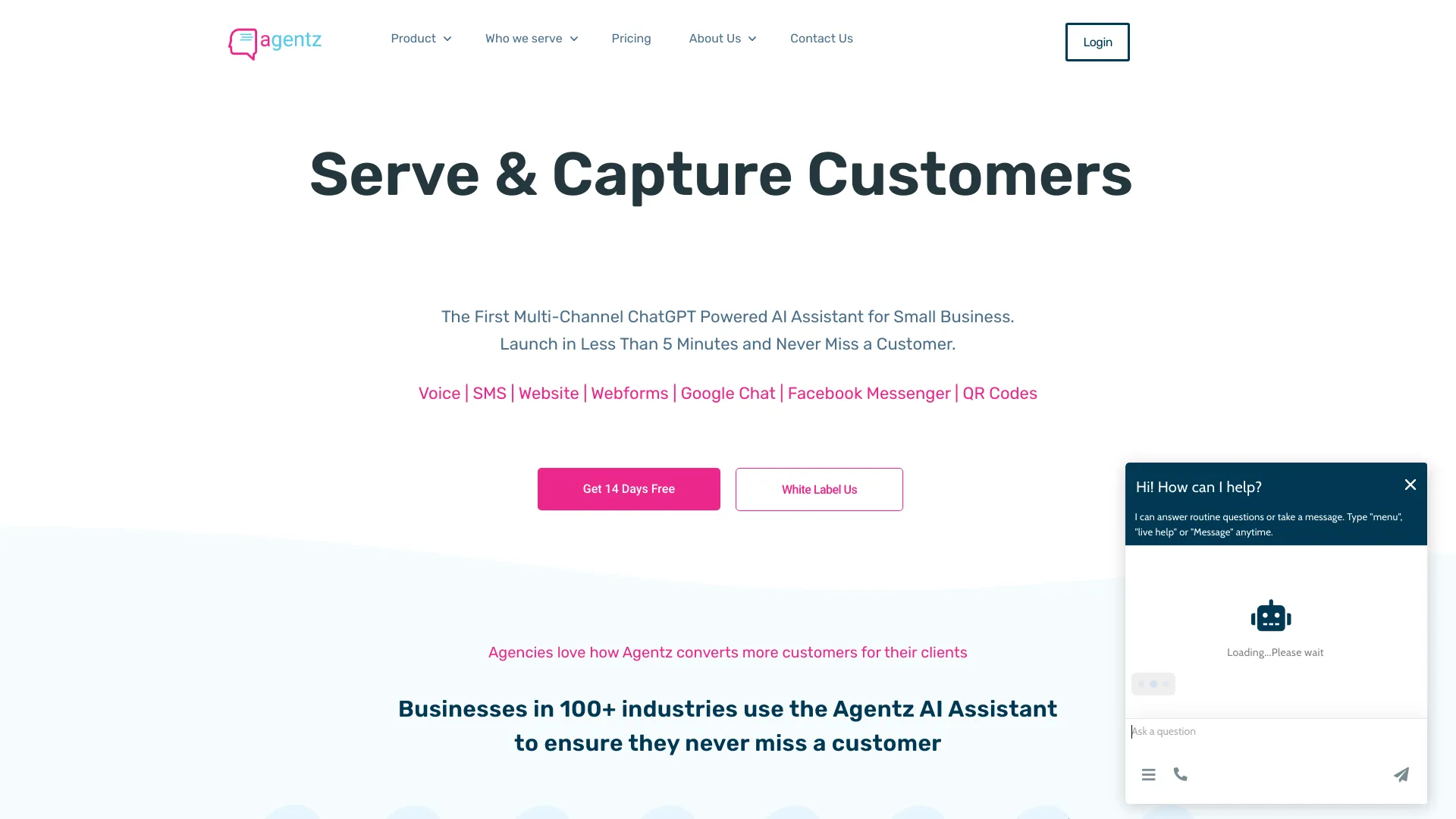
Agentz

- Small-business customer communications
- Free trial available
- Starts at $29/month
- Usage signal: 2.9K
Zams

- Enterprise back-office automation
- Starts at Check vendor pricing
- Usage signal: 10.1K
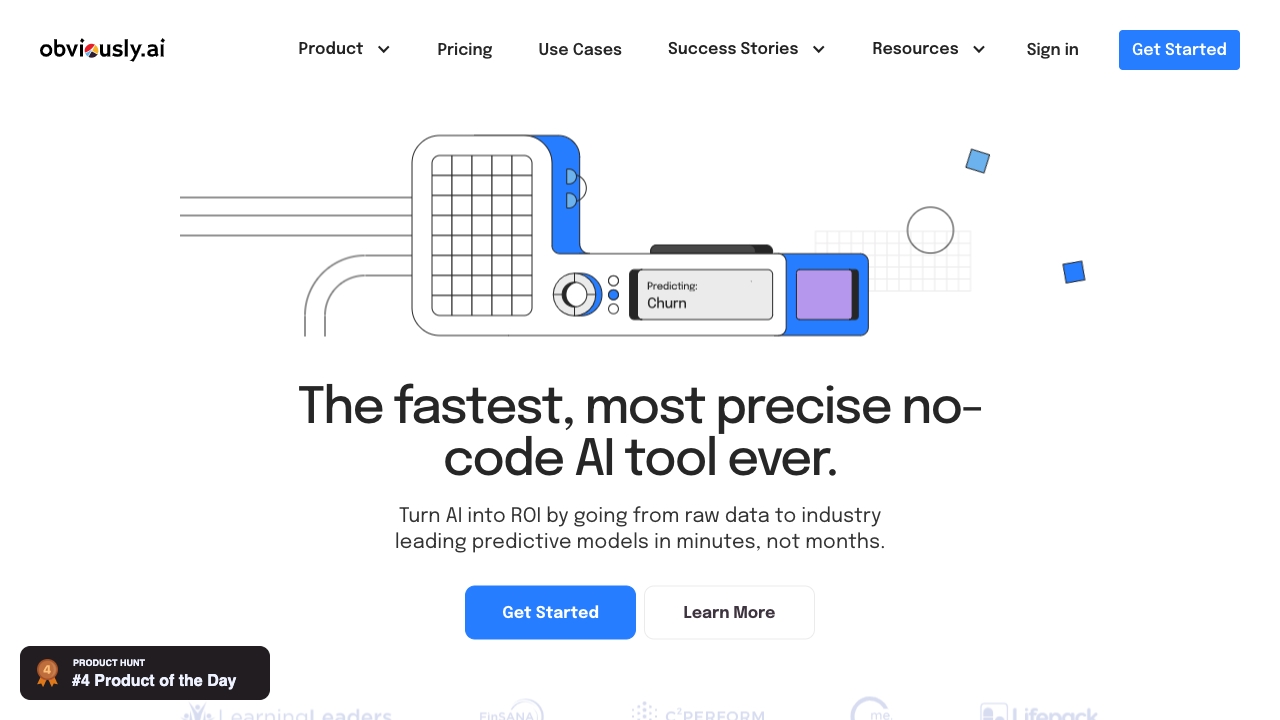
AdsGency AI

- AI-powered multichannel advertising
- Starts at Check vendor pricing
- Usage signal: 6.1K
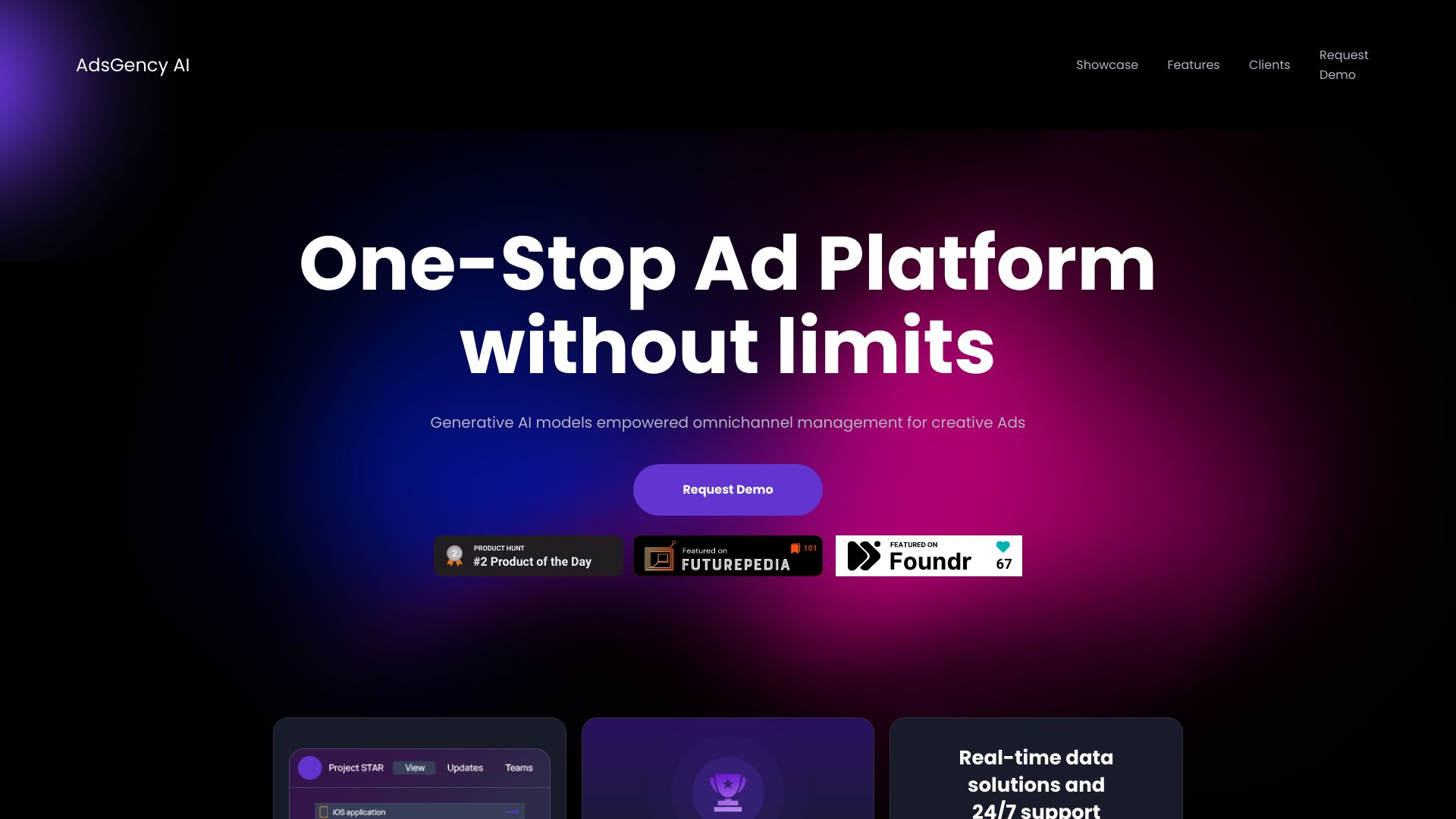
Dabe

- No-code AI automation across apps
- Free trial available
- Starts at From $15/month
- Usage signal: 3.4K
HeyAgent

- Autonomous agent networking
- Starts at Check vendor pricing
- Usage signal: 1.0K

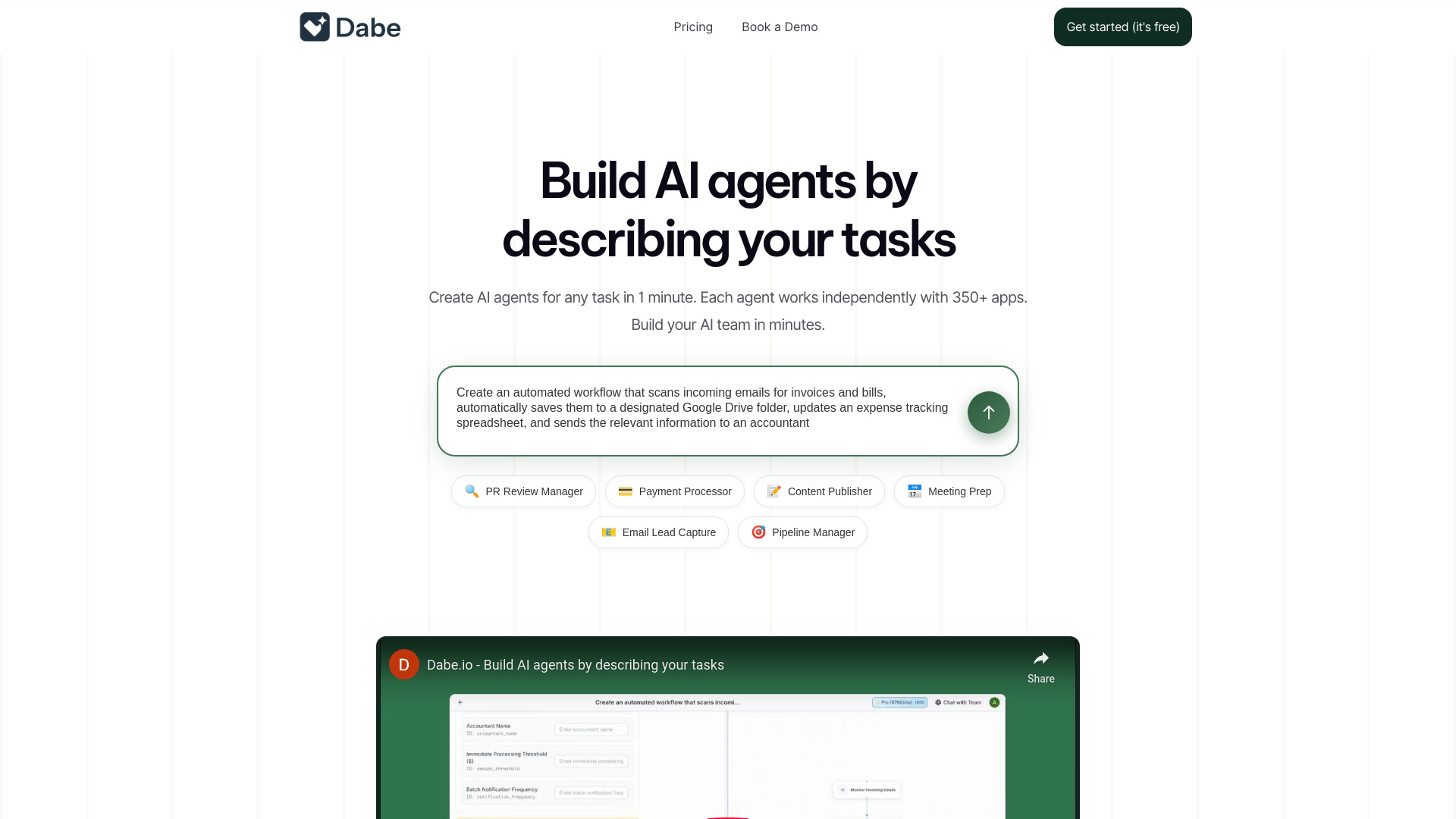
AI Recruiting Agent by CogniAgent

- High-turnover hiring teams
- 5,000 free credits
- Starts at $10 pay-as-you-go
- Usage signal: 2.9K
AI Agents Directory

- Discovering and comparing AI agent tools
- 3 dofollow links
- Starts at $0
- Usage signal: 1.3K
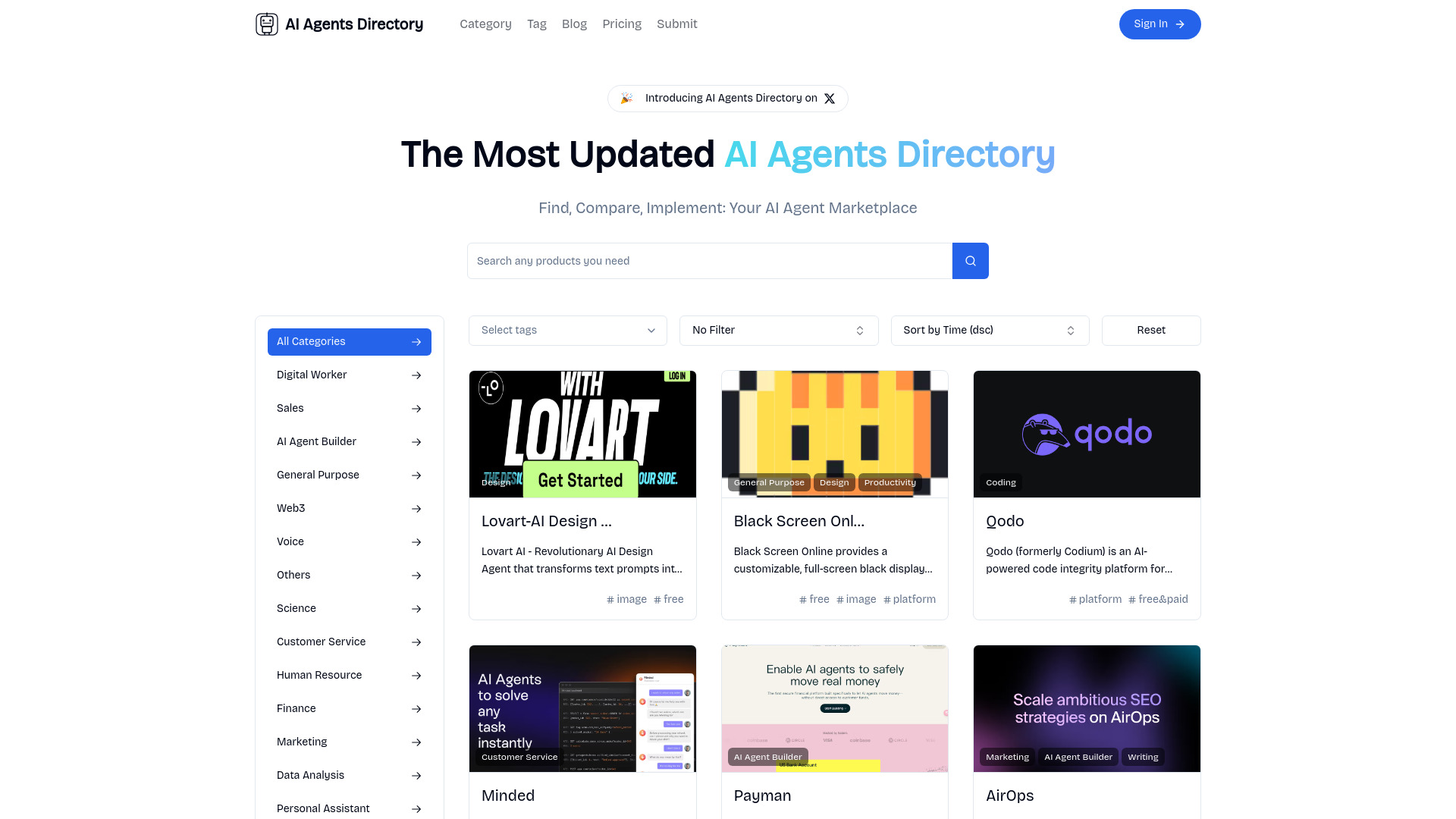
GenFuse AI

- No-code AI agent teams
- Free trial available
- Starts at Check vendor pricing
- Usage signal: 5.0K
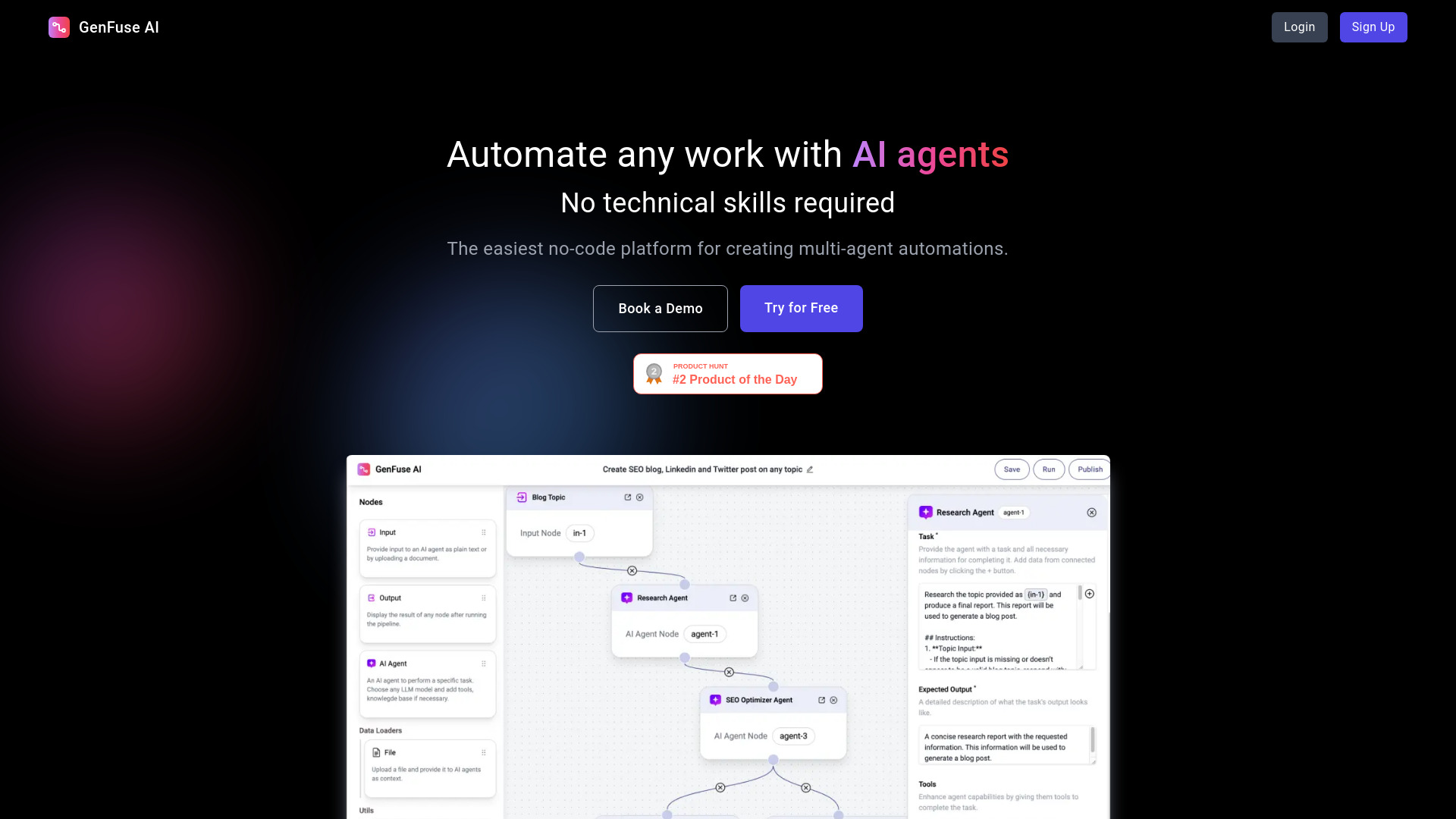
Powered_by Agency

- Custom AI agents for SMB workflows
- Starts at Check vendor pricing
- Usage signal: 1.6K
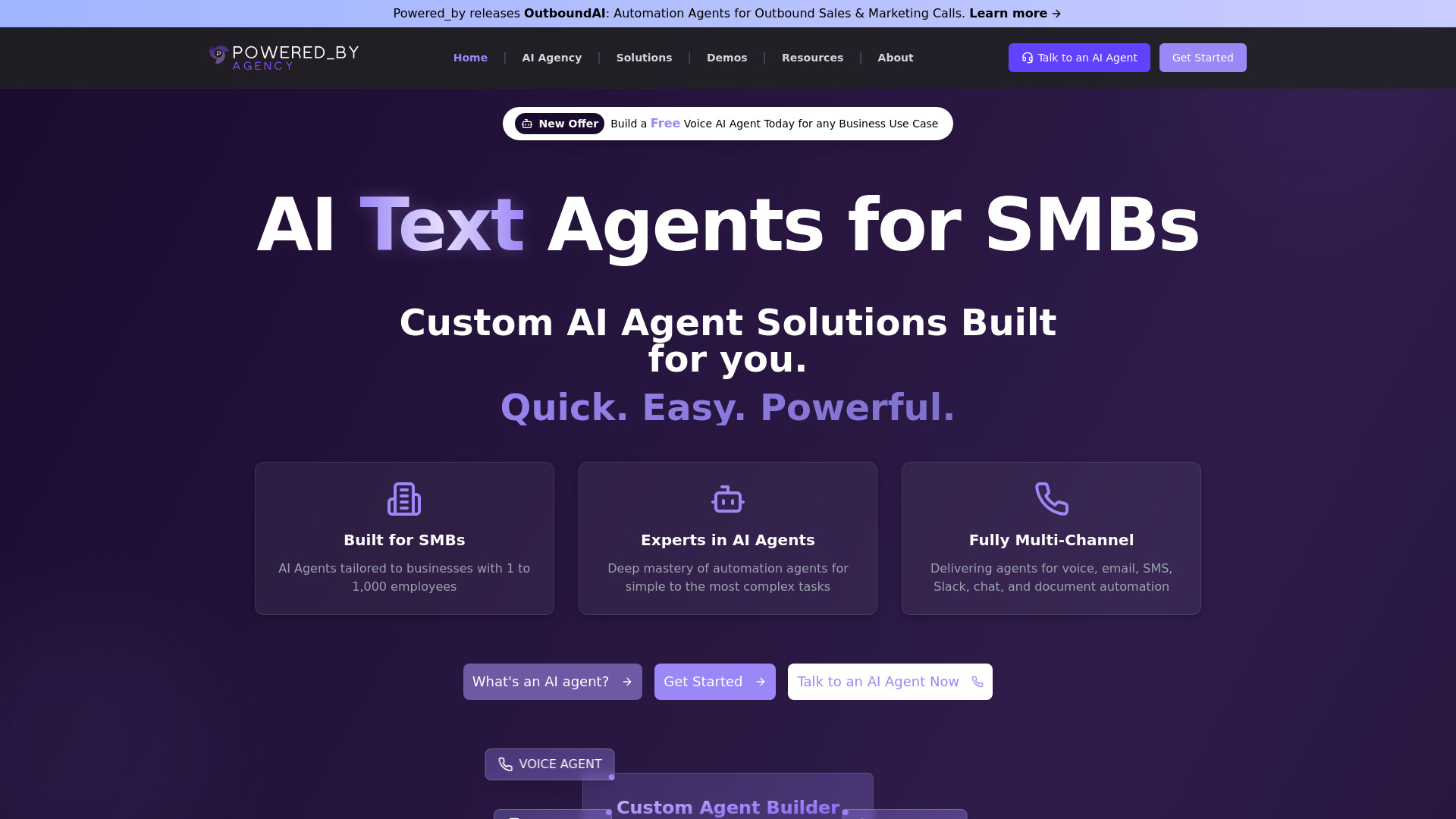
GenWorlds

- Developers building multi-agent systems
- Starts at Check vendor pricing
- Usage signal: 2.9K
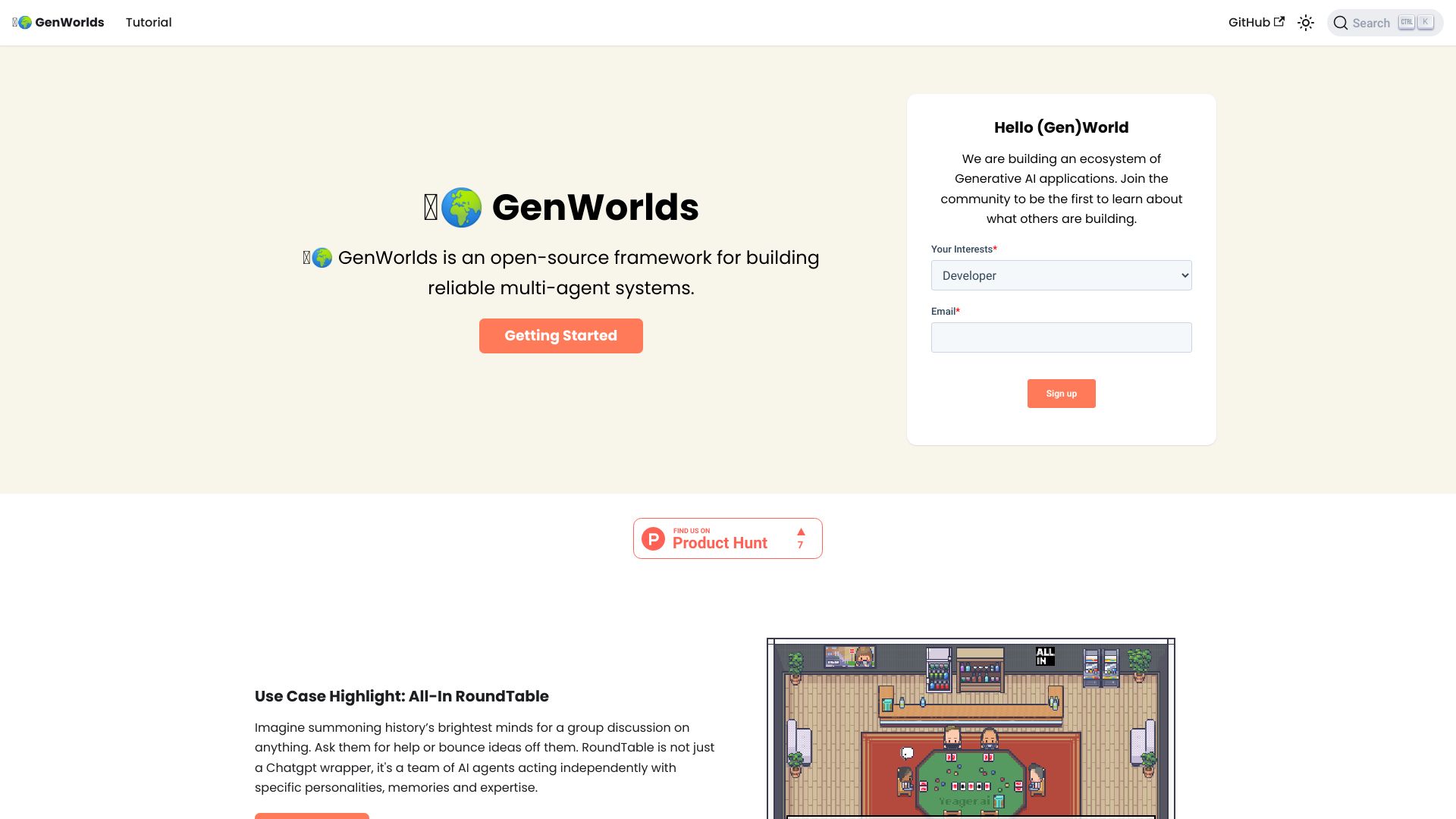
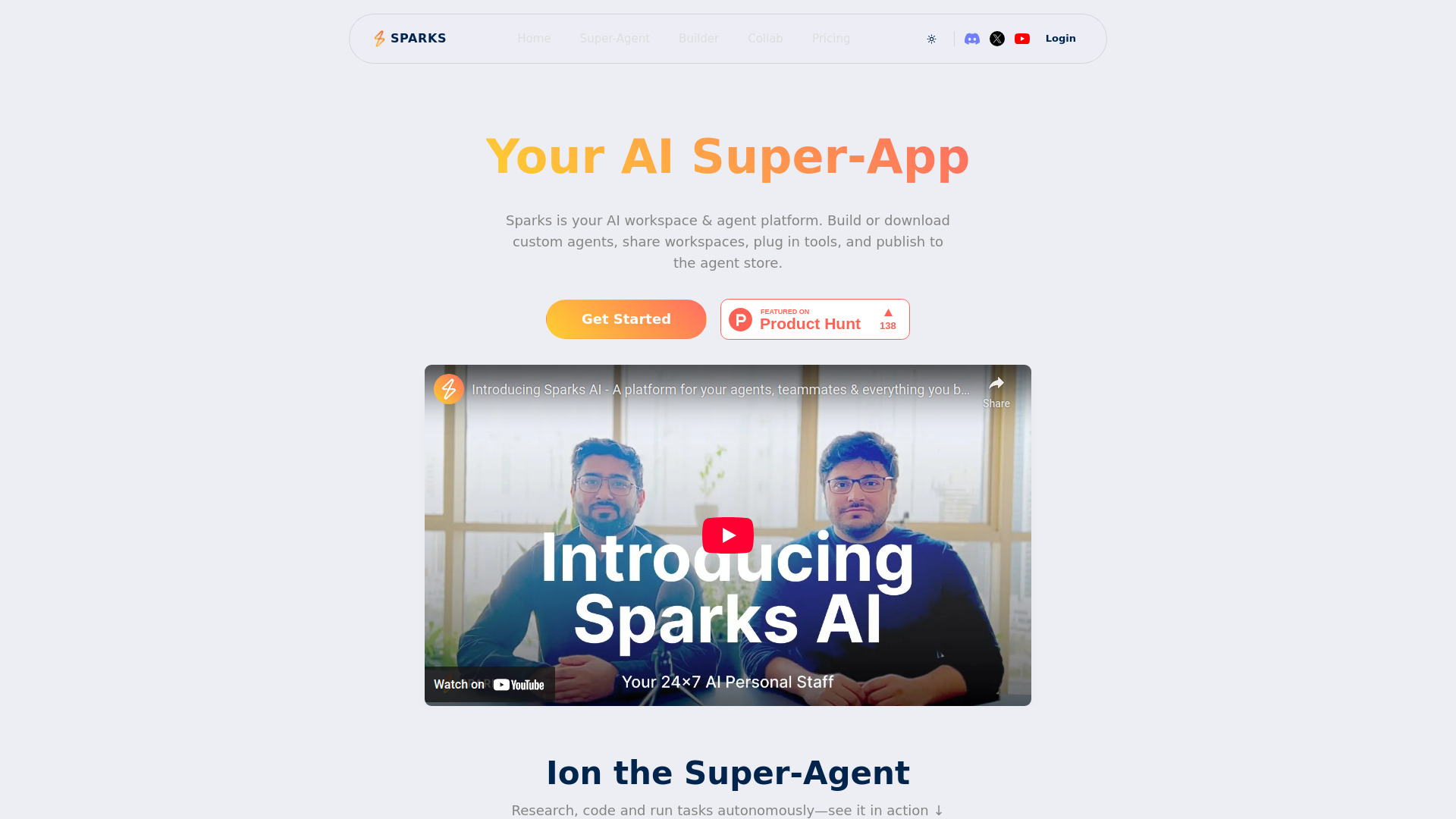
Sparks AI

- No-code AI agent teams
- Starts at $20/month
- Usage signal: 2.8K
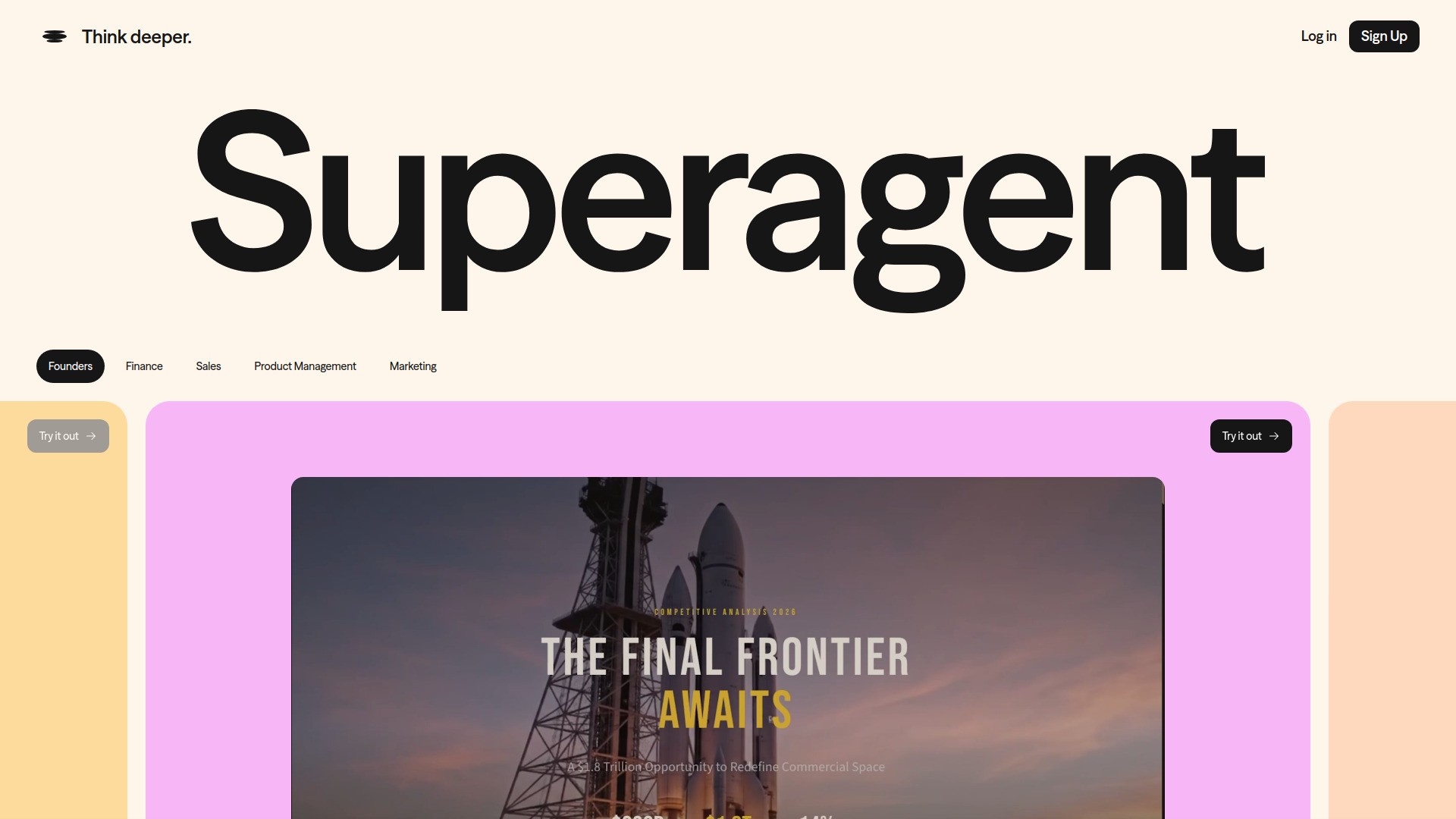
Superagent

- Boardroom-ready business research
- 10 free reports
- Starts at $20/month
- Usage signal: 518
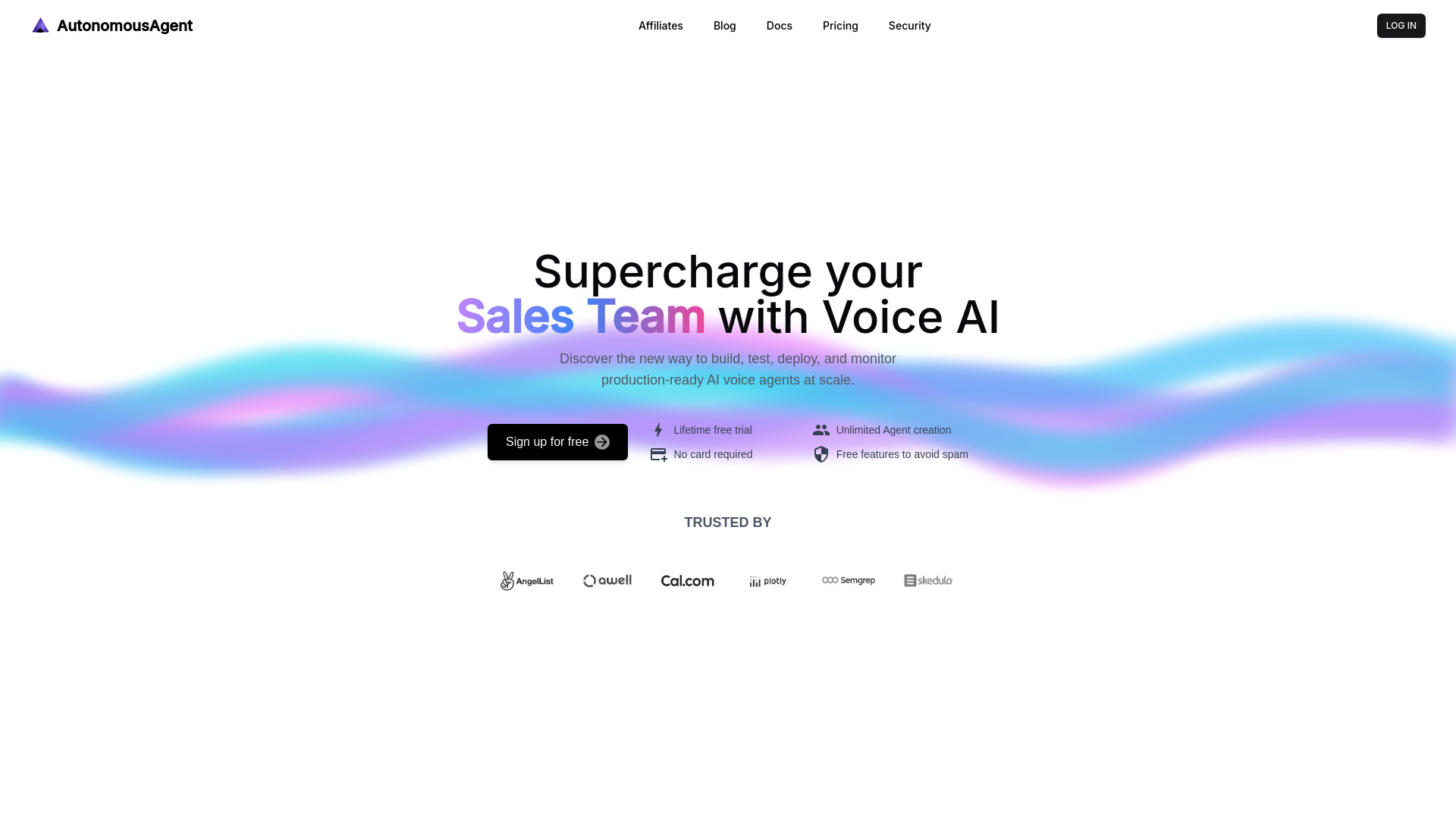
Autonomous Agent

- AI voice call automation
- 60 free minutes
- Starts at From $19/month
- Usage signal: 736
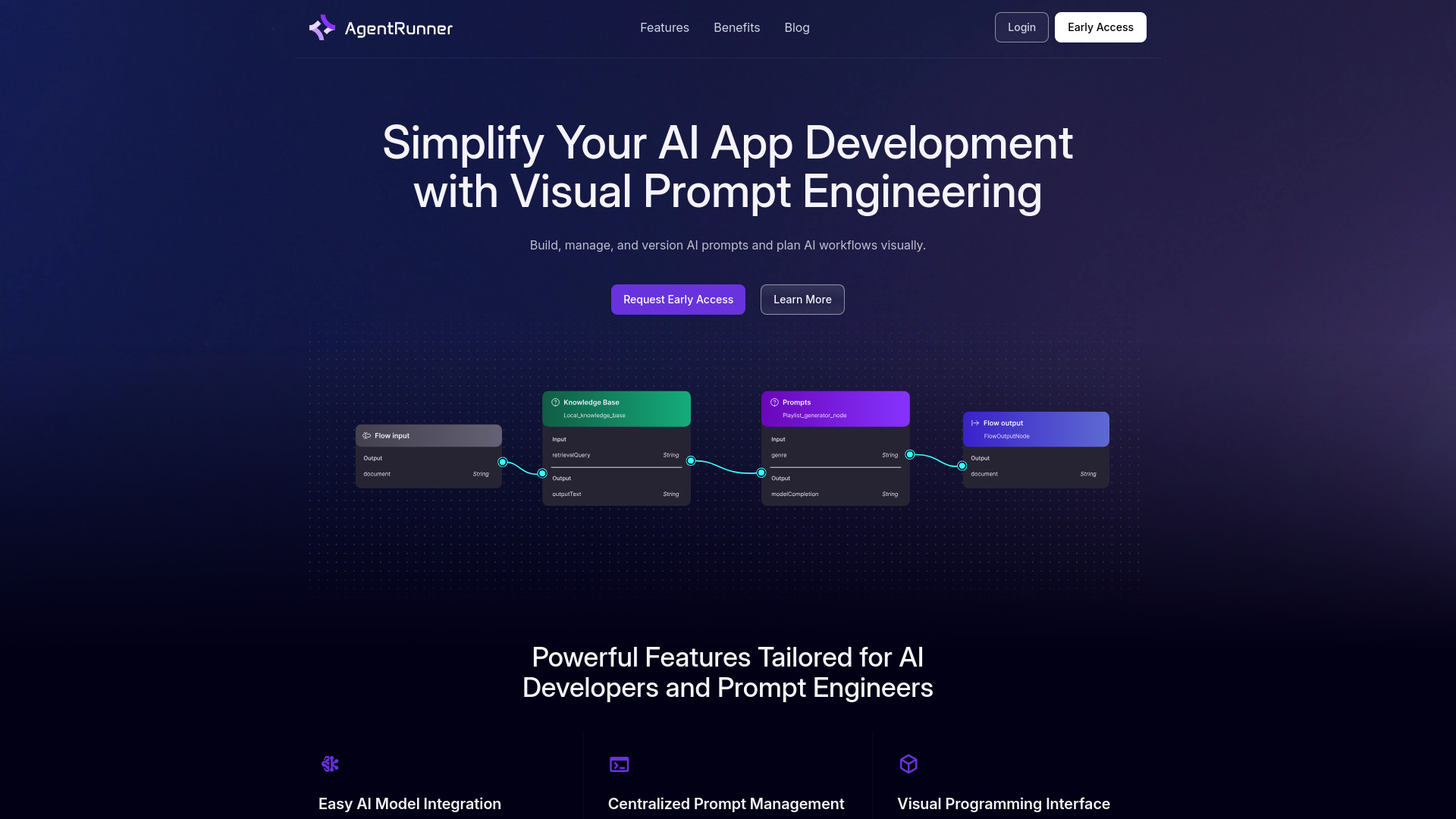
AgentRunner

- Visual prompt engineering teams
- Starts at Check vendor pricing
- Usage signal: 417
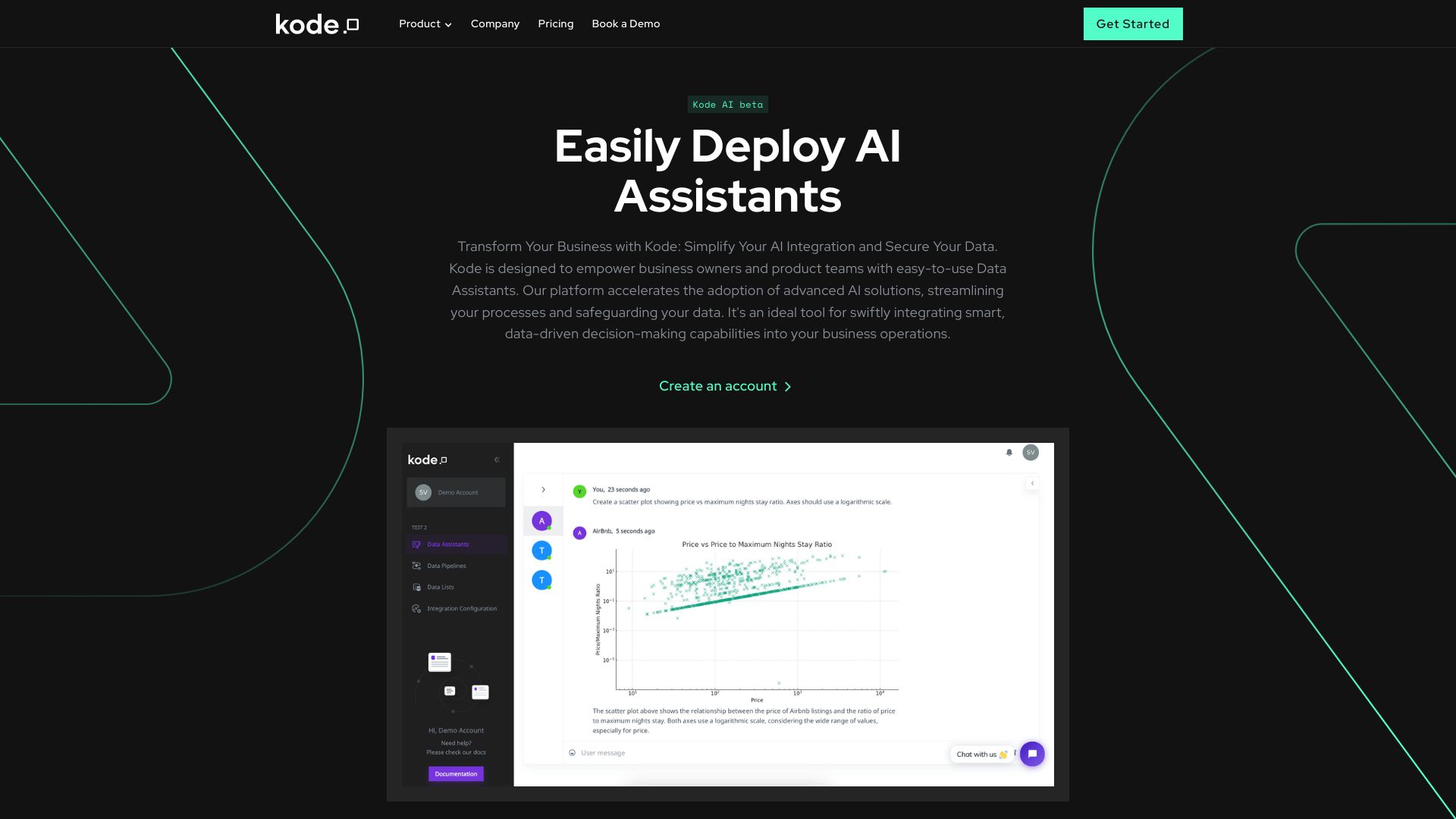
Kode AI

- No-code agentic workflow automation
- 7-day free trial
- Starts at Check vendor pricing
- Usage signal: 1.0K
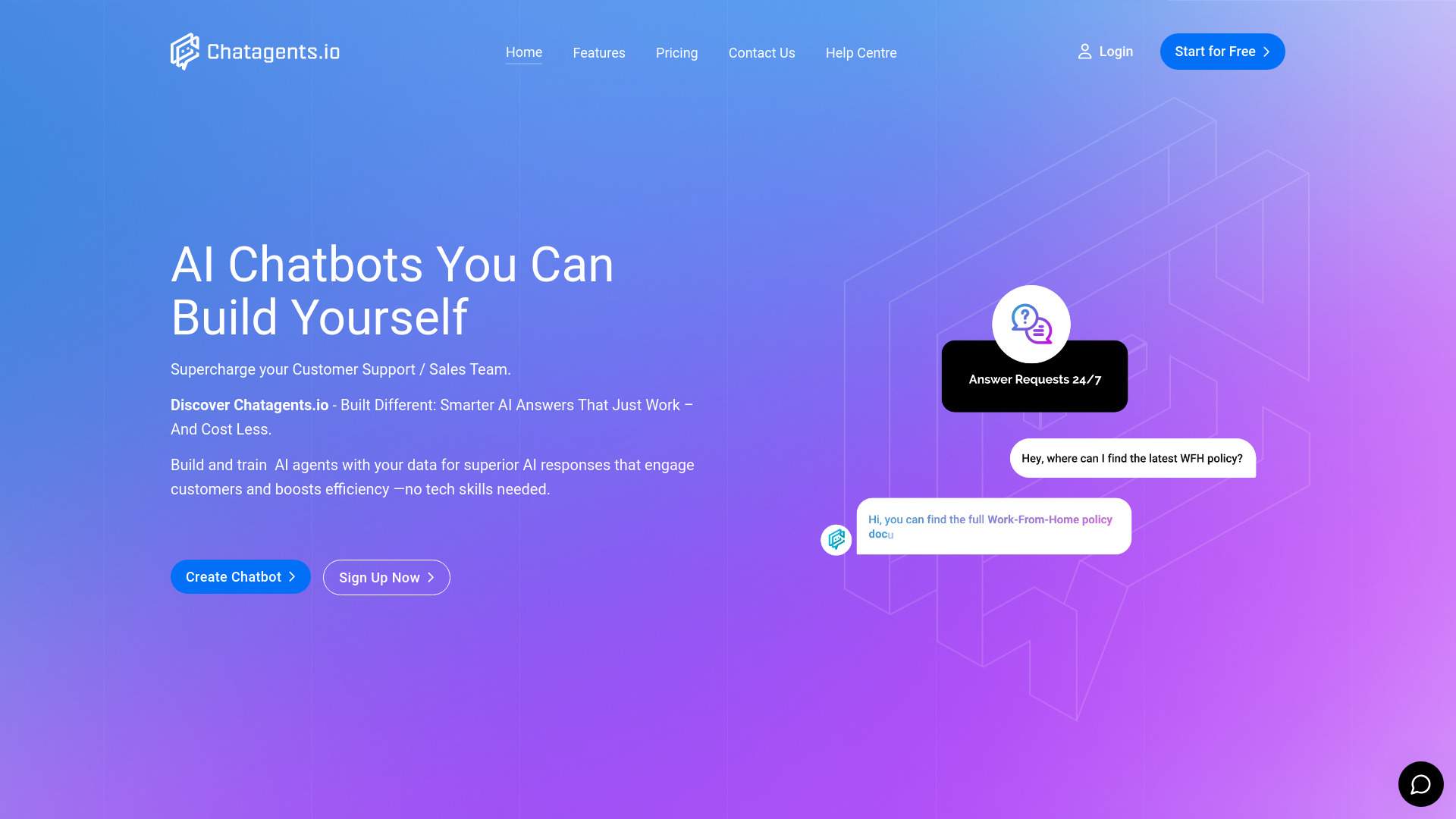
Chat Agents

- No-code customer support agents
- 30 messages/month
- Starts at $0/month
- Usage signal: 486
Agents4Future (A4F)

- Entrepreneurs validating business ideas
- 200 free tokens
- Starts at From US$19
- Usage signal: 145

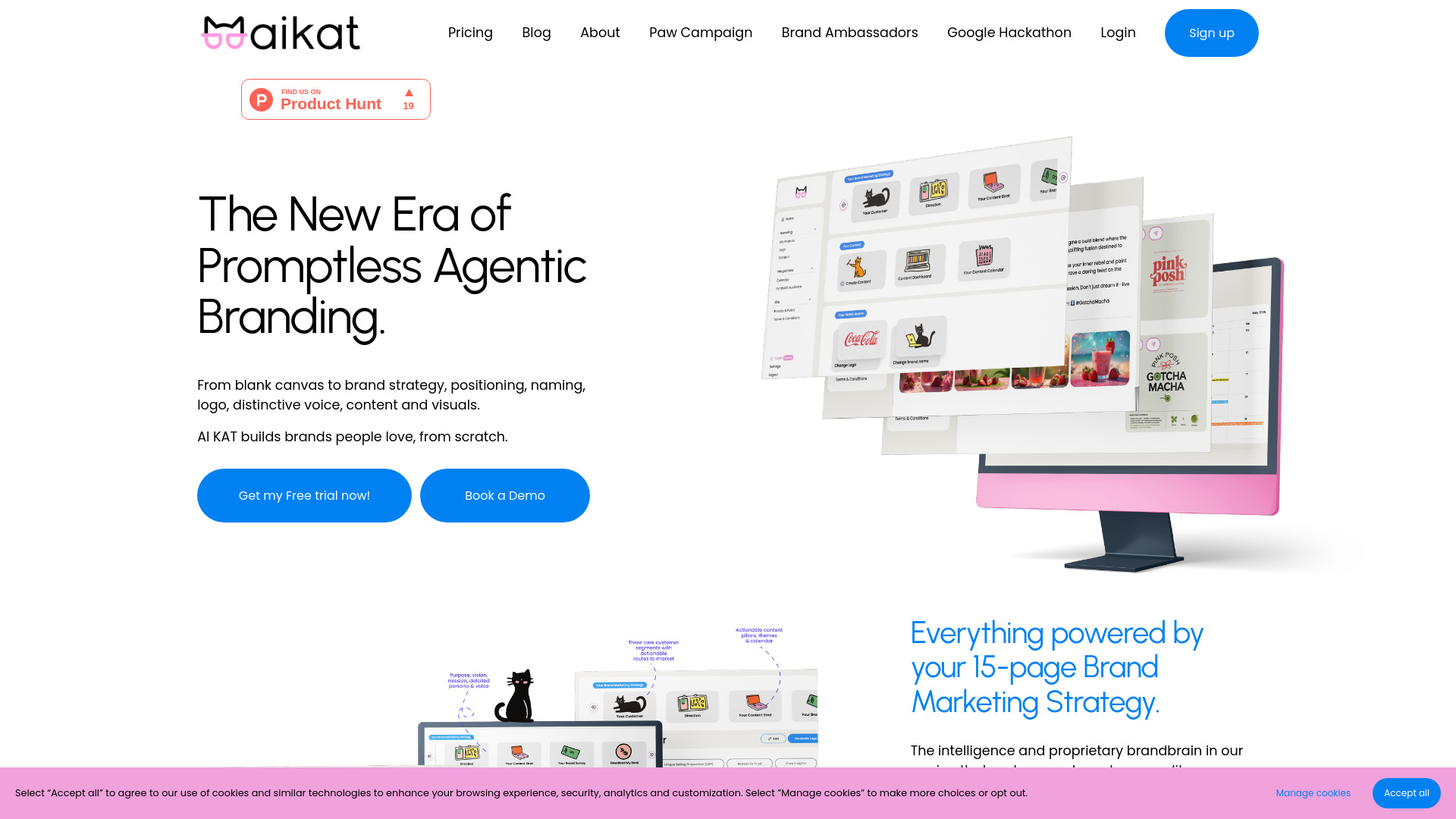
AI KAT

- Promptless brand creation
- 7 free content pieces
- Starts at From £49/user/month
- Usage signal: 468
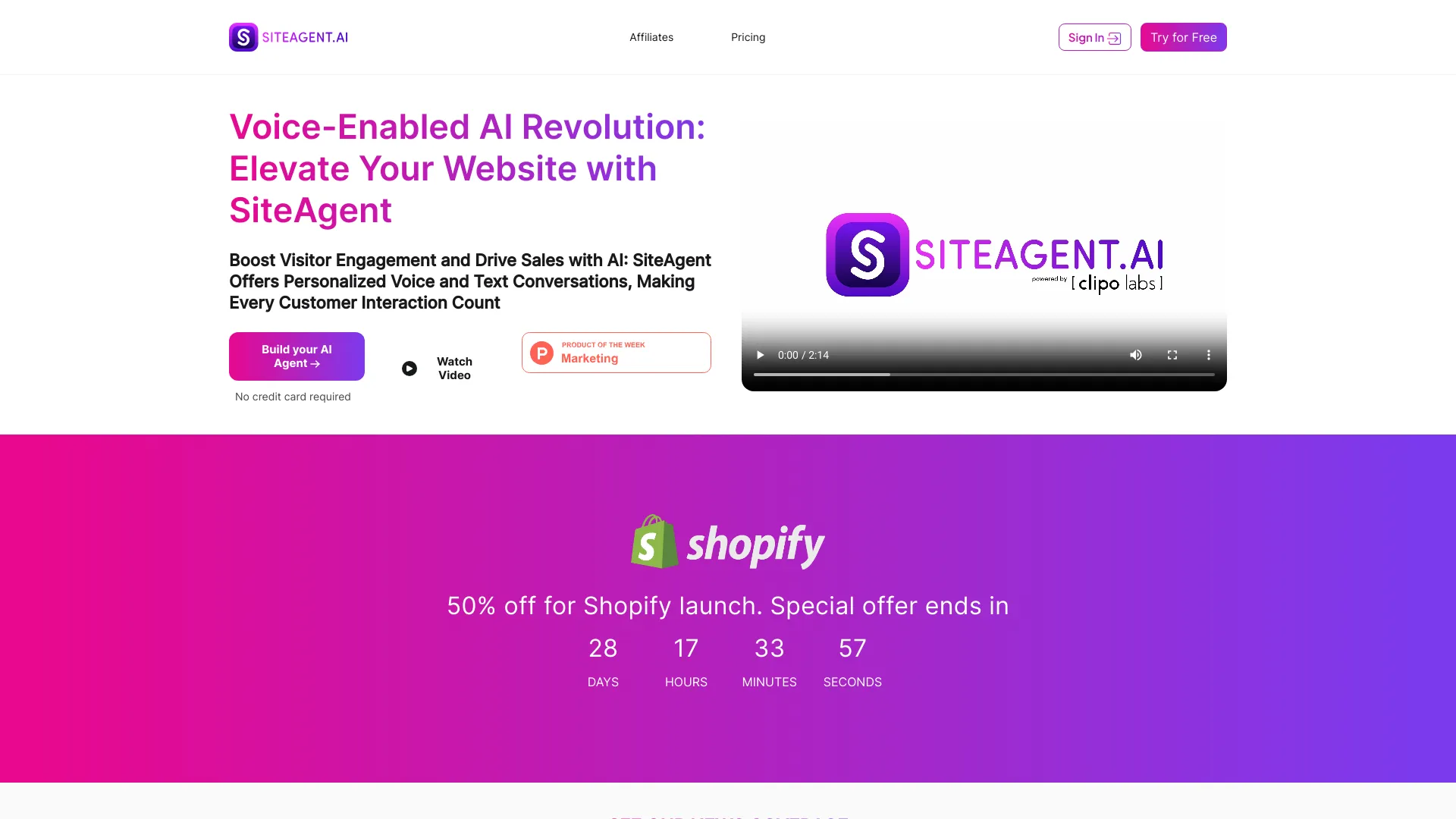
SiteAgent

- Voice AI for customer-facing websites
- 400 messages/month
- Starts at $0/month
- Usage signal: 465
Katalyst AI
- Enterprise sales teams using Salesforce
- 1-month free trial
- Starts at $39/seat/month + platform fee
- Usage signal: 375
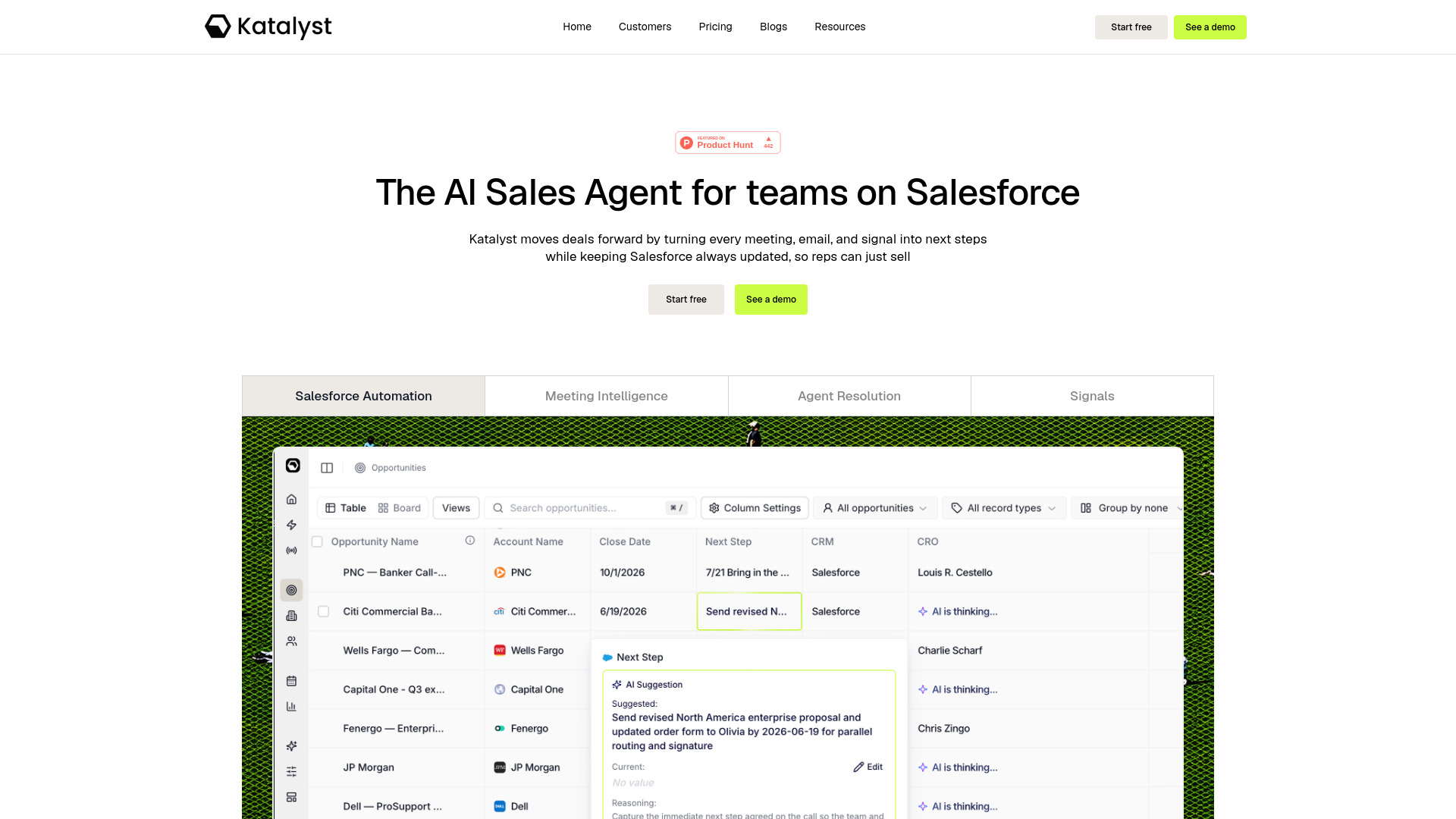
Aida Framework

- Brands seeking AEO and GEO visibility
- Free plan available
- Starts at $99/month
- Usage signal: 0
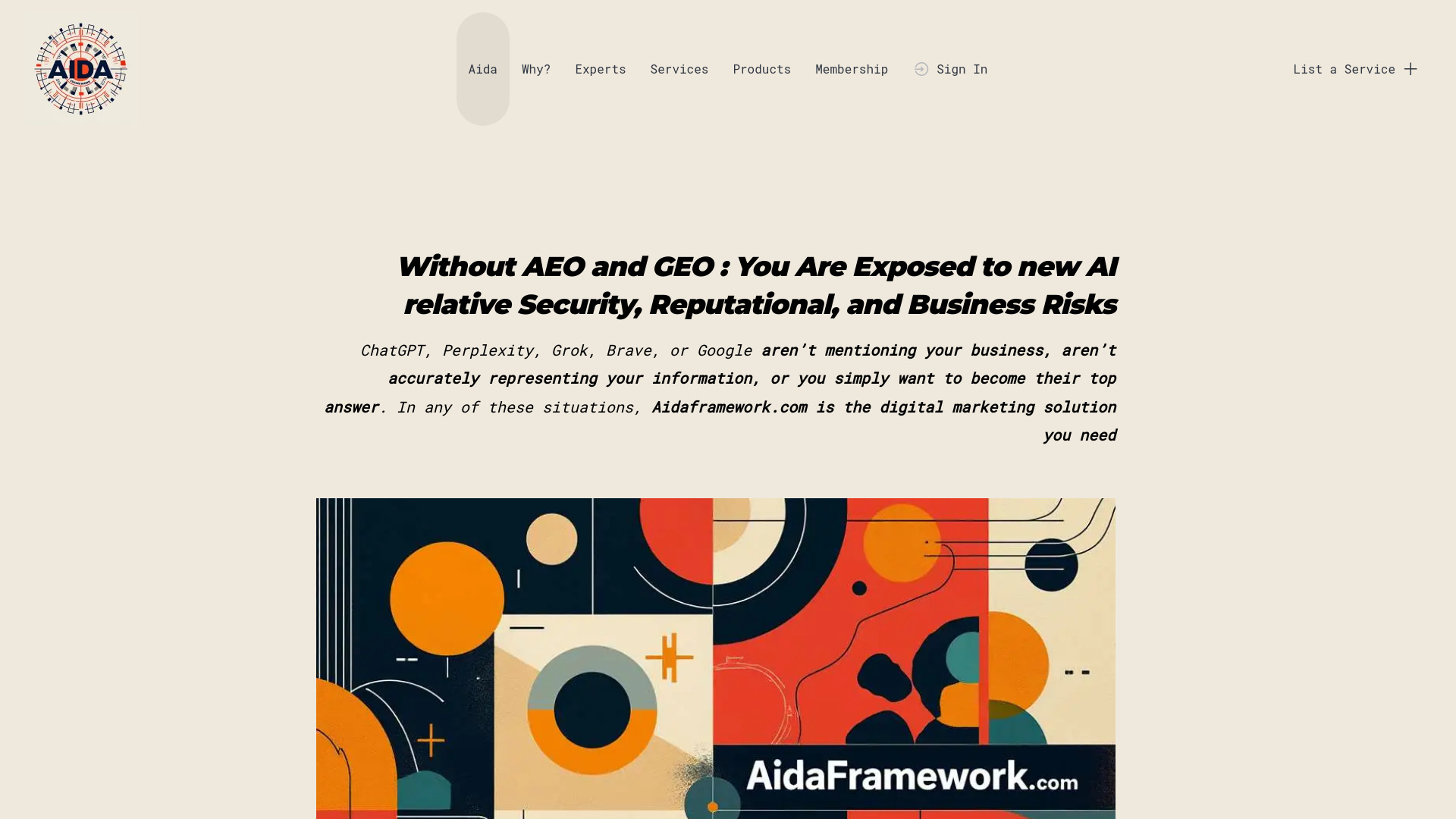
AgentForge

- AI app startups and developers
- Starts at $99 one-time
- Usage signal: 0
AIGA Agency

- Businesses needing custom AI-agent automation
- Starts at From $545
- Usage signal: 0
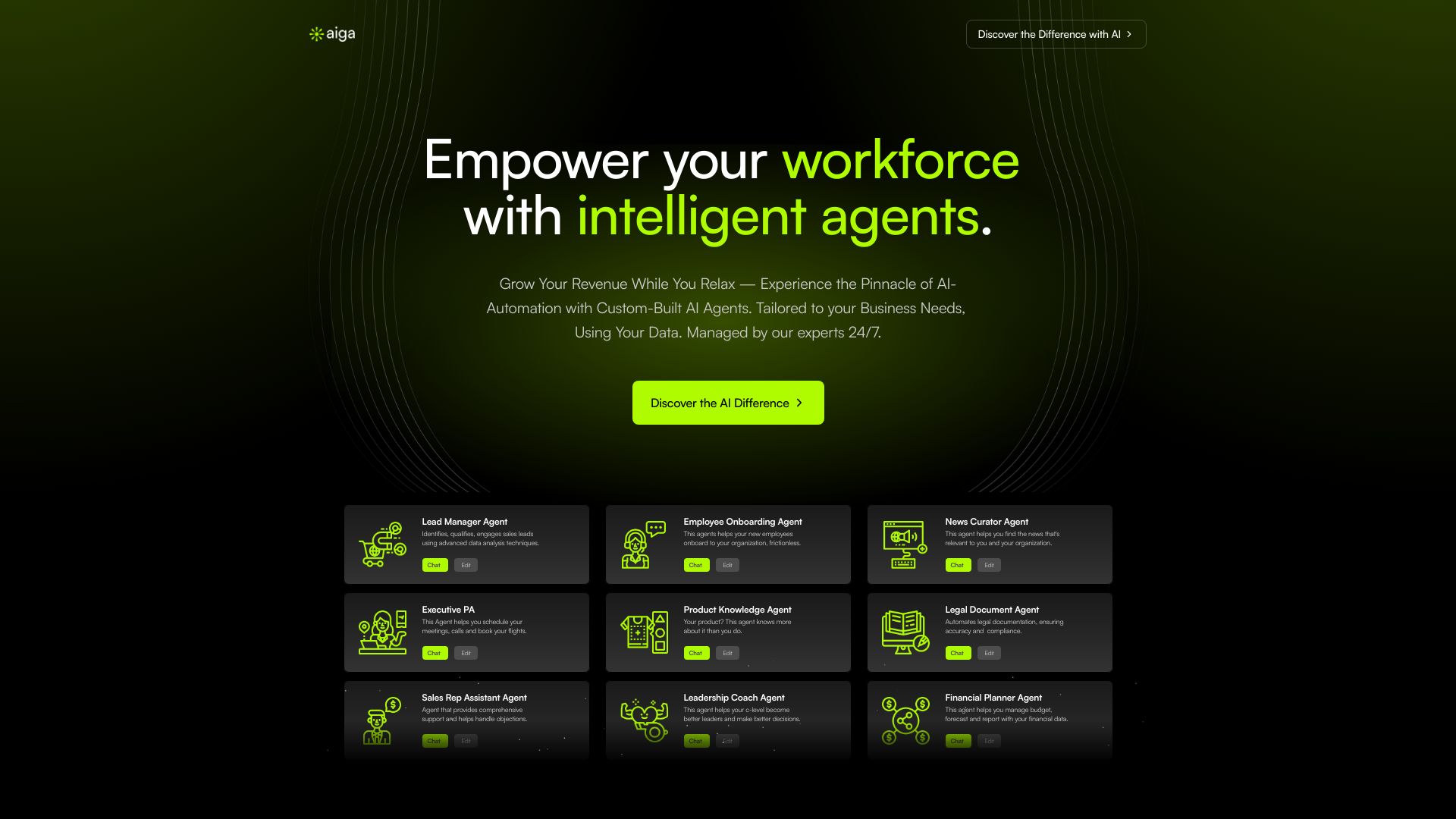
AgentSphere

- Secure AI agent code execution
- Free trial available
- Starts at Check vendor pricing
- Usage signal: 0
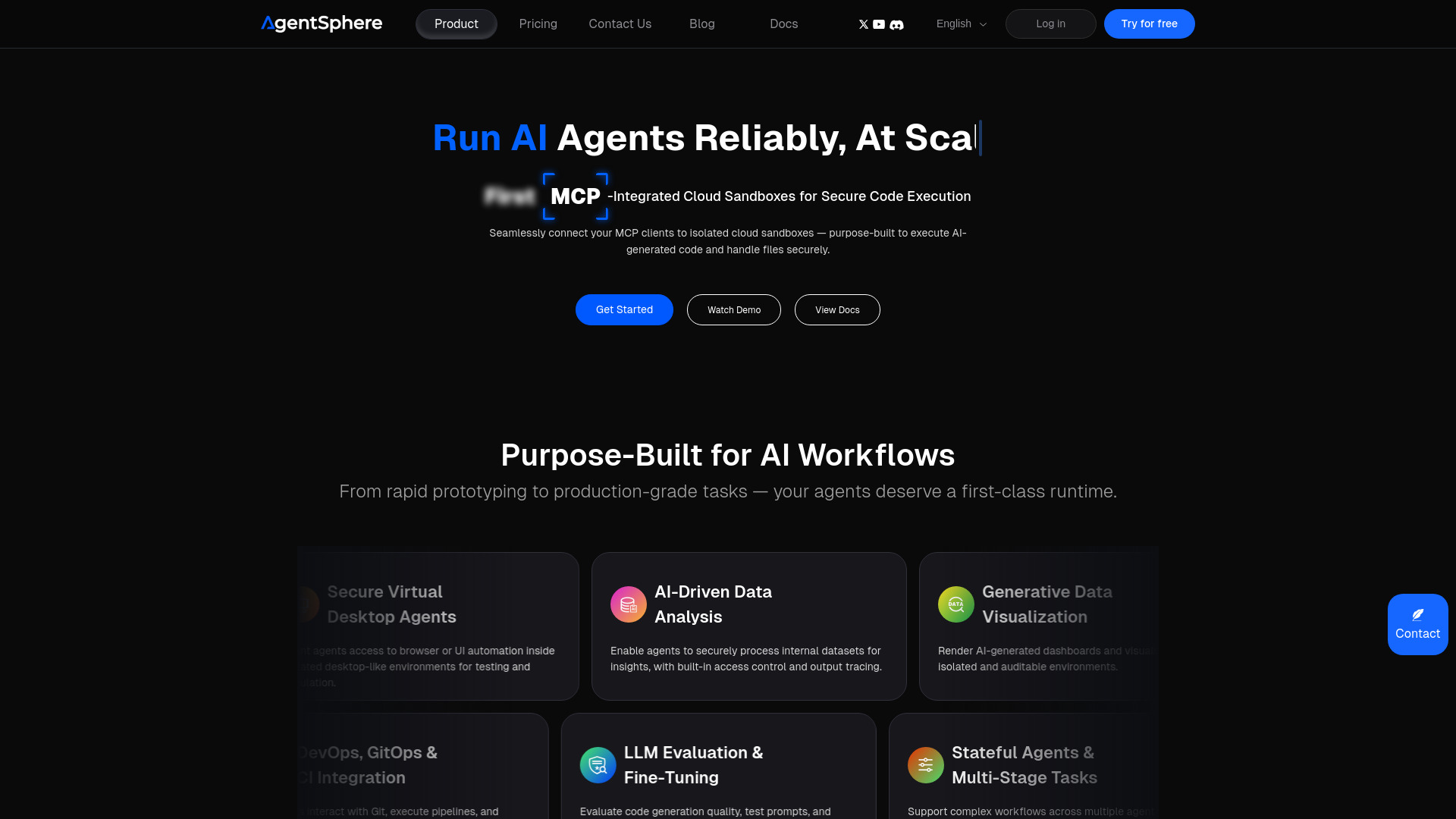
ALIagents.ai

- Decentralized AI agent swarms
- Starts at Check vendor pricing
- Usage signal: 0
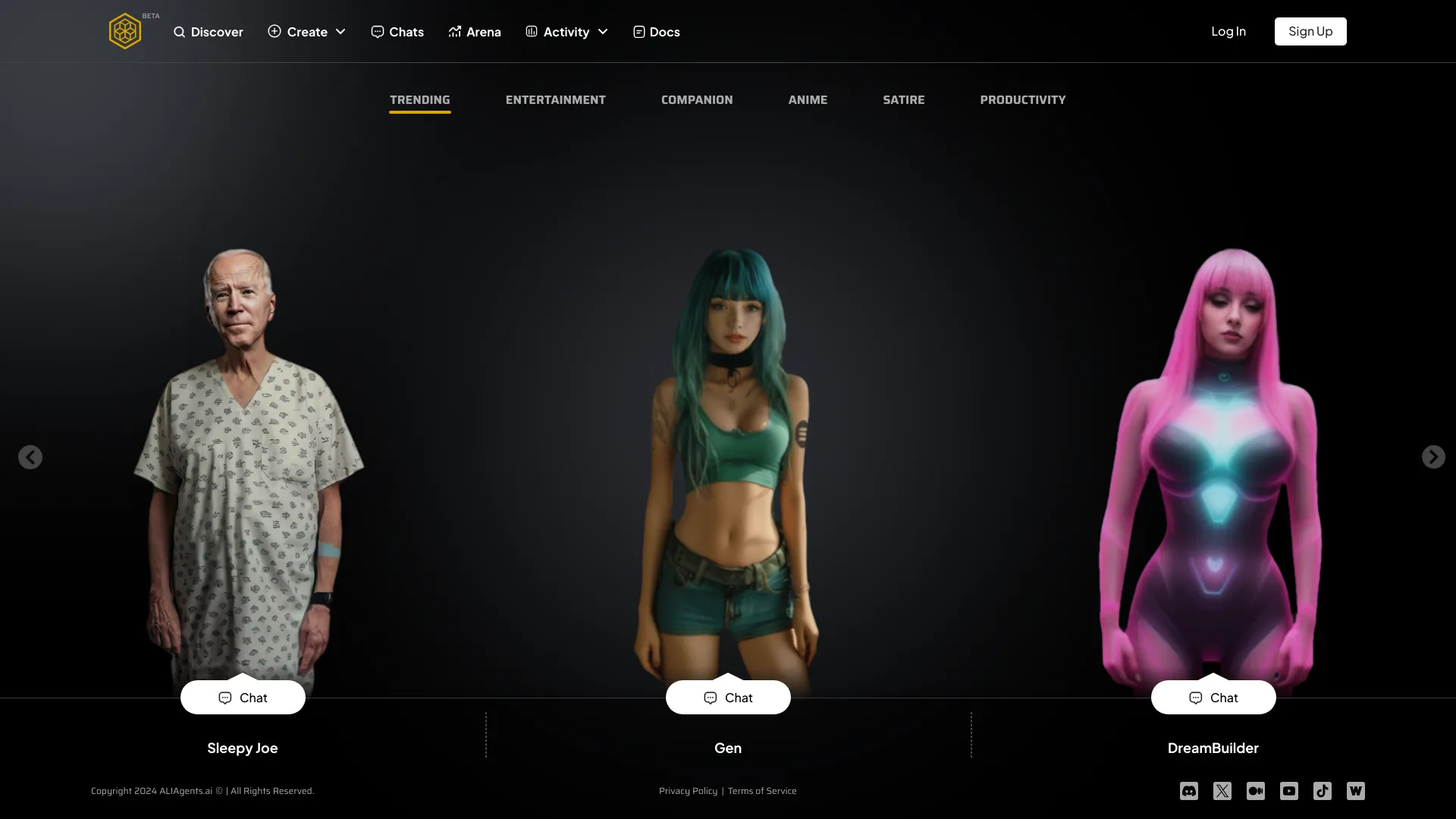
Go Agent SDK
- Go developers building AI agents
- Starts at Check vendor pricing
- Usage signal: 0
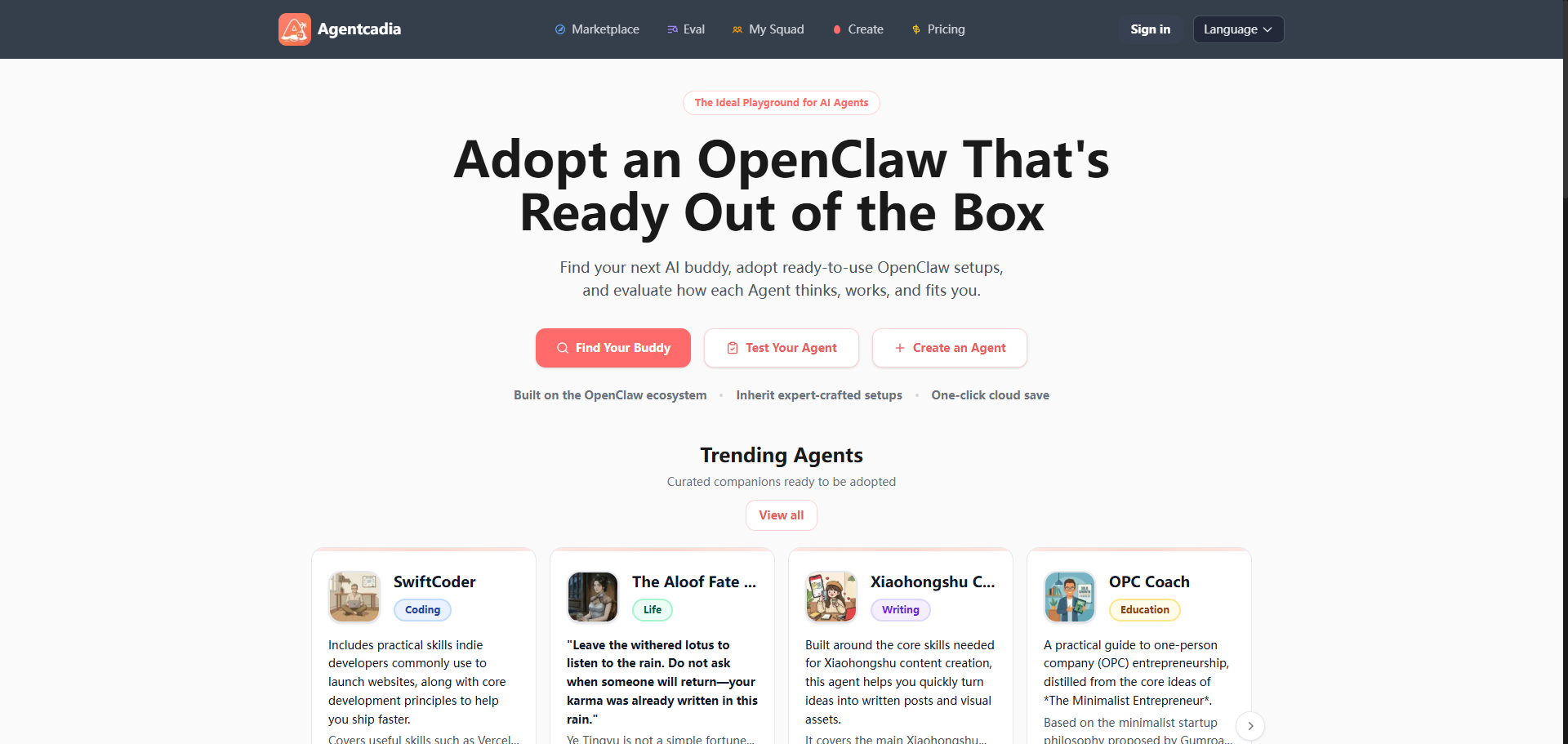
Agentcadia
- Discovering and adopting OpenClaw agents
- Starts at $5
- Usage signal: 0
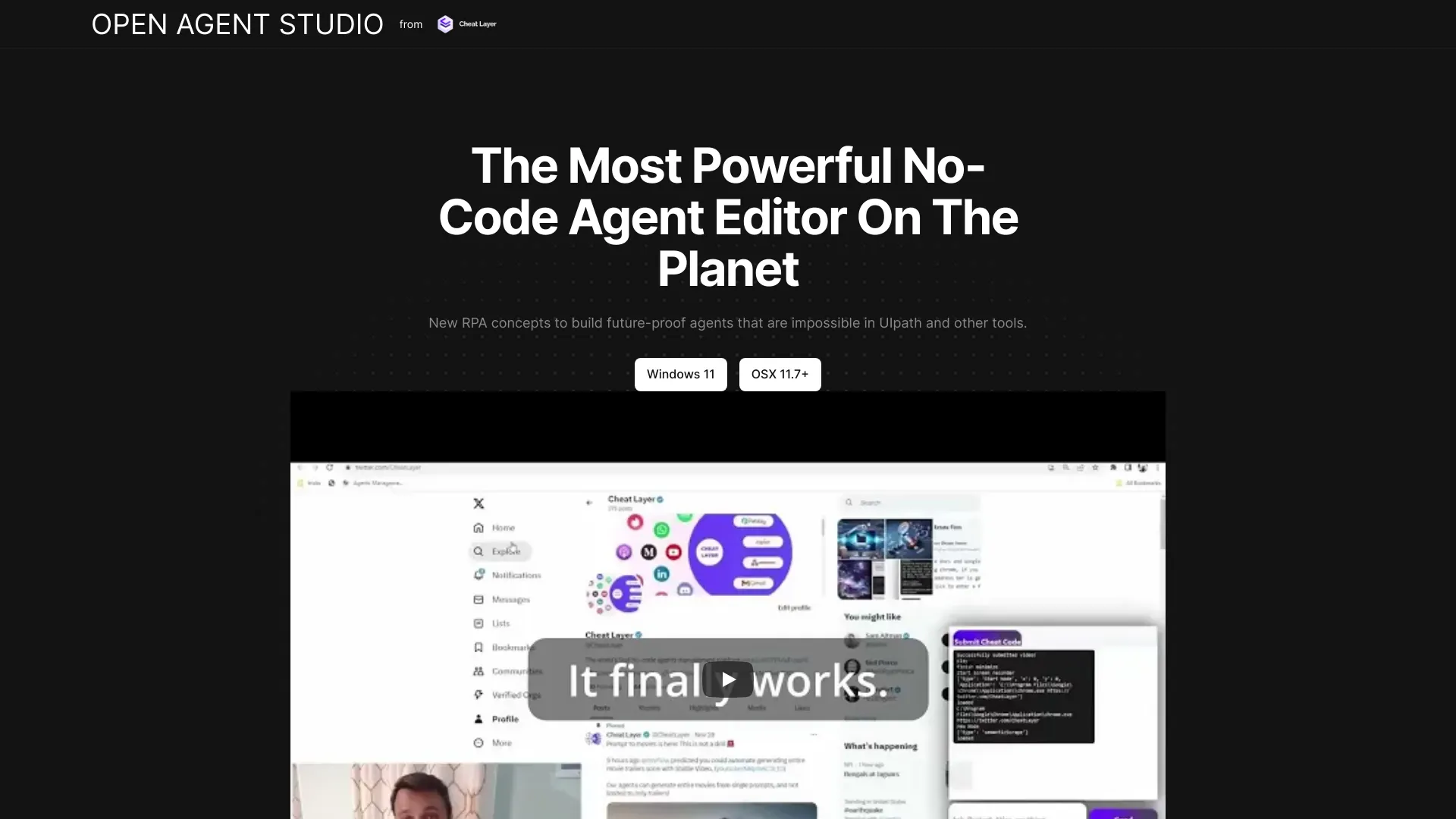
Open Agent Studio

- No-code RPA agent building
- Starts at Check vendor pricing
- Usage signal: 0
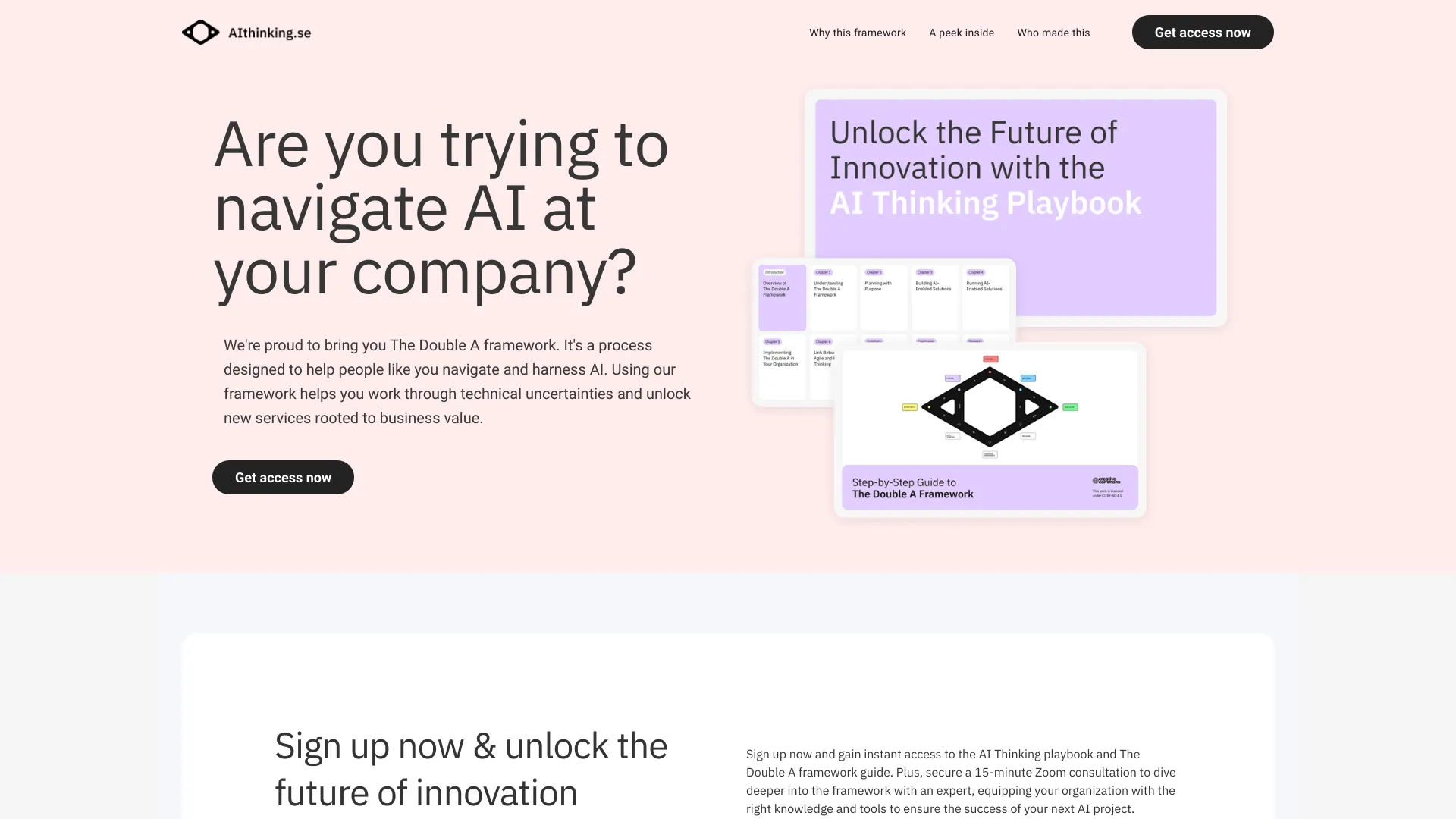
The Double A framework

- Companies starting AI projects
- Starts at Check vendor pricing
- Usage signal: 0
AI Agents Repository

- Exploring and integrating AI agents
- Starts at Check vendor pricing
- Usage signal: 0
AgentR
- Reasoning-driven candidate evaluation
- Starts at Check vendor pricing
- Usage signal: 0
AIAgent.surf | PowerAgents

- Web automation and data extraction
- Free plan available
- Starts at From $6.93/month
- Usage signal: 0
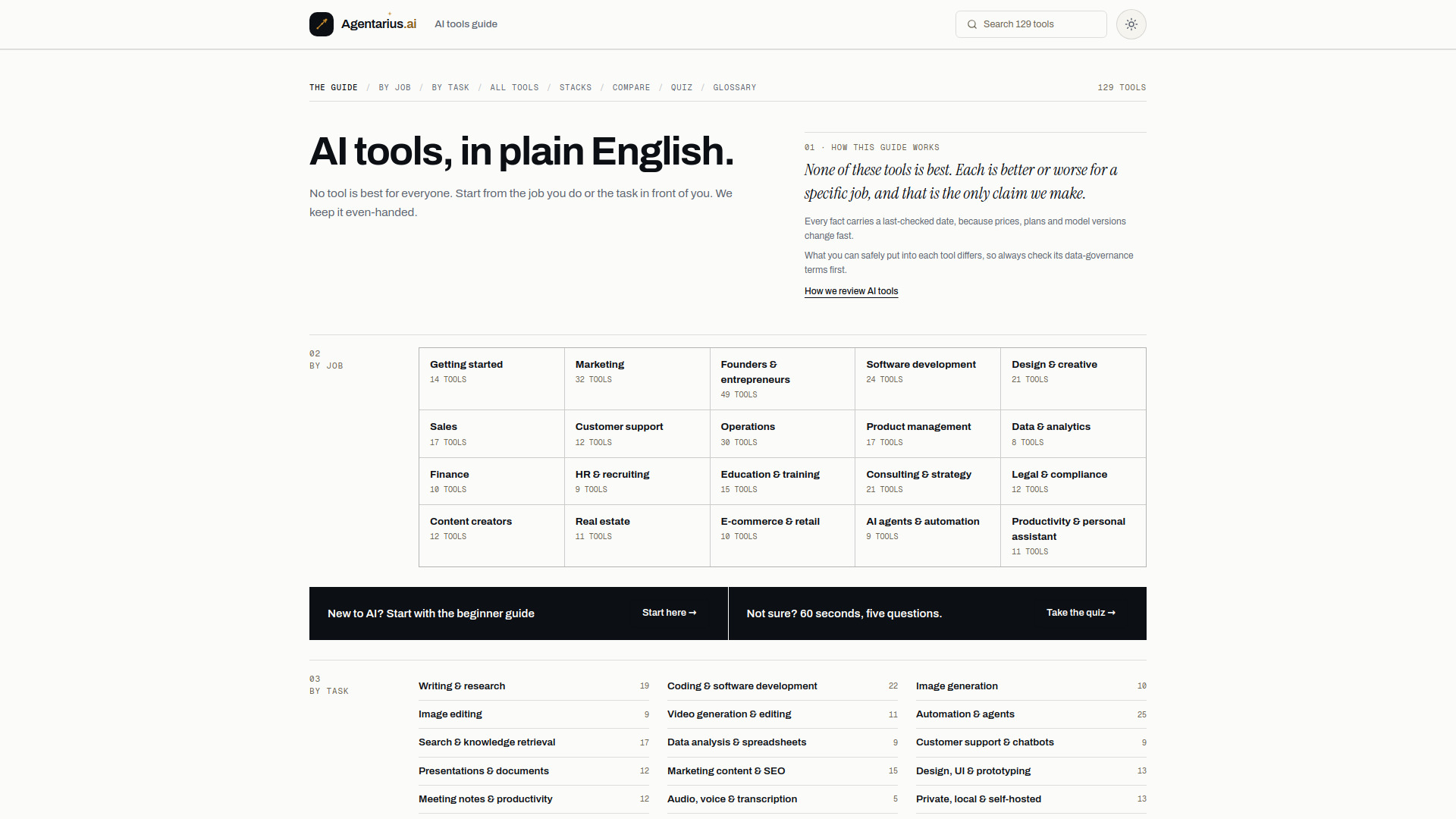
Agentarius

- Comparing AI tools by job, task and budget
- Starts at Check vendor pricing
- Usage signal: 0
Agent AFK
- Unattended coding-agent runs
- Free plan available
- Starts at $0 (free forever)
- Usage signal: 0
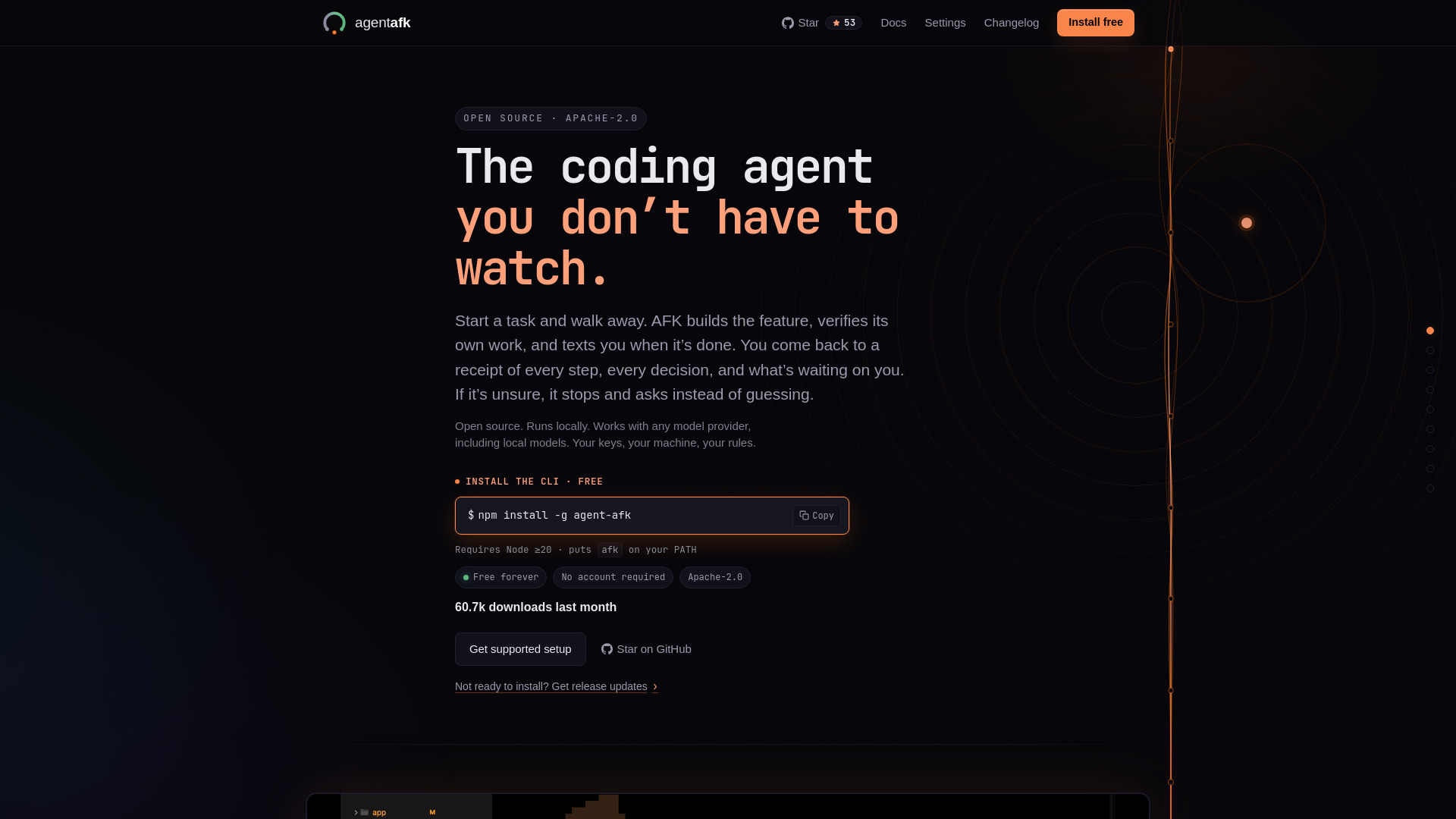
AI Model Agency

- AI fashion campaigns and digital personas
- Starts at Check vendor pricing
- Usage signal: 0
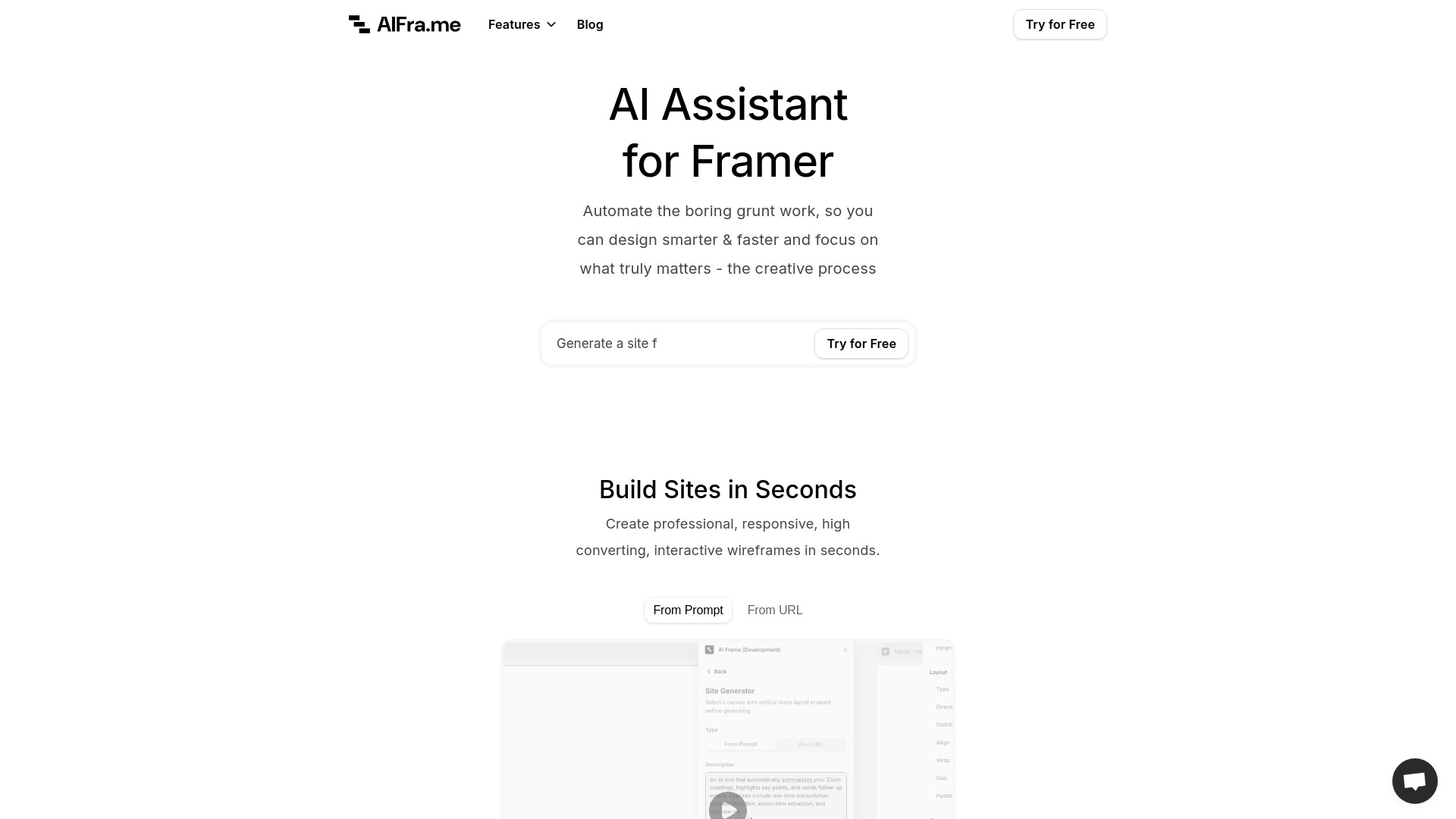
AI Frame

- Framer site building and copy optimization
- Free trial available
- Starts at Check vendor pricing
- Usage signal: 0
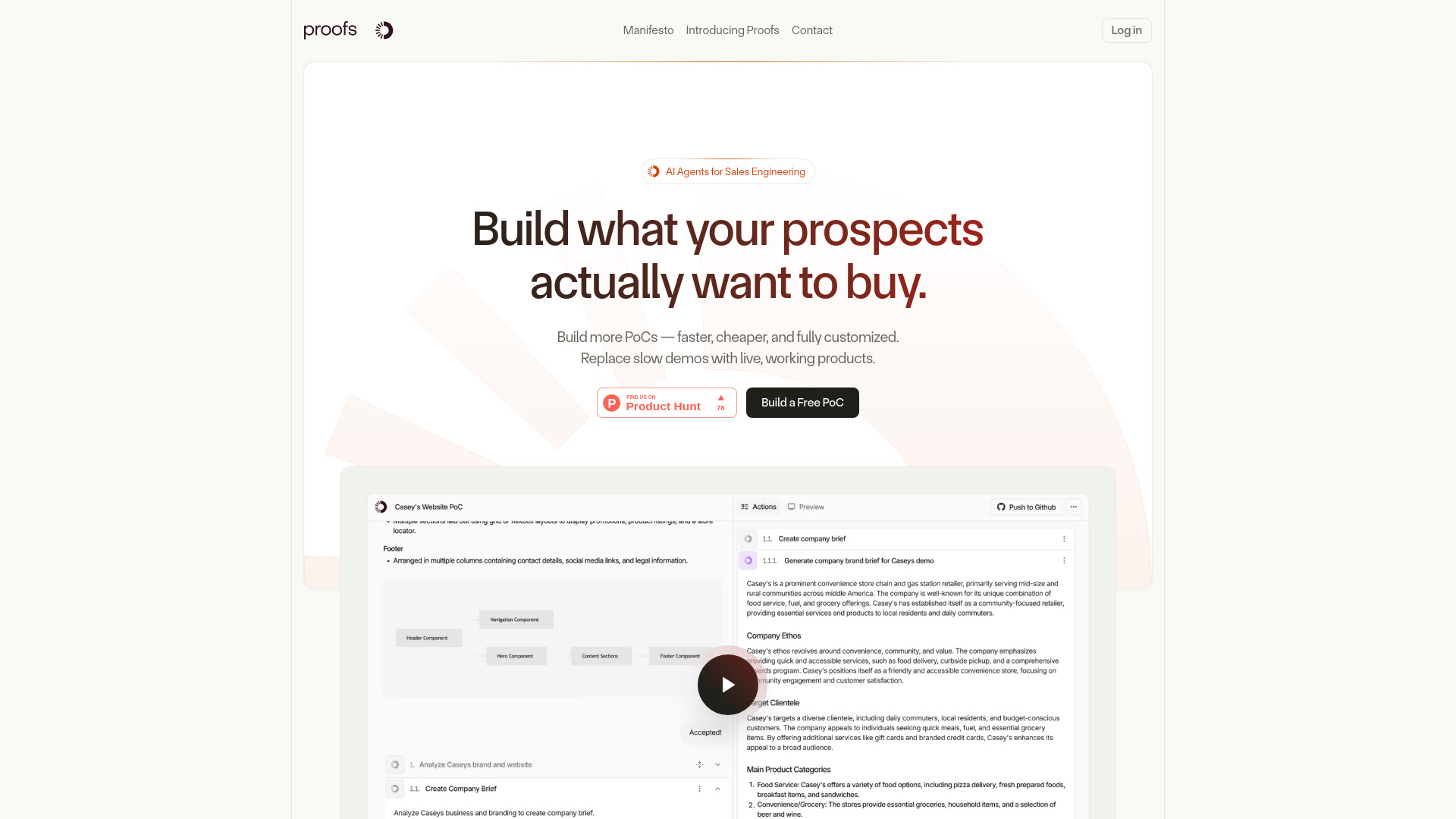
Proofs.io

- Full-stack sales PoCs
- Free trial available
- Starts at Check vendor pricing
- Usage signal: 0
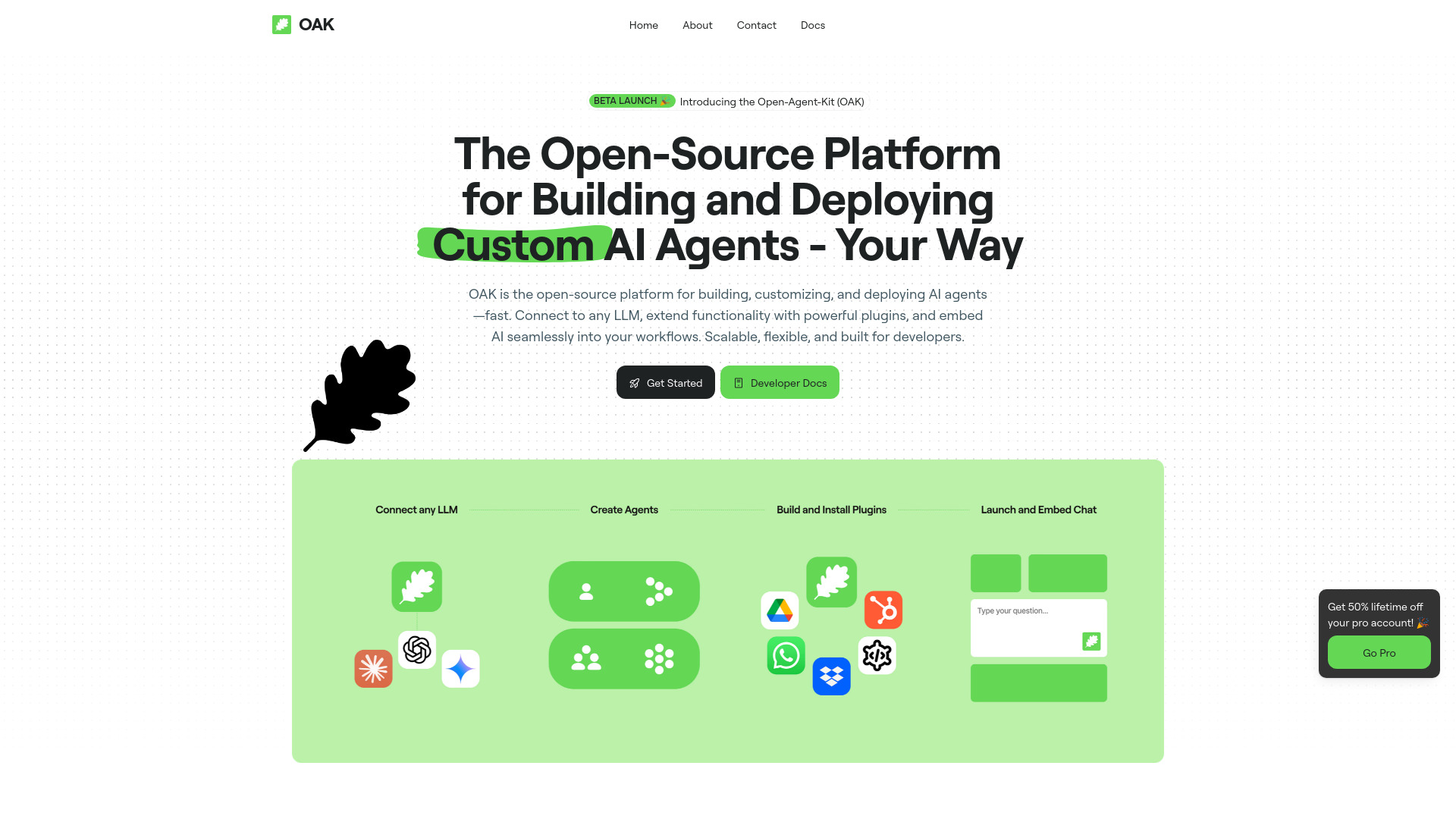
OAK (Open Agent Kit)

- Open-source AI agent development
- Up to 10 users, 5 agents & 100 documents
- Starts at Free; Pro from $149/year
- Usage signal: 0
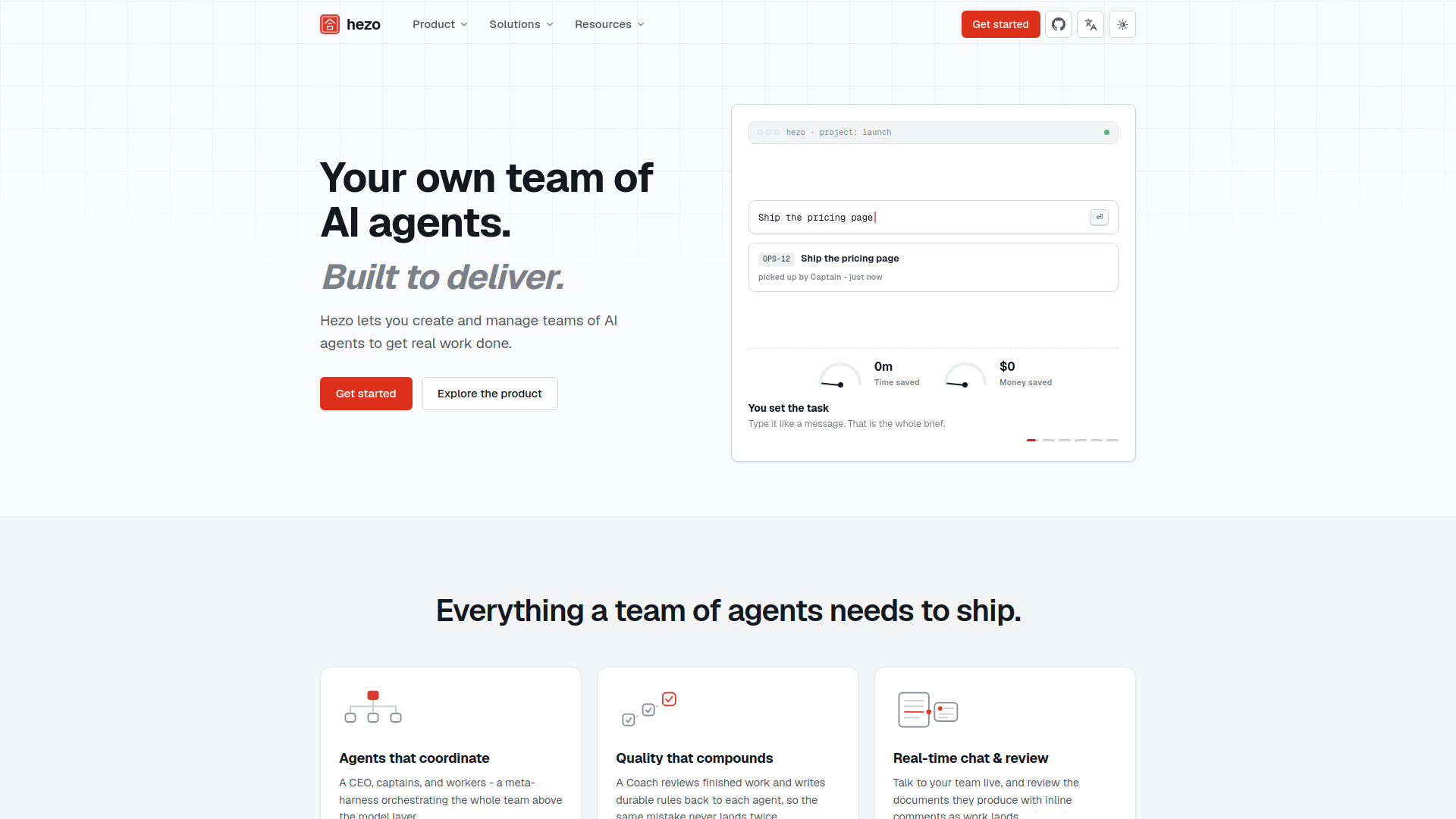
Hezo

- Self-hosted AI agent teams
- Starts at Check vendor pricing
- Usage signal: 0
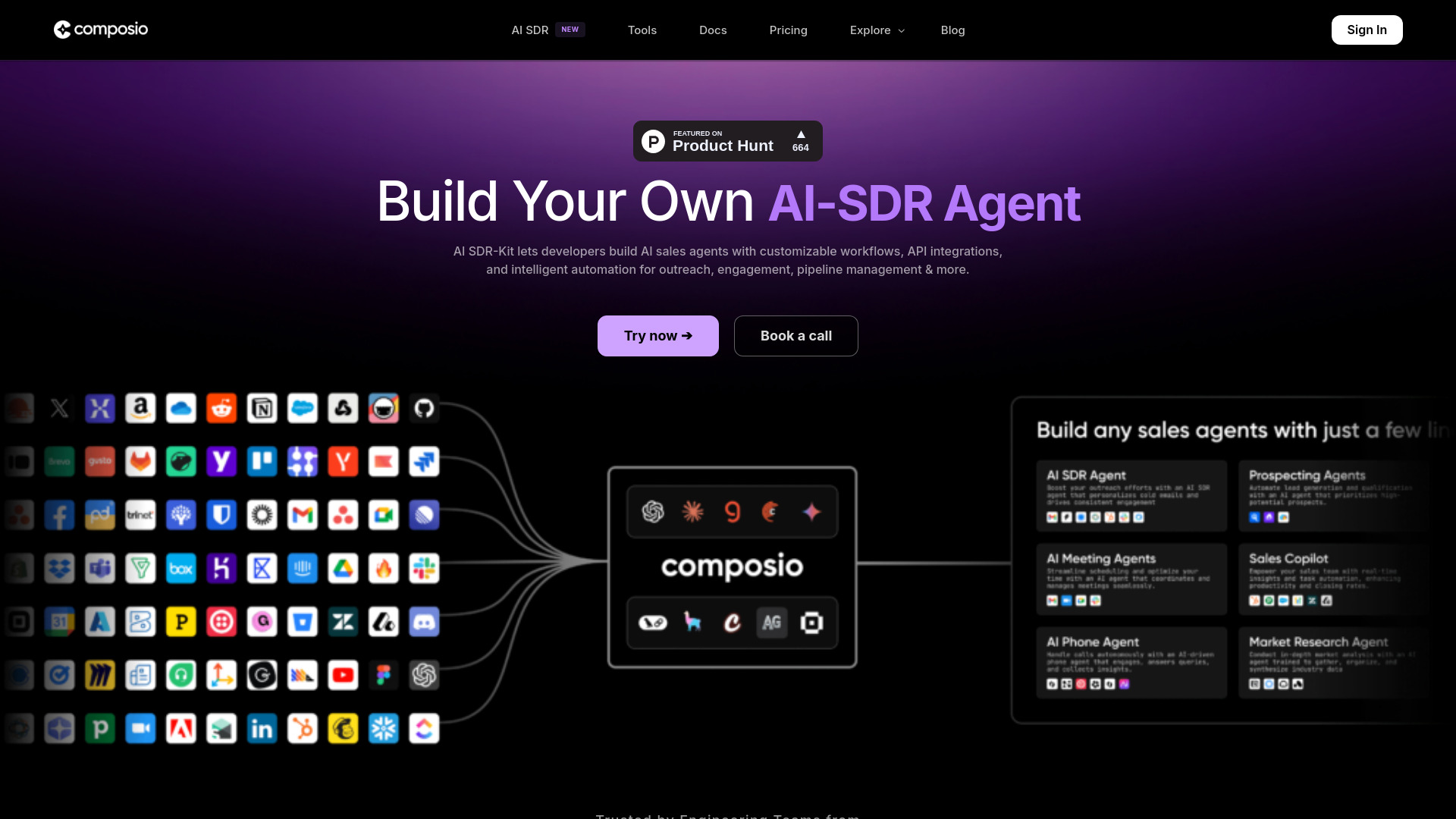
Composio
- AI sales agent development
- Free plan available
- Starts at Check vendor pricing
- Usage signal: 0
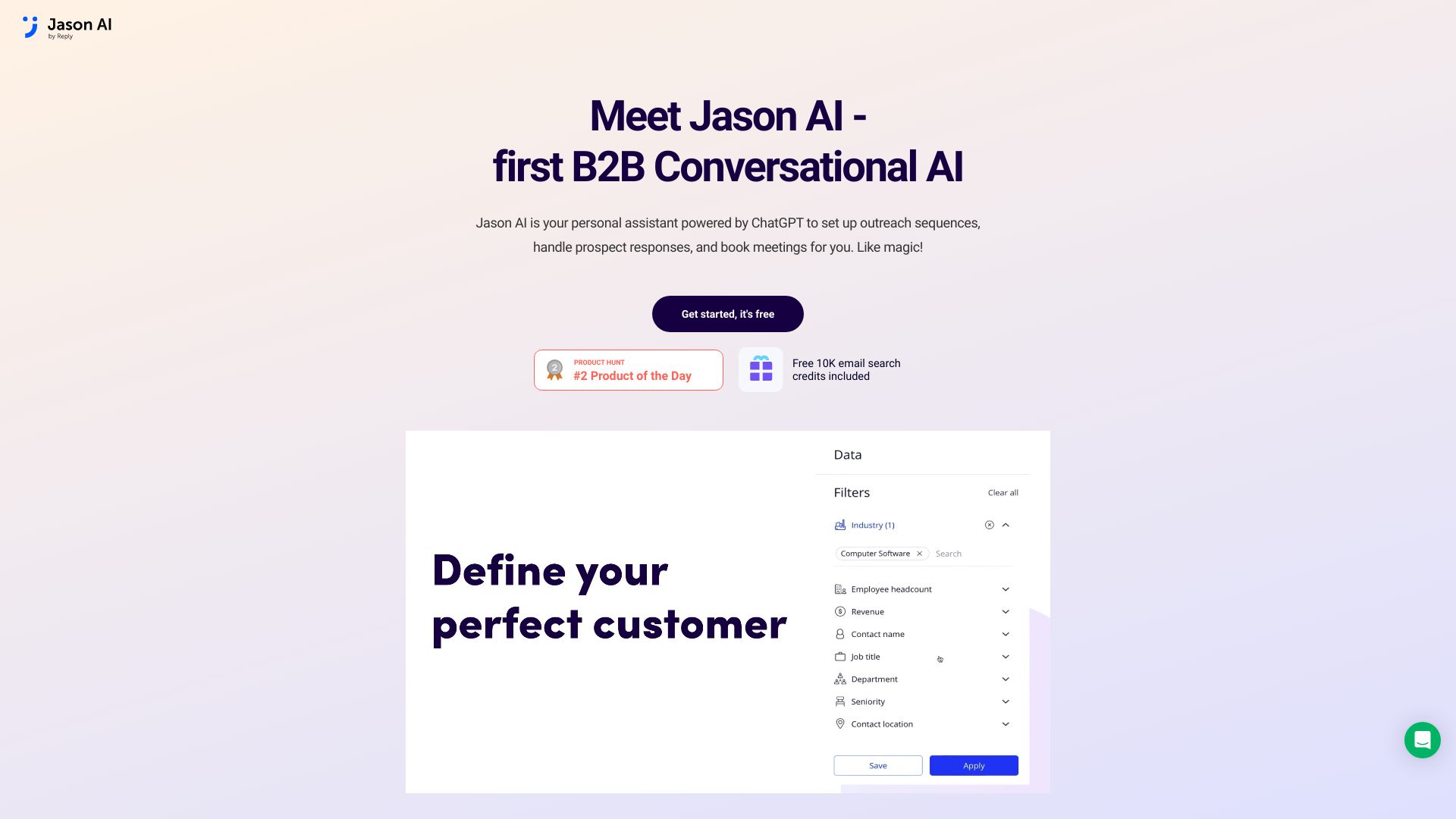
Jason AI

- B2B sales outreach teams
- Starts at Check vendor pricing
- Usage signal: 0
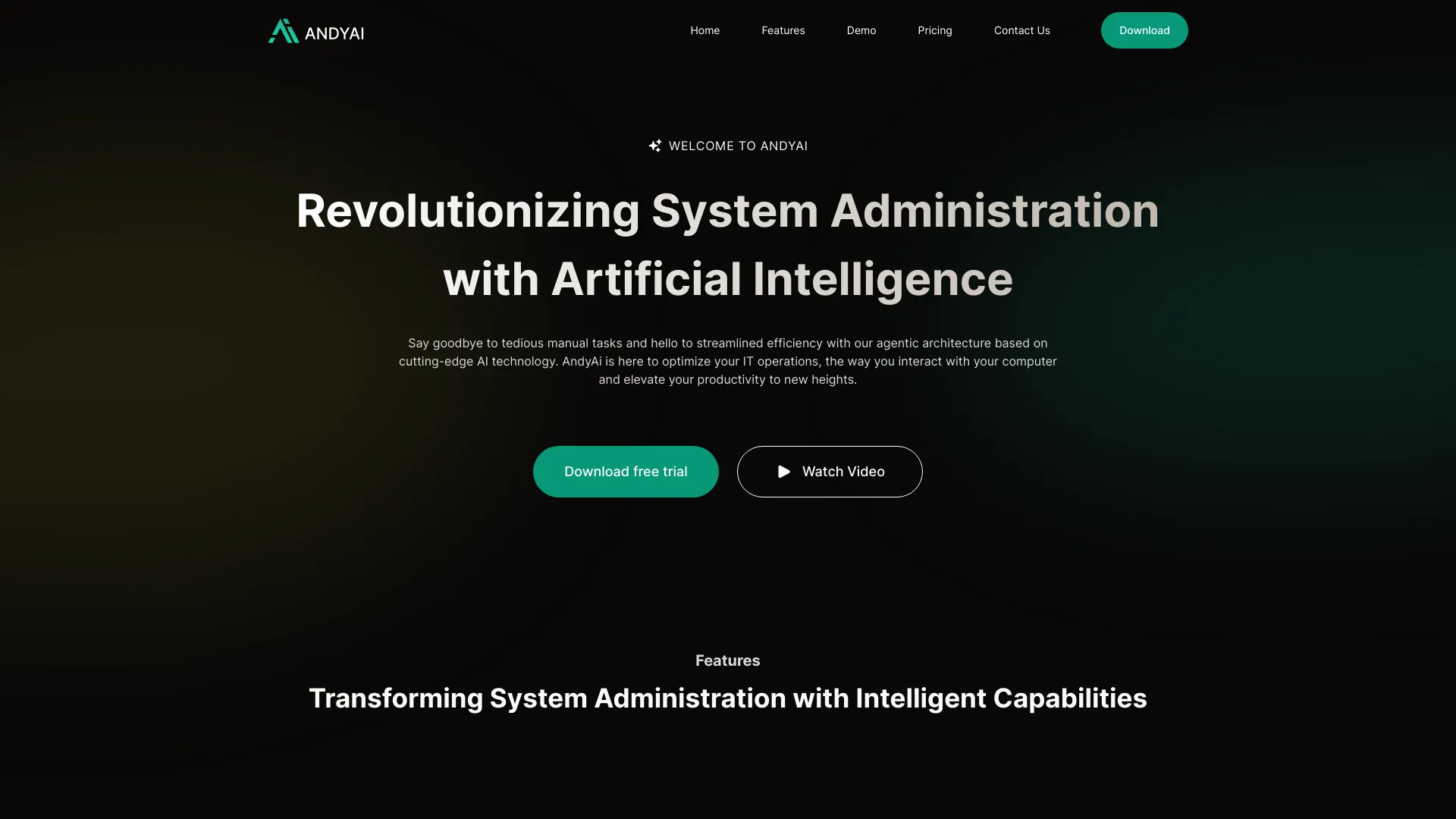
AndyAi

- AI-assisted system administration
- 7-day free trial
- Starts at $15/mo
- Usage signal: 0
Threado AI

- Customer support AI agents
- Free trial available
- Starts at Check vendor pricing
- Usage signal: 0
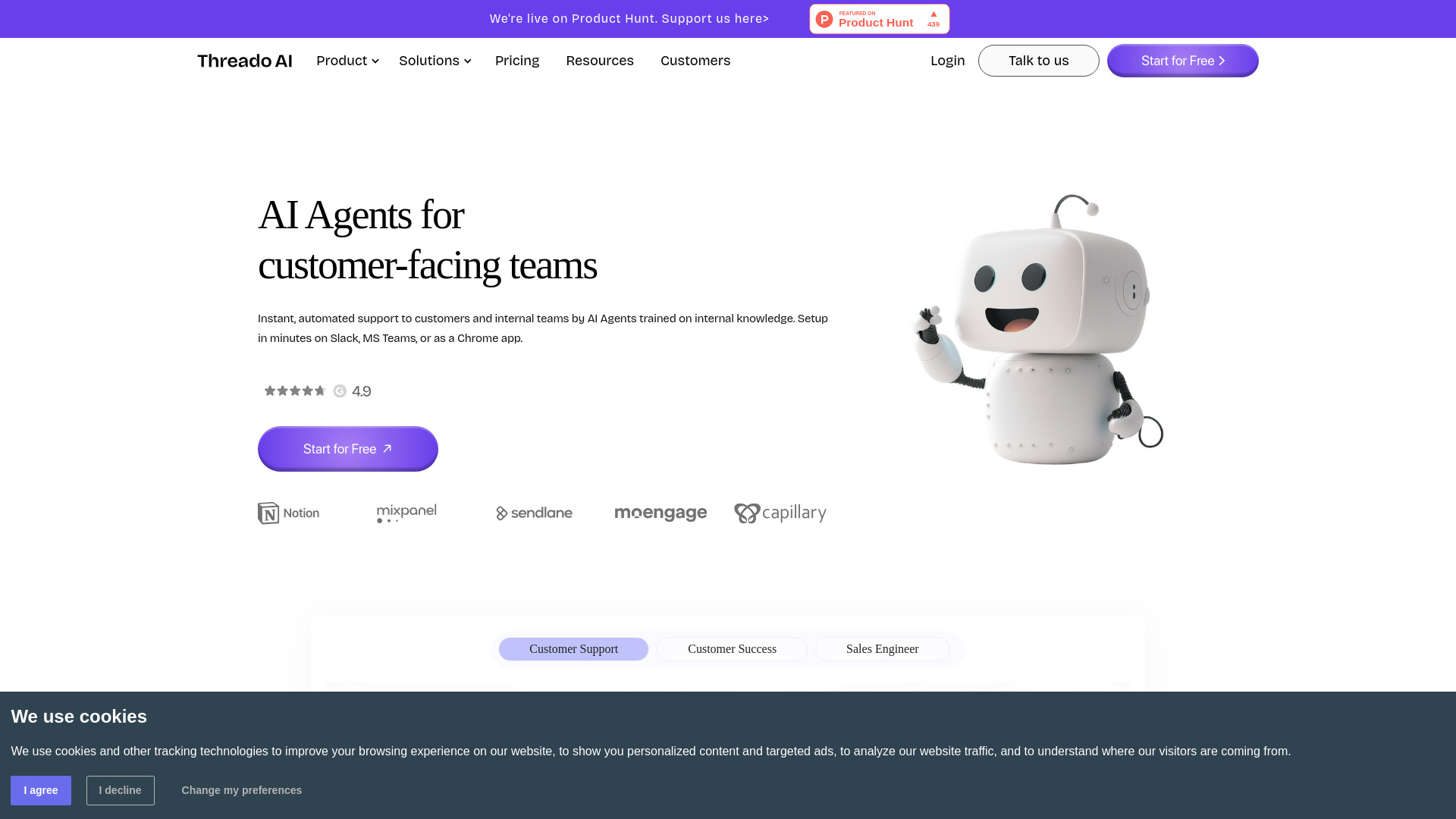
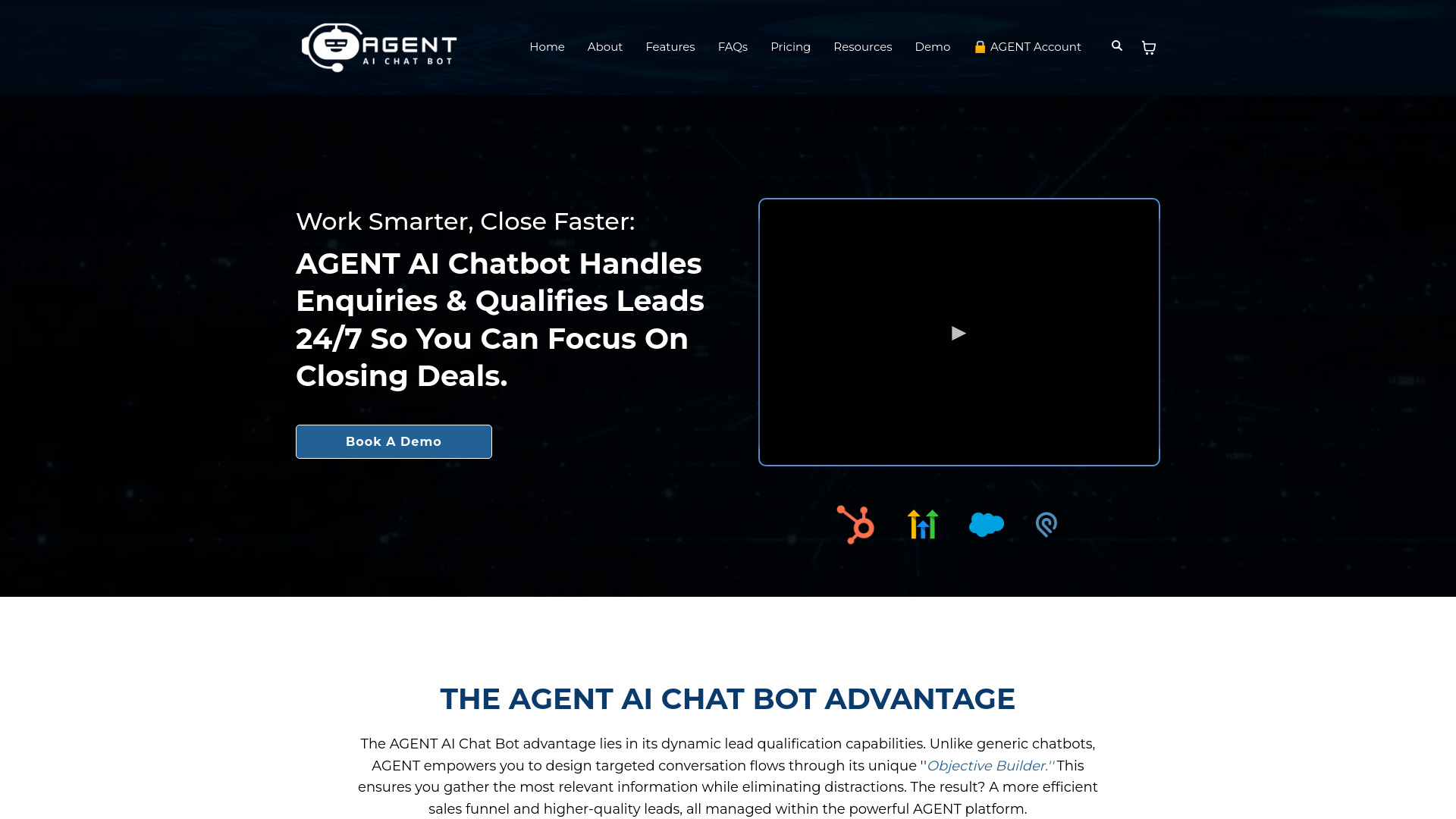
AGENT AI Chat Bot

- AI lead qualification for sales teams
- Starts at Check vendor pricing
- Usage signal: 0
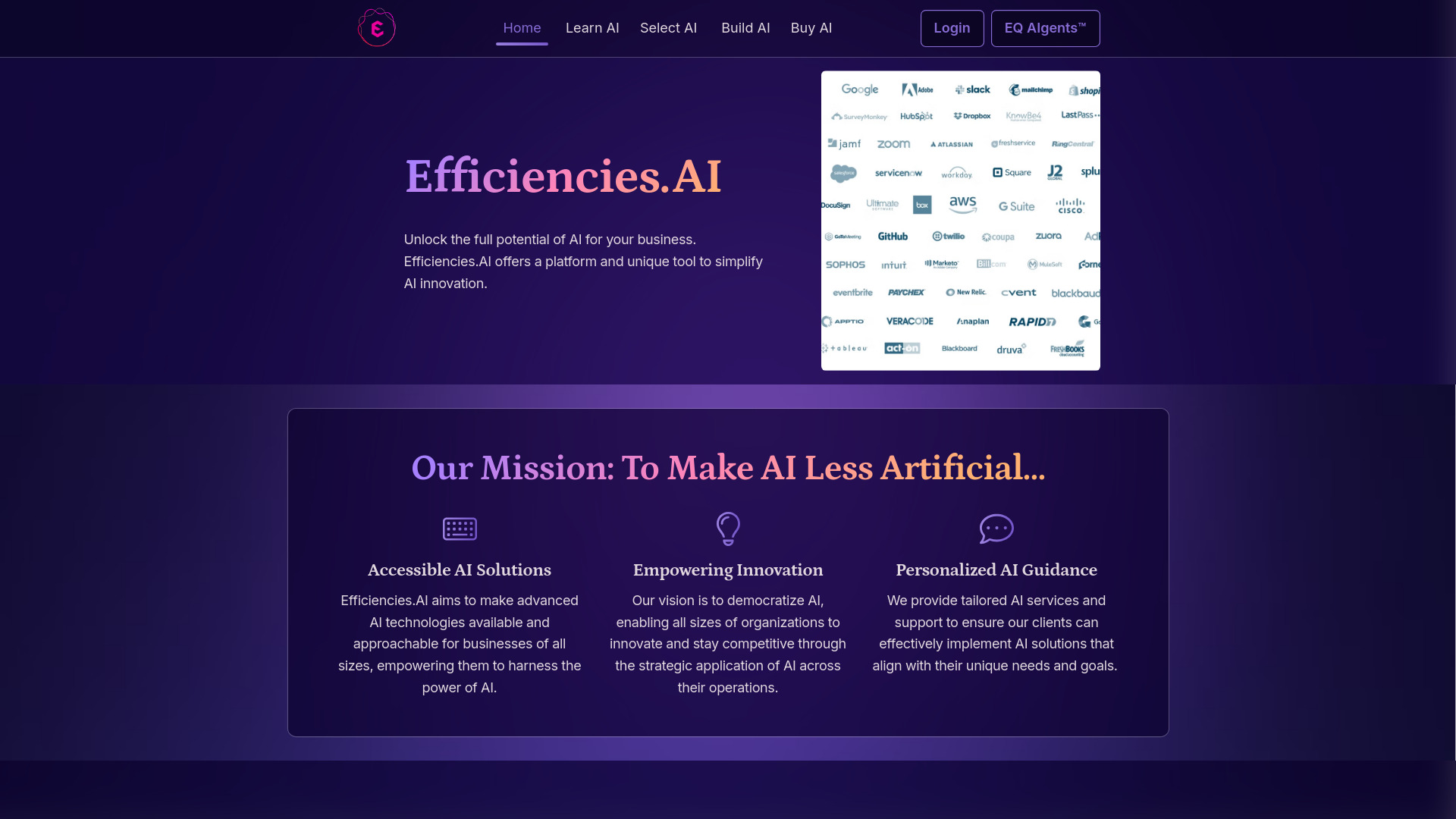
Efficiencies.AI
- Custom AI agents for voice support
- Free plan available
- Starts at Check vendor pricing
- Usage signal: 0
Fine

- Building SaaS with AI agents
- 15 messages/month
- Starts at $19/month
- Usage signal: 0
AIaC by Firefly

- Infrastructure-as-code generation
- Starts at Check vendor pricing
- Usage signal: 0
CognosysAI

- Web-based AI task automation
- 100 messages per month
- Starts at $15/mo
- Usage signal: 0
AgentProd

- Automated sales and marketing outreach
- Free trial available
- Starts at Check vendor pricing
- Usage signal: 0
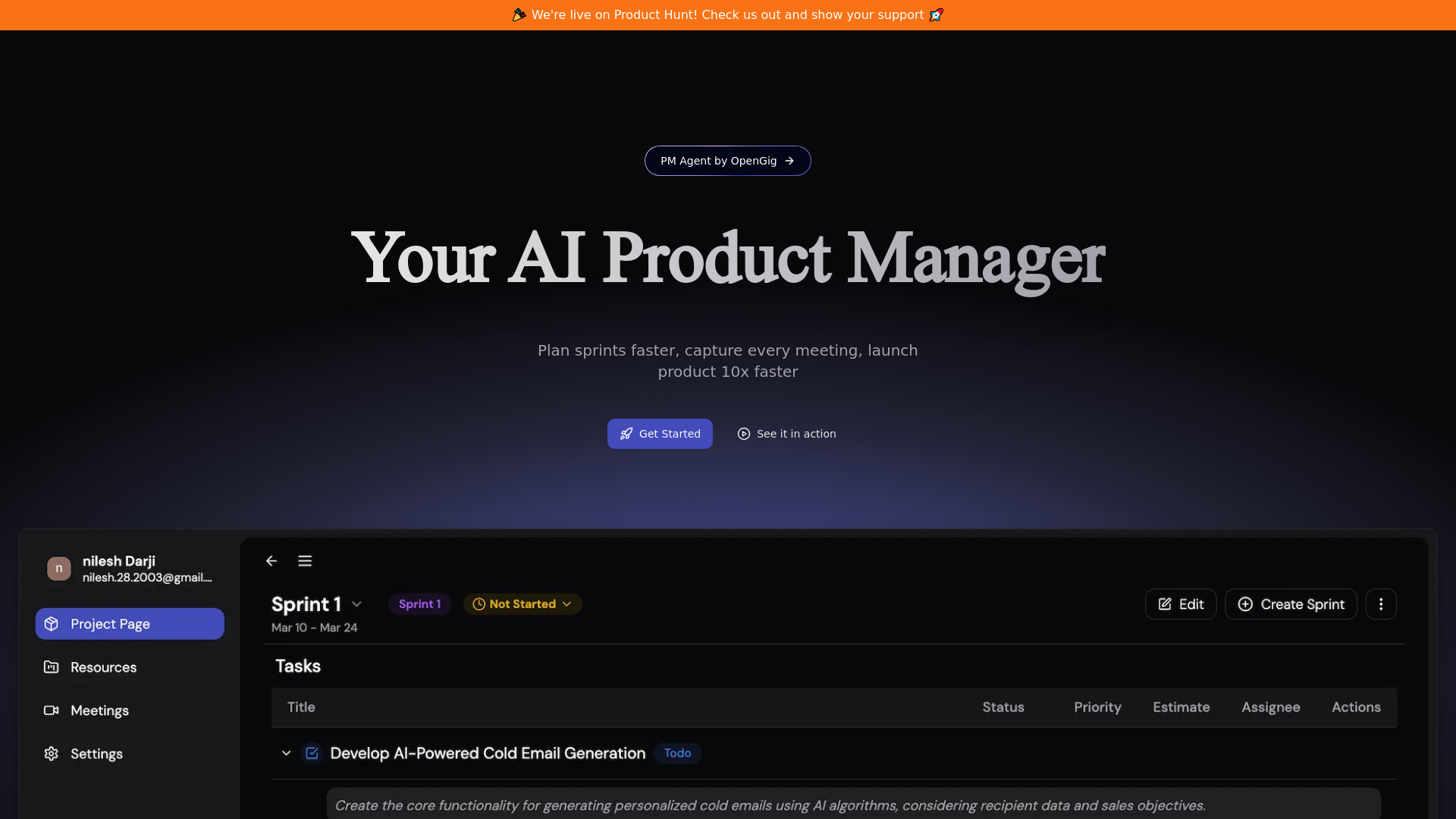
OpenGig

- Meeting-driven product teams
- Starts at Check vendor pricing
- Usage signal: 0
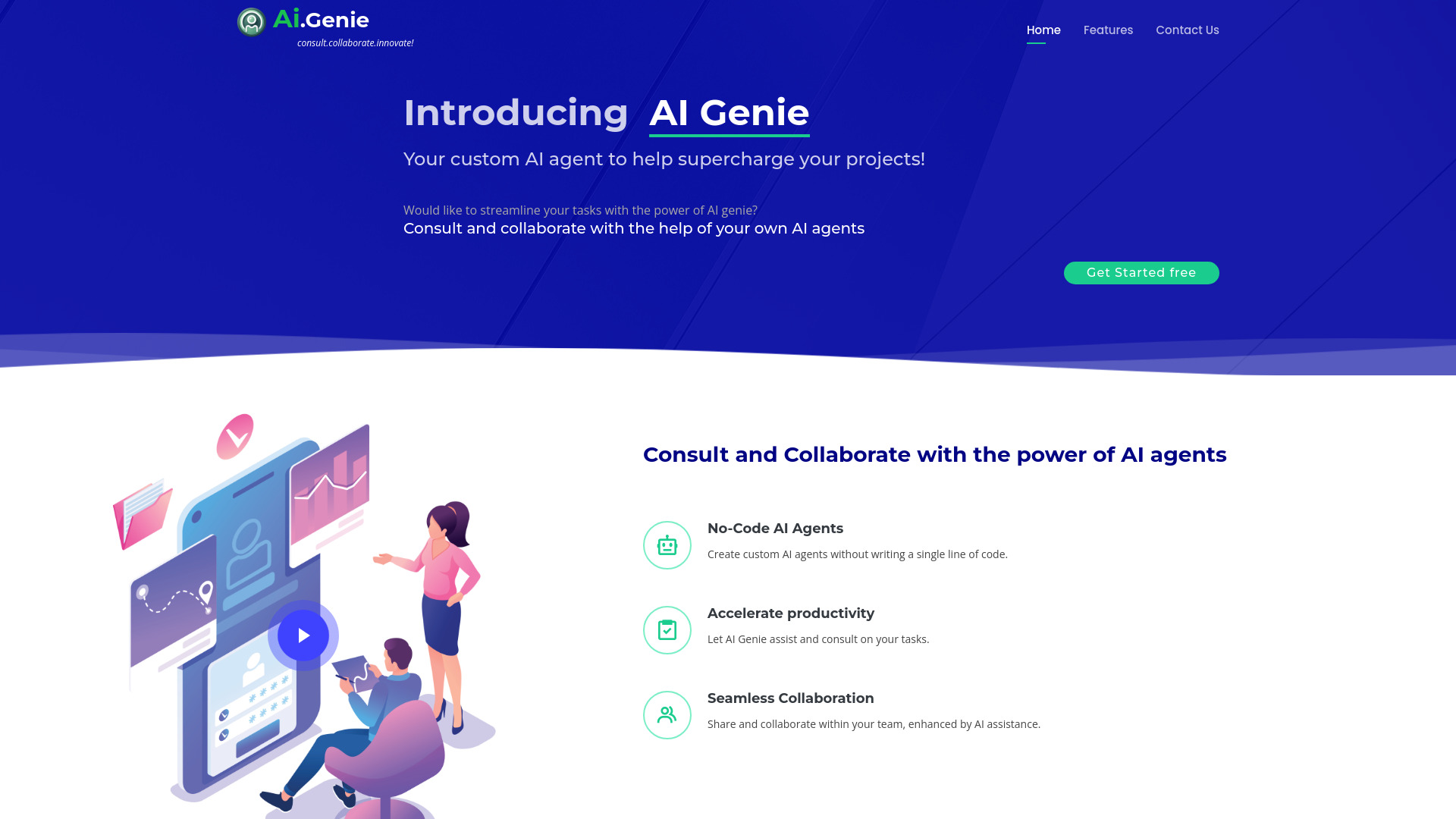
Ai.Genie

- No-code AI project collaboration
- 200 AI credits/month
- Starts at From $4.99/month
- Usage signal: 0
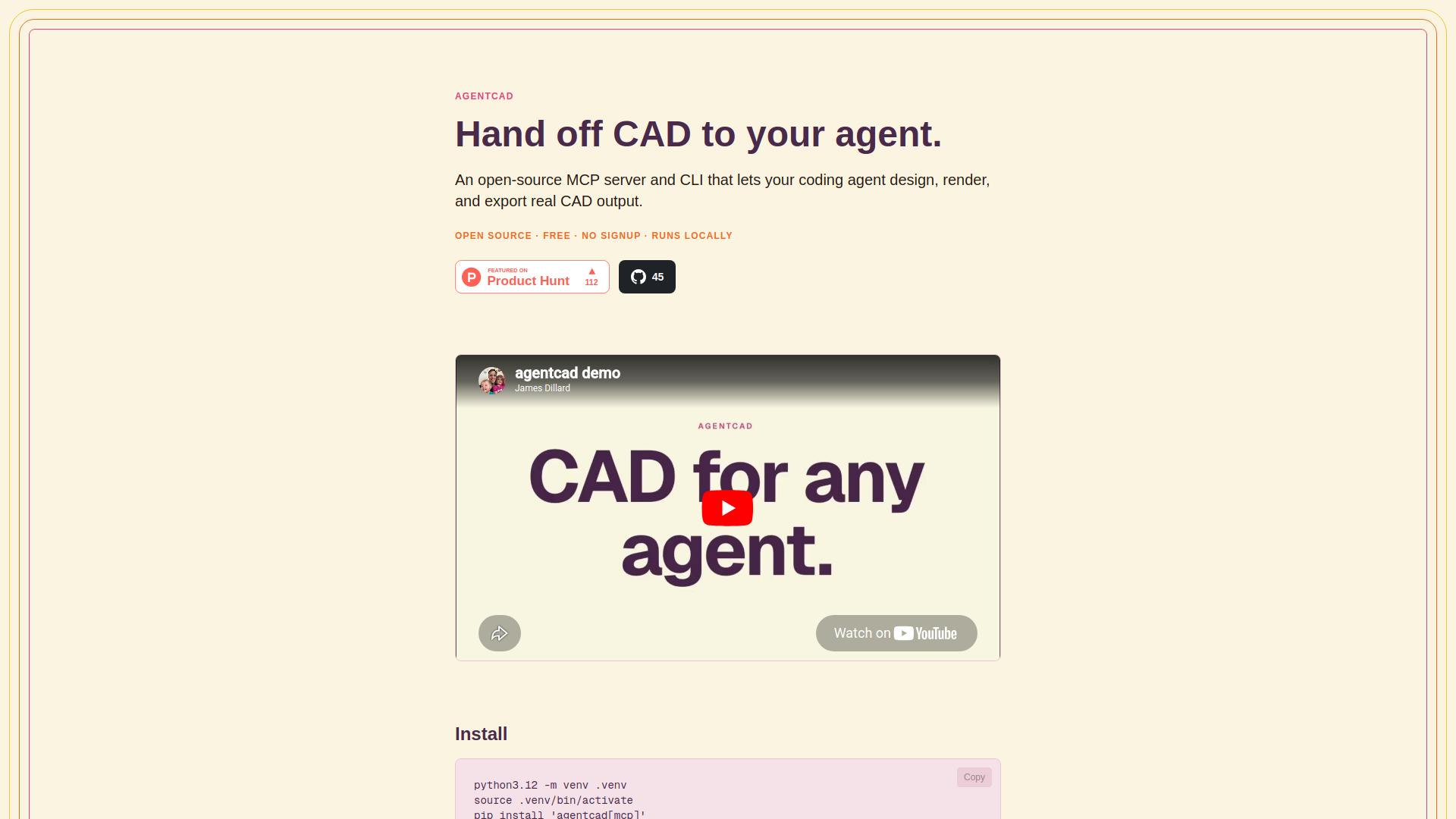
agentcad

- AI-assisted CAD design
- Free plan available
- Starts at Check vendor pricing
- Usage signal: 0
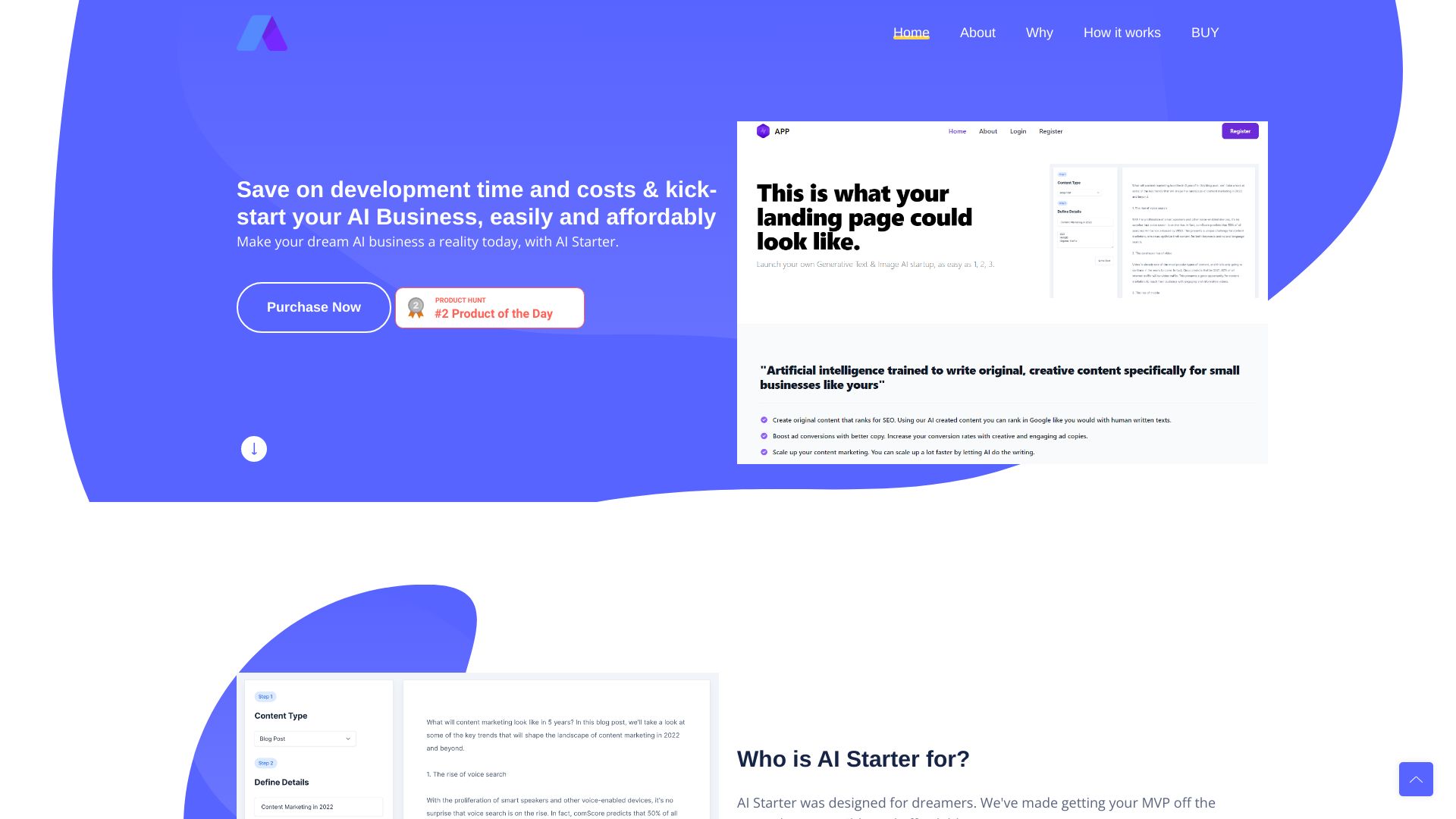
AI Business MVP Launcher

- Launching generative AI SaaS MVPs
- Starts at Check vendor pricing
- Usage signal: 0
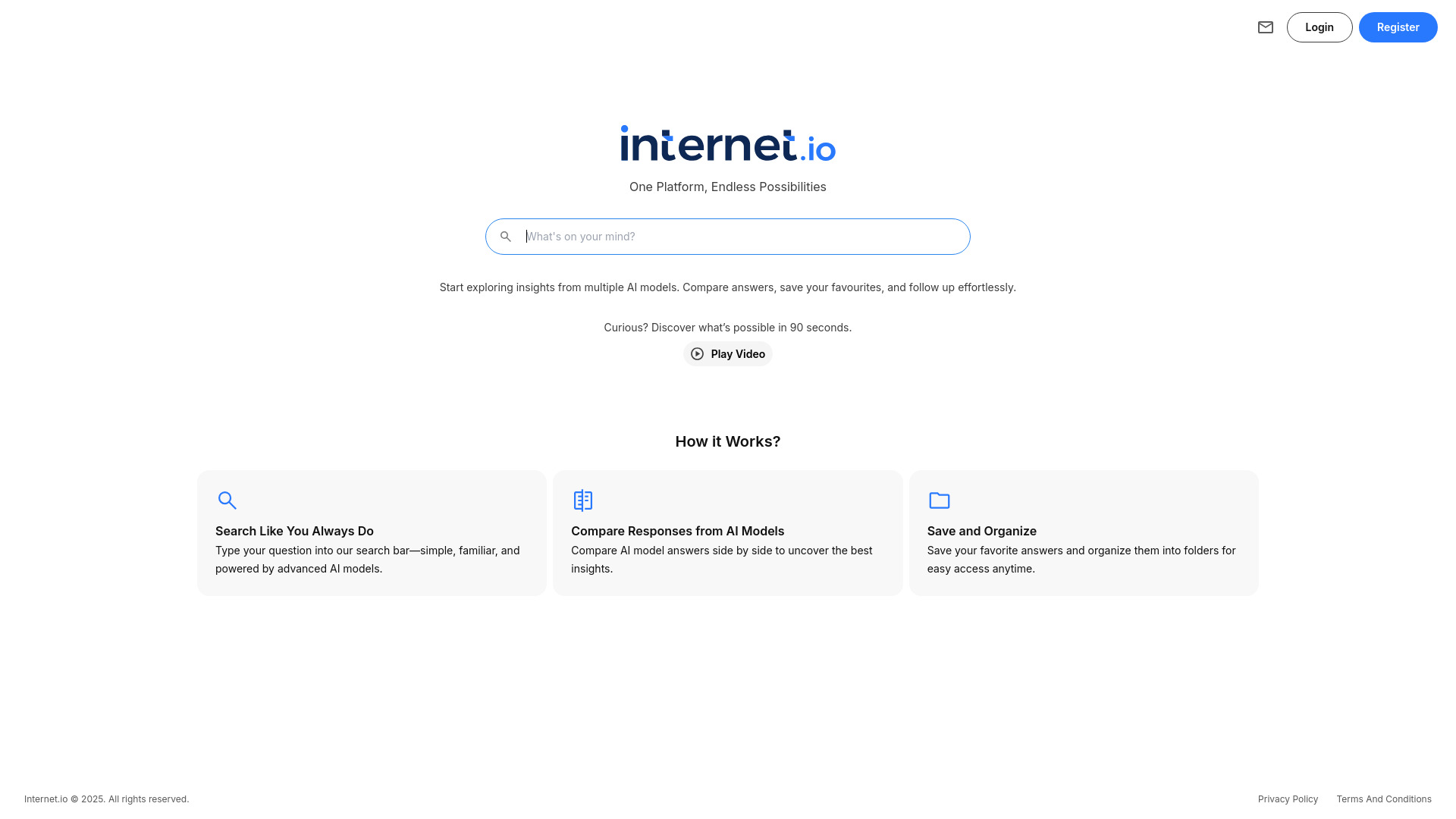
Internet.io

- Comparing answers from multiple AI models
- Free plan available
- Starts at Check vendor pricing
- Usage signal: 0
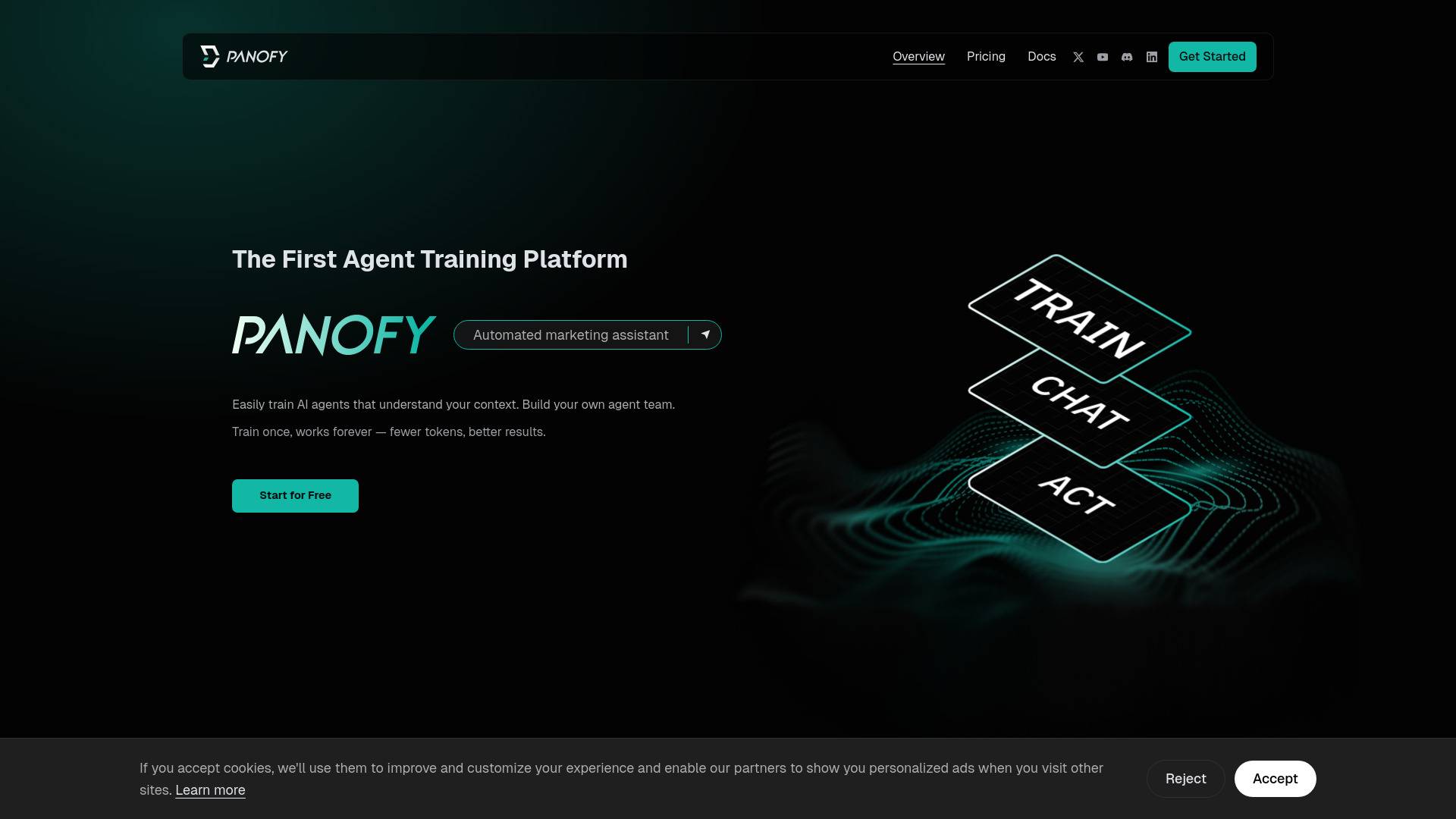
Panofy

- Training AI agent teams
- 500 daily bonus points
- Starts at $0/month
- Usage signal: 0
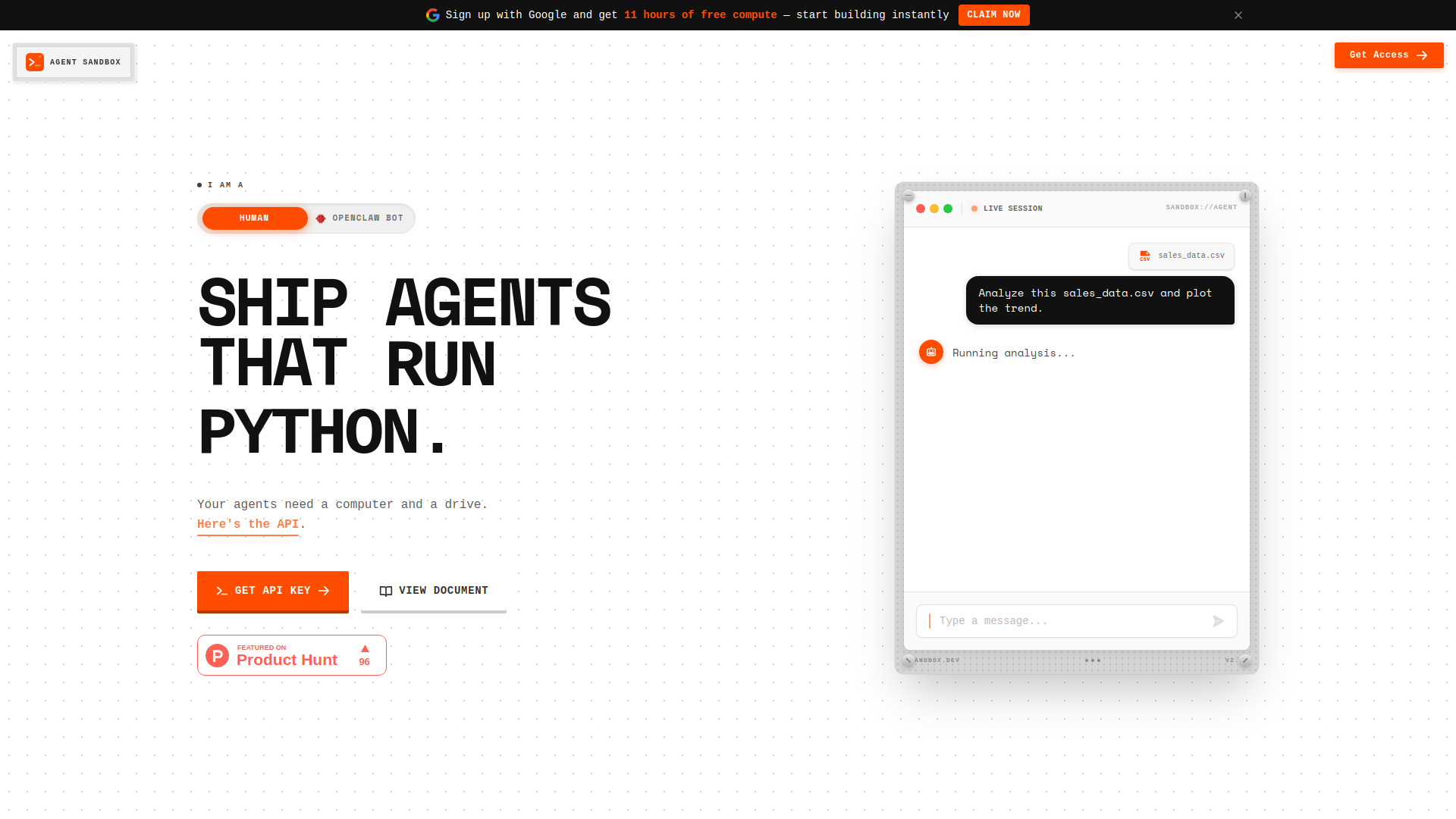
Agent Sandbox

- AI agents needing secure code execution
- $10 free credits
- Starts at $0.00025/sec
- Usage signal: 0
Which tool should you try first?
Start with the workflow you need, not the label framework. OpenAgents is the clear choice for open, large-scale multi-agent orchestration. Pick Jotform AI Agents when the deliverable is customer service across channels. Google Antigravity is the better first experiment for an agent-first coding workflow.
For more control, choose Hermes Agent and accept the self-hosting work. Agnes AI fits multimodal API development, while ATXP covers identity and payments around an agent. OiiOii.ai, SkillsMP, ai sdk agents, and Agenta are narrower but useful when creative production, skill discovery, application patterns, or LLMOps is the actual bottleneck.
Full comparison table
| Rank | Tool | Score | Best for | Free access | Starting price |
|---|---|---|---|---|---|
| #1 | OpenAgents | 93/100 | AI developers | Open source | Check vendor pricing |
| #2 | Jotform AI Agents | 92/100 | Customer service teams | 5 AI agents | Check vendor pricing |
| #3 | Google Antigravity | 92/100 | Professional developers | Individual plan: $0/month | Individual plan: $0/month |
| #4 | Hermes Agent | 92/100 | Developers | Free | Check vendor pricing |
| #5 | Agnes AI | 92/100 | Software developers | Free API access | Free API: Free |
| #6 | OiiOii.ai | 92/100 | Directors | Free plan available | Check vendor pricing |
| #7 | ATXP | 92/100 | AI developers | Free to create | Check vendor pricing |
| #8 | Agent Skills Marketplace | 92/100 | Developers | Free plan available | Check vendor pricing |
| #9 | ai sdk agents | 91/100 | Full-stack developers | Free Plan: $0 one-time | Free Plan: $0 one-time |
| #10 | Agenta | 91/100 | Developers | 2 users and 5k traces/month | Hobby: Free /month |
Best by use case
| Use case | Best pick | Why it stands out |
|---|---|---|
| Large multi-agent networks | OpenAgents | Open protocols, interoperability, and large-scale orchestration |
| Customer service | Jotform AI Agents | Agent creation, templates, and multi-channel support |
| Agentic software development | Google Antigravity | AI IDE, natural-language code commands, and agent verification |
| LLM evaluation and monitoring | Agenta | Prompt management, evaluation, tracing, and observability |
OpenAgents vs Jotform AI Agents vs Google Antigravity
These three tools win for very different reasons. OpenAgents is the architecture-first choice for developers coordinating networks. Jotform AI Agents is the fastest route to customer-service automation. Google Antigravity sits in the middle for professional developers who want an agent embedded in the IDE. Choose by workflow, not score: all three reduce a different kind of implementation friction.
| Factor | OpenAgents | Jotform AI Agents | Google Antigravity |
|---|---|---|---|
| Primary job | Agent networks | Customer service | Agent-first development |
| Best audience | AI developers | Customer service teams | Professional developers |
| Standout capability | Open protocols at scale | Templates and multi-channel support | Context-aware agent in an AI IDE |
| Main concern | Complexity and support | Response errors and human touch | Team and Enterprise plans coming soon |
| Score | 93/100 | 92/100 | 92/100 |
Best free AI agent frameworks
Google Antigravity has the clearest documented $0 individual plan. OpenAgents is open source, and Hermes Agent is free, but both require technical work and, in Hermes's case, self-hosted server resources. Agnes AI offers free API access to frontier models, while ATXP lets developers create for free. Agenta's free Hobby plan includes two users and 5,000 traces per month. Confirm current terms before moving a prototype into production.
Pricing: what you actually pay for
| Tool group | Pricing signal | What to verify |
|---|---|---|
| Open-source options | OpenAgents and Hermes Agent are free or open source | Hosting, setup, and maintenance requirements |
| Free entry plans | Google Antigravity, Agenta, and ai sdk agents have free starting options | User, trace, access, or feature limits |
| API and infrastructure | Agnes AI starts with free API access; ATXP uses pay-as-you-go positioning | Model quotas, beta features, and usage costs |
| Managed products | Jotform AI Agents and OiiOii.ai require current vendor confirmation | Channels, agent limits, and production pricing |
Pricing is hidden or incomplete for several products, so treat the starting-price column as a screening signal rather than a quote. Verify live pricing, model charges, hosting costs, and plan limits with each vendor before purchase.
When to skip these tools
Skip this category if you only need a conventional chatbot, a one-off prompt, or a simple automation with no agent memory, tool use, or multi-step behavior. Avoid open-source frameworks when your team cannot maintain infrastructure. Avoid managed agent products when every response requires human approval or strict deterministic behavior. For sensitive workloads, review data handling and output controls directly with the vendor.
How we scored the list
We scored the 10 featured tools on a 100-point editorial scale using agent capability, workflow fit, developer control, usability, free access, pricing clarity, and market usage signals. Feature depth mattered, but so did the friction involved in getting useful work done. Broader platforms were included when they solved a meaningful part of an agent workflow, such as infrastructure, creative coordination, or LLMOps.
Who reviewed this guide
FAQ
OpenAgents leads for large-scale orchestration. Google Antigravity is the strongest fit for agent-first coding, while Hermes Agent suits developers who want an open-source, self-hosted agent with persistent memory.