
Suggested tools for you
The top autonomous coding agents that benchmark refactor impact on performance should do two things: make meaningful code changes with limited hand-holding, and measure whether those changes improve runtime, memory use, or another agreed performance target. We compared 8 tools against that brief. The important caveat: this shortlist contains coding agents and adjacent evaluation products, but none is documented here as a dedicated benchmark for the performance impact of code refactors. Jcode and ML.ai are the most direct coding-agent options; the rest are useful only for narrower or neighboring workflows.
Quick trust line
Tools reviewed: 8
Last checked: November 2, 2026
Reviewed by: aitop10.ai software rankings editor
What we checked: Fit for autonomous coding, agent evaluation, performance measurement, pricing clarity, and workflow limits.
This ranking is a practical shortlist, not a claim that every pick can benchmark refactor impact. The first three entries are the strongest matches to agent work or evaluation; later picks are increasingly adjacent. If you specifically need before-and-after code performance numbers, plan to pair a coding agent with your own reproducible benchmark and test suite.
Coarena

- AI researchers comparing computer-use agents
- Free plan available
- Starts at Check vendor pricing
- Usage signal: 88.7K
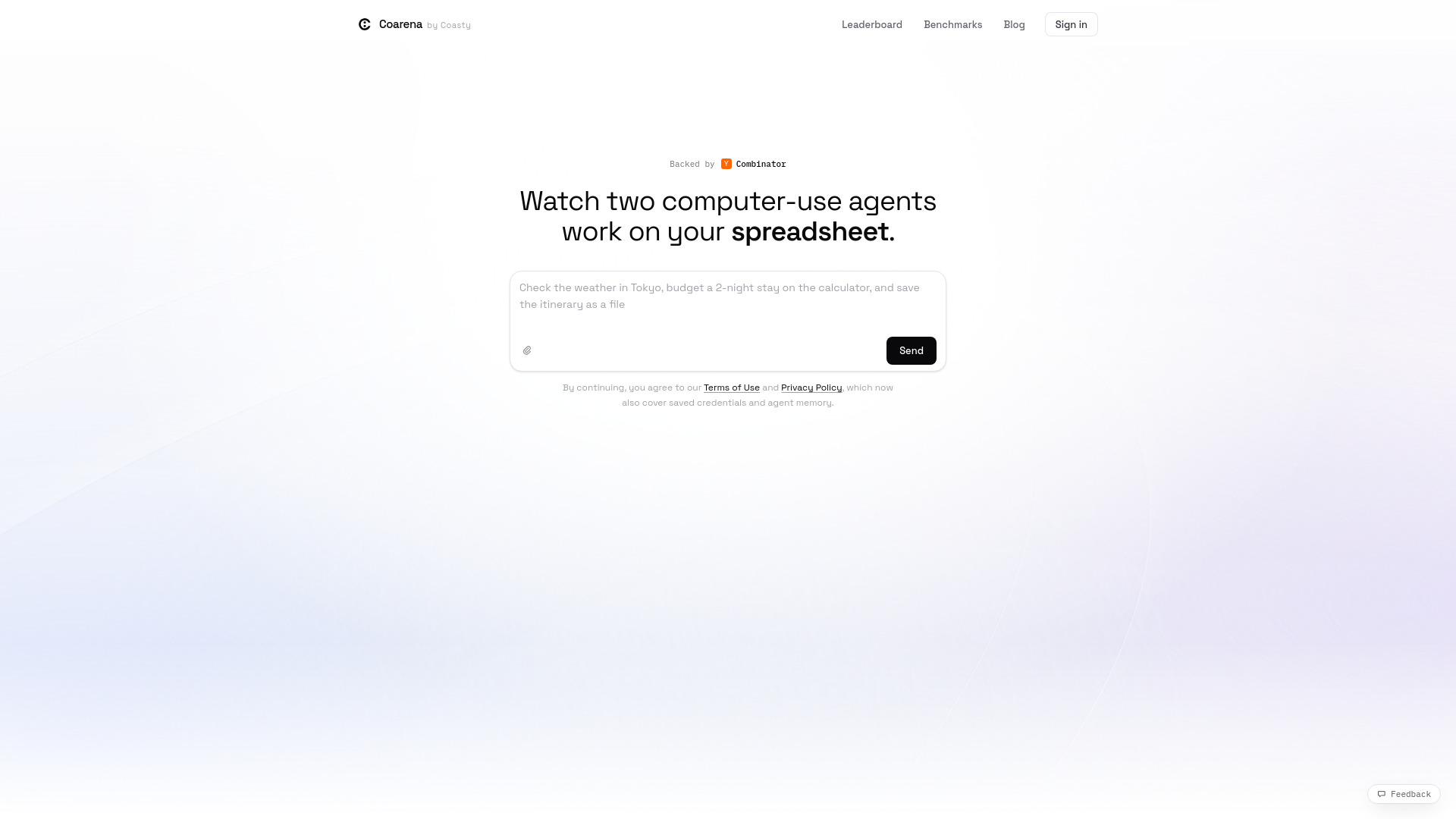
Coarena earns the first spot because it puts competing AI agents against the same real computer tasks and lets people compare their performance side by side. Blind human voting adds a useful judgment signal, while the platform evaluates speed, accuracy, reliability, and task completion. That makes it the strongest evaluation-oriented entry here, although its focus is computer use rather than source-code refactoring.
For a team exploring autonomous coding agents, Coarena can help frame a broader question: does an agent complete a task reliably, not just produce an impressive-looking answer? It cannot, on the documented capabilities, tell you whether a refactor made a service faster or reduced memory consumption. Treat its results as agent-behavior evidence, not a code-performance benchmark.
Why it ranks first
| Scoring lens | Assessment |
|---|---|
| Agent comparison | Strong: side-by-side battles between agents |
| Real-task relevance | Strong: tests computer tasks rather than only synthetic benchmarks |
| Human evaluation | Strong: blind voting supports direct comparison |
| Refactor-performance fit | Limited: no documented source-code or before-and-after performance benchmark |
Best fit
Researchers comparing how computer-use agents handle the same task.
Teams that want human preference alongside speed, accuracy, reliability, and completion signals.
Exploratory evaluations where the agent's interaction with a real interface matters.
Limitations
This is not documented as a coding agent or a code-refactoring benchmark.
Google sign-in is required to start, and the available tasks and competing agents may be limited.
Jcode

- Software developers building terminal-based coding workflows
- Free, open-source software
- Starts at $0 software; hosted inference costs extra
- Usage signal: 23.5K
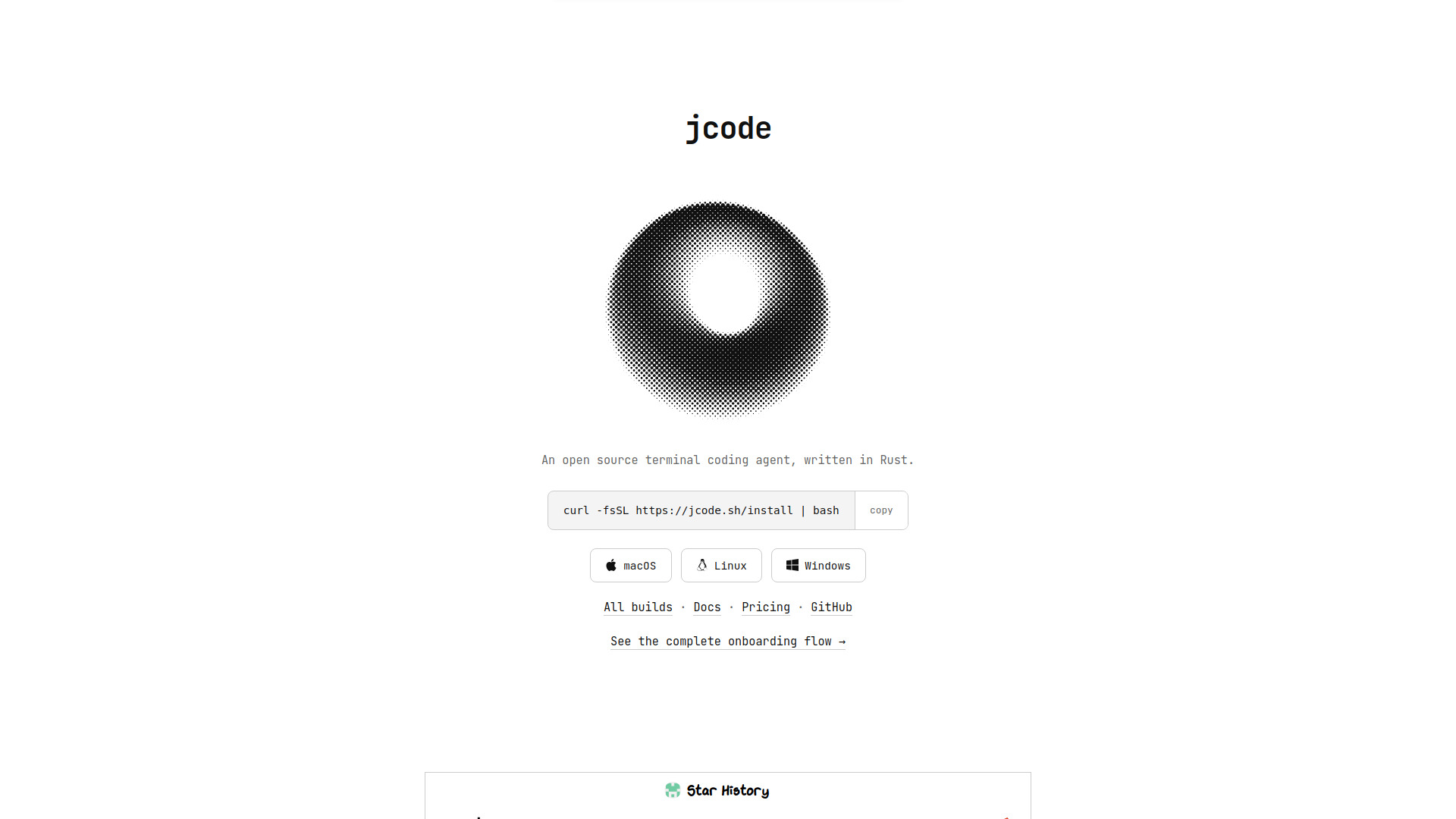
Jcode is the clearest open-source coding-agent pick in this group. The Rust-based terminal agent supports personal API keys, OAuth subscriptions, and local models, so developers can choose how they connect inference rather than being locked into one route. Its durable semantic memory is designed to recall project context, while background tasks, automatic continuation, confidence stepping, and agent swarms point toward longer-running work.
That makes Jcode a plausible agent to use when implementing a refactor, especially if your team prefers a terminal workflow and wants control over models. The distinction matters: the available product details describe coding and agent orchestration, not a built-in performance benchmark that proves the refactor improved execution speed. Pair it with repeatable tests and profiling before accepting performance claims.
Why it is near the top
| Scoring lens | Assessment |
|---|---|
| Coding-agent fit | Strong: an open-source terminal coding agent |
| Project continuity | Strong: semantic memory can recall relevant project context |
| Long-running work | Strong: background tasks, continuation, and agent swarms |
| Refactor-performance fit | Limited: no documented performance benchmark or impact report |
Best fit
Developers who want an open-source terminal agent and are comfortable configuring model access.
Repositories where project context and longer-running tasks matter.
Teams that want to experiment with local models, API keys, or OAuth-based subscriptions.
Limitations
Hosted inference requires a recurring subscription plus additional usage billing.
Model-provider or API credential configuration may add setup work.
Jcode can help make code changes, but the documented feature set does not establish that it benchmarks their performance impact.
ML.ai

- Developers who want coding tasks carried through reviewable diffs
- Free plan available
- Starts at Check vendor pricing
- Usage signal: Not listed
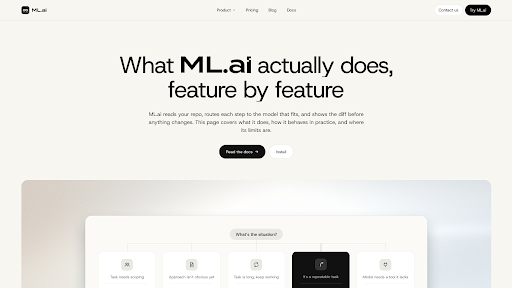
ML.ai's strongest angle is not a single editor surface; its IDE extension, desktop app, PR Reviewer, and CLI share an engine, settings, and repository memory. The product describes focused Explore, Architect, Plan, and General agents, with only General able to change code. That separation, plus reviewable diffs and approval controls, is useful when you want an agent to carry a software task through changes, testing, and pull-request creation without giving every step permission to write files.
Cost-aware model routing is another practical idea: the product says it sends each step to the cheapest model that clears the quality bar. But ML.ai is described as being in private beta, India first, and launch pricing may change. The available information supports a guarded coding workflow; it does not establish a built-in benchmark that compares performance before and after a refactor.
Best fit
Developers who want one agent workflow across an IDE, desktop, CLI, and pull-request review.
Teams that value approval controls and inspectable diffs before code is written.
Projects where model-cost routing and shared repository context are useful.
Limitations
Private beta availability is described as India first, which may restrict access.
Individual launch prices are private-beta pricing and may change at general availability.
The product's coding and testing workflow is not the same as a dedicated performance-refactor benchmark.
AI Humanizer Benchmark

- Content writers comparing humanizer outputs
- Monthly rankings and public scoring data
- Starts at Check vendor pricing
- Usage signal: Not listed
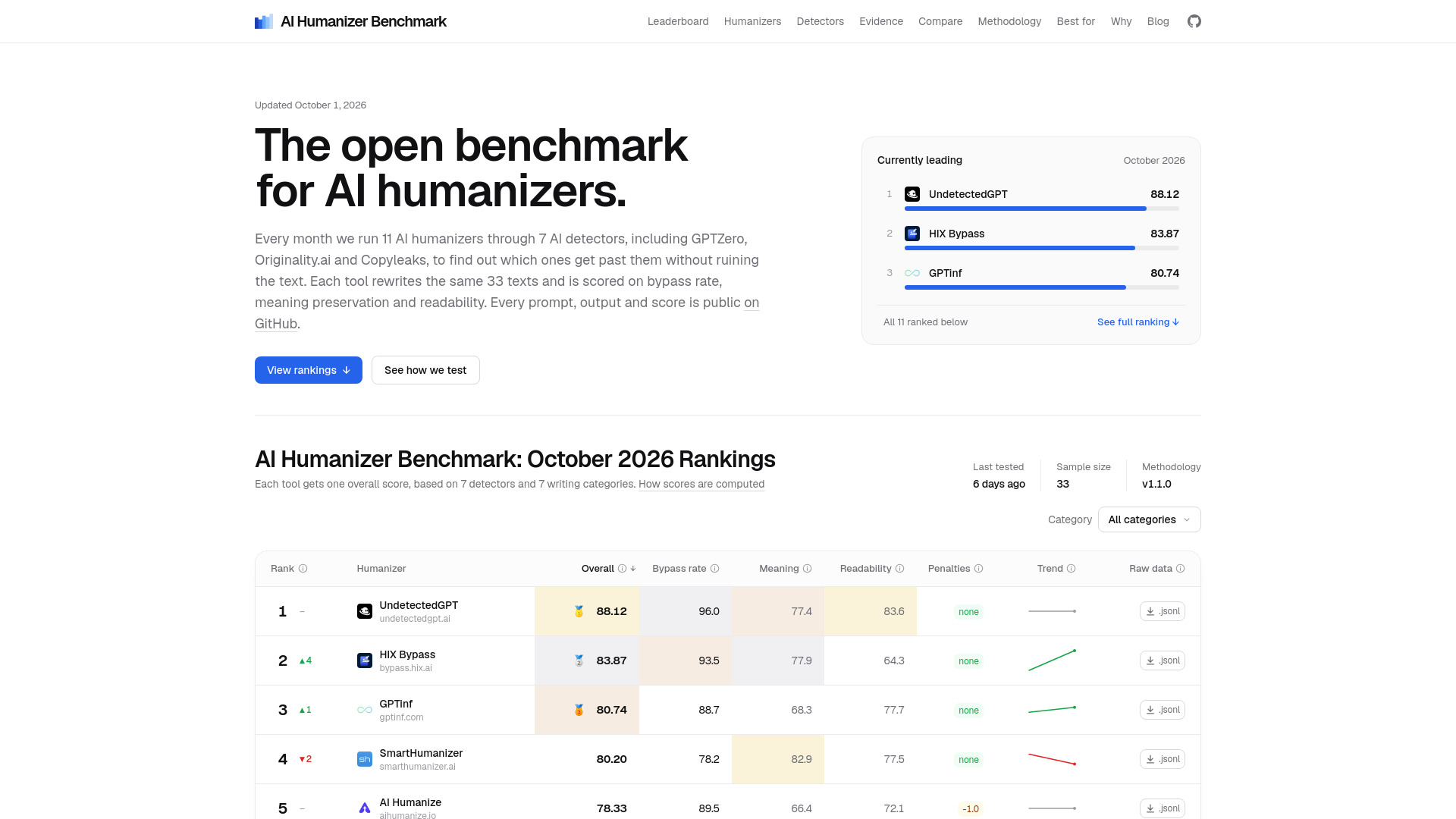
A benchmark is only useful when its method fits the task. This one applies a consistent process to AI humanizers, testing the same texts and default settings against seven detectors and scoring detector bypass, meaning preservation, readability, and consistency. Its public rankings and raw data make it a more transparent example of comparative evaluation than a simple list of vendor claims.
The subject, however, is writing output, not code. It cannot tell a developer whether a refactor speeds up a program, and its results should not be used as a proxy for coding-agent quality. It is included as an adjacent example of how a repeatable evaluation process can be presented, with the caveat that its operator's own product, UndetectedGPT, is also ranked.
Best fit
Writers comparing humanizer tools using a consistent test process.
Readers interested in public scoring methods and multi-detector evaluation.
Limitations
It evaluates humanizers, not coding agents, refactors, or software performance.
The benchmark operator's own product is ranked, and the sample of 33 texts may not generalize to every writing task.
AI Agent Readiness Check for Moving Companies

- Moving company owners checking AI visibility
- Free AI visibility check
- Starts at Free: $0
- Usage signal: Not listed
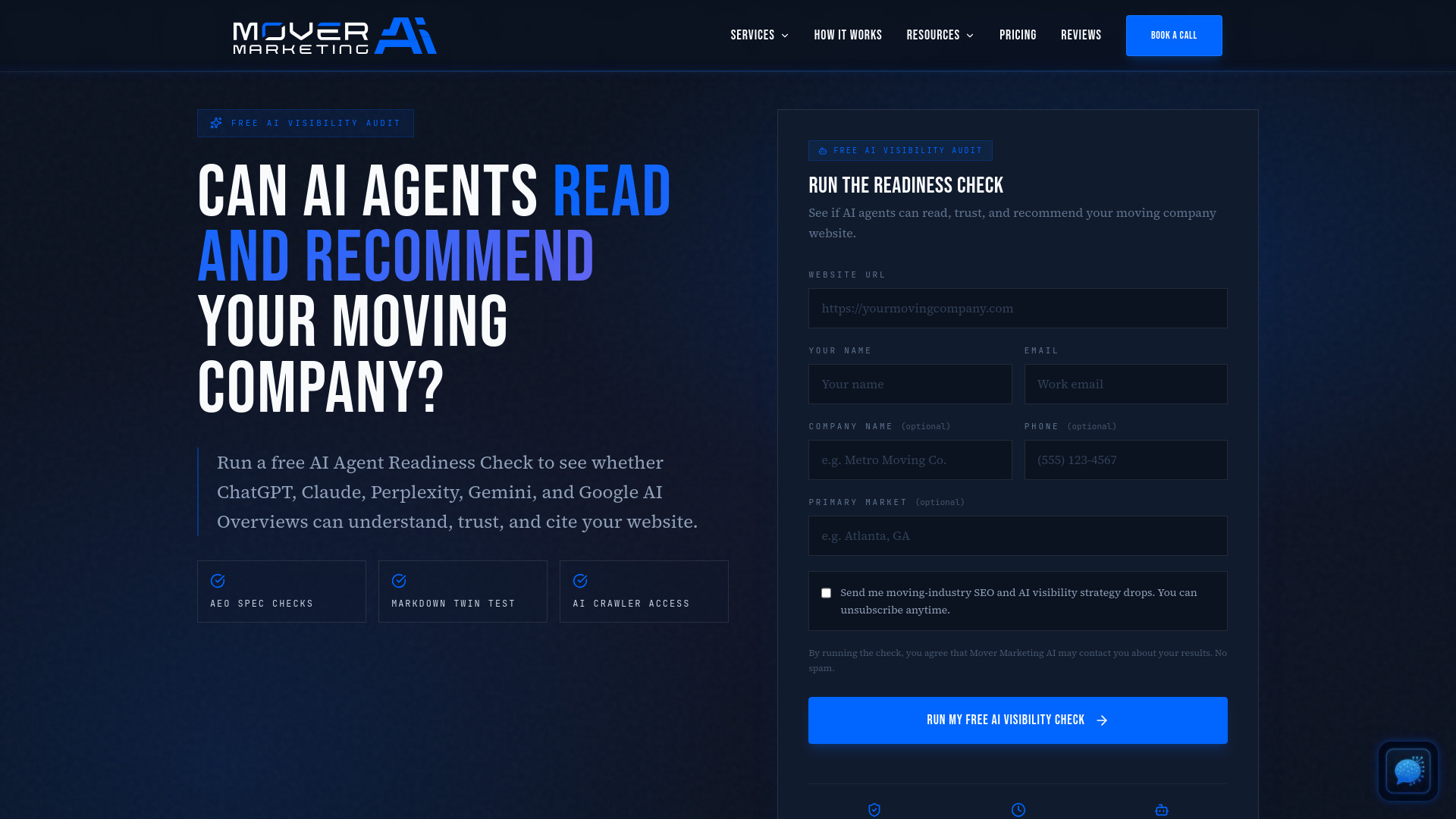
This tool runs 28 website checks and marks each pass, warning, or fail with a reason. Separate scores cover areas such as AI crawler access, Markdown versions, AI-readable files, schema, trust signals, and answer extraction. It also tests the URLs and headers AI crawlers request, including content negotiation for Markdown, so the output is more concrete than a generic visibility score.
That specificity is useful for moving businesses trying to understand whether AI systems can read and cite their site. It is not an autonomous coding agent, and website accessibility checks do not measure the runtime or memory impact of a code refactor. Growth and Scale SEO plans, PPC management, and website builds require a custom quote.
Best fit
Moving company owners checking website-side AI discoverability.
Marketing teams that want individual pass, warning, and fail explanations rather than one opaque score.
Limitations
The check covers website-side signals, not every external source that can influence AI recommendations.
It does not evaluate source-code changes or application performance.
Larger SEO, PPC, and website services require a custom quote.
EvalCore

- LLM engineers adding repeatable evaluations to CI
- Free; no login required
- Starts at Check vendor pricing
- Usage signal: Not listed
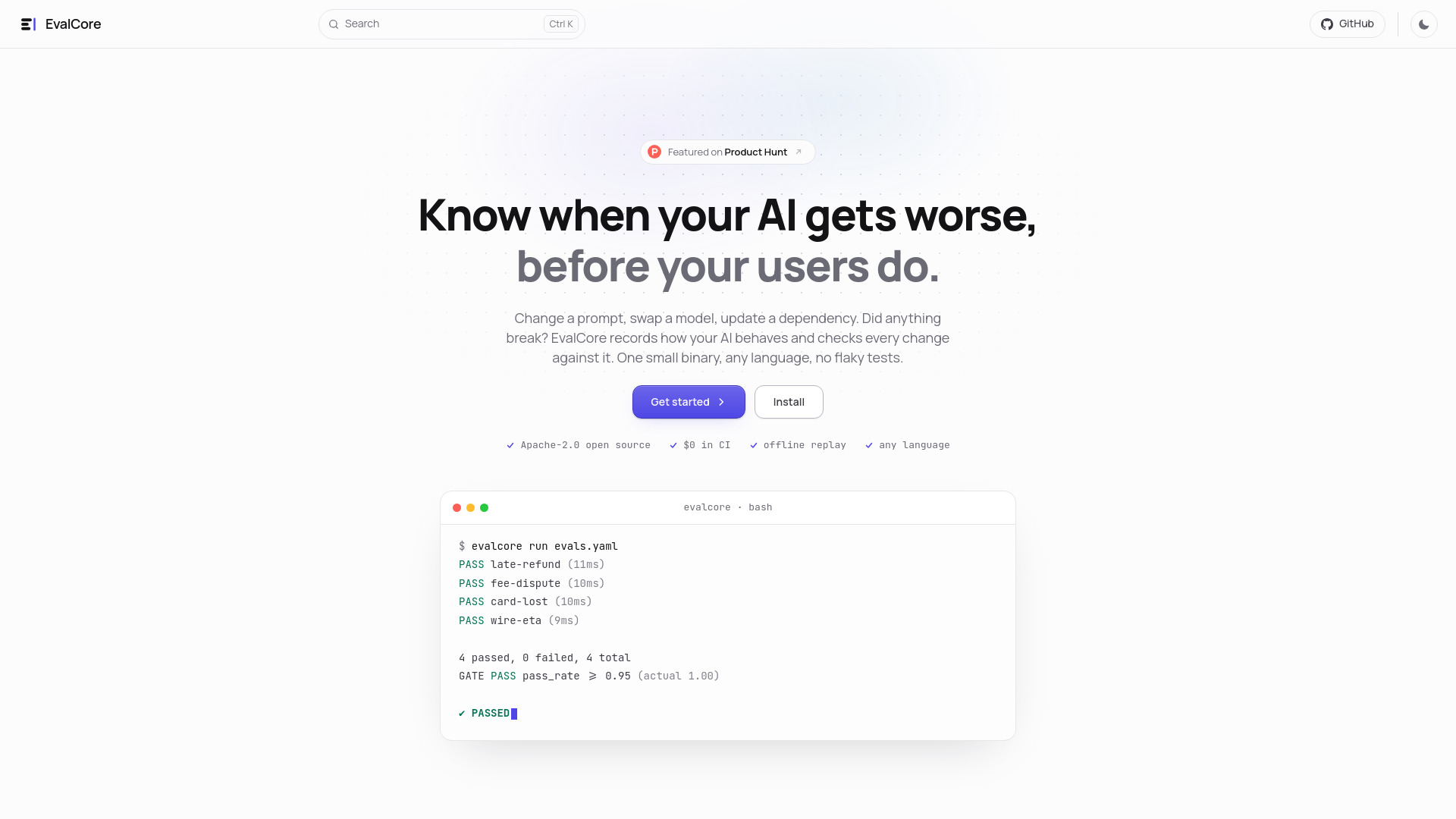
EvalCore is the most directly relevant tool here for repeatable testing, even though its target is AI behavior rather than application performance. Its single-binary runner, YAML-based evaluation definitions, and scorers let engineers record model calls and replay them deterministically offline. REST and shell targets make it language-agnostic, which can help teams run the same behavioral checks from different environments.
That is a good fit for regression testing an LLM application or agent in CI. It is not an interactive coding agent and does not document profiling or before-and-after benchmarks for software refactors. You also need an initial live run to record cassettes, so it is a better choice for controlled repeatability than for open-ended experimentation.
Best fit
LLM engineers who want reproducible behavior checks in CI.
Teams that prefer YAML-defined evaluations and deterministic offline replay.
Limitations
A live run is required before cassettes can be replayed offline.
Its focus is regression testing for AI behavior, not interactive coding or code-performance profiling.
InfuseBI

- Data analysts investigating changes in business metrics
- 15-day free trial
- Starts at Free trial: 15 days
- Usage signal: Not listed
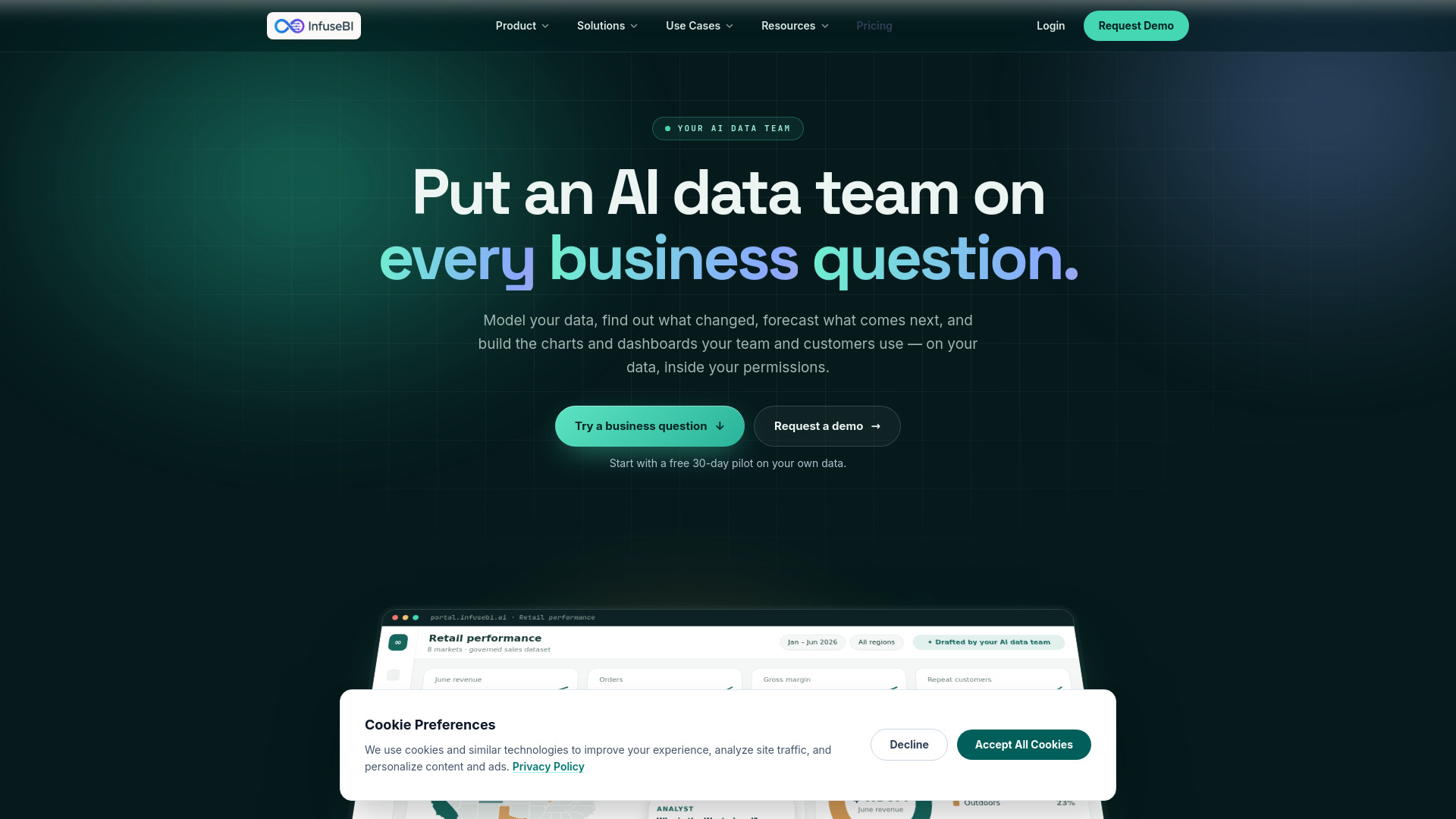
InfuseBI brings data preparation, analysis, forecasting, and reporting into one platform, with a workflow intended to make AI-guided data modeling possible without SQL. Its described AI agents explain why numbers changed, which is a useful analytical task when teams need a narrative alongside a metric shift.
For this comparison, it is a distant neighbor: explaining a change in business data is not the same as measuring whether a code change improved application performance. Data analysts may find the workflow relevant to their reporting stack, but developers looking for an autonomous refactoring agent should look elsewhere. Paid plan prices are quote-based, and the self-serve trial lasts 15 days.
Best fit
Analysts who want AI-guided data preparation, analysis, forecasting, and reporting.
Teams that need help investigating why business numbers changed without relying on SQL for every step.
Limitations
It is a BI platform, not a software coding agent or refactor benchmark.
Paid prices are quote-based, and the self-serve trial is time-limited.
AI Agents Listing

- Researchers delegating multi-step web research
- Free plan available
- Starts at Check vendor pricing
- Usage signal: Not listed
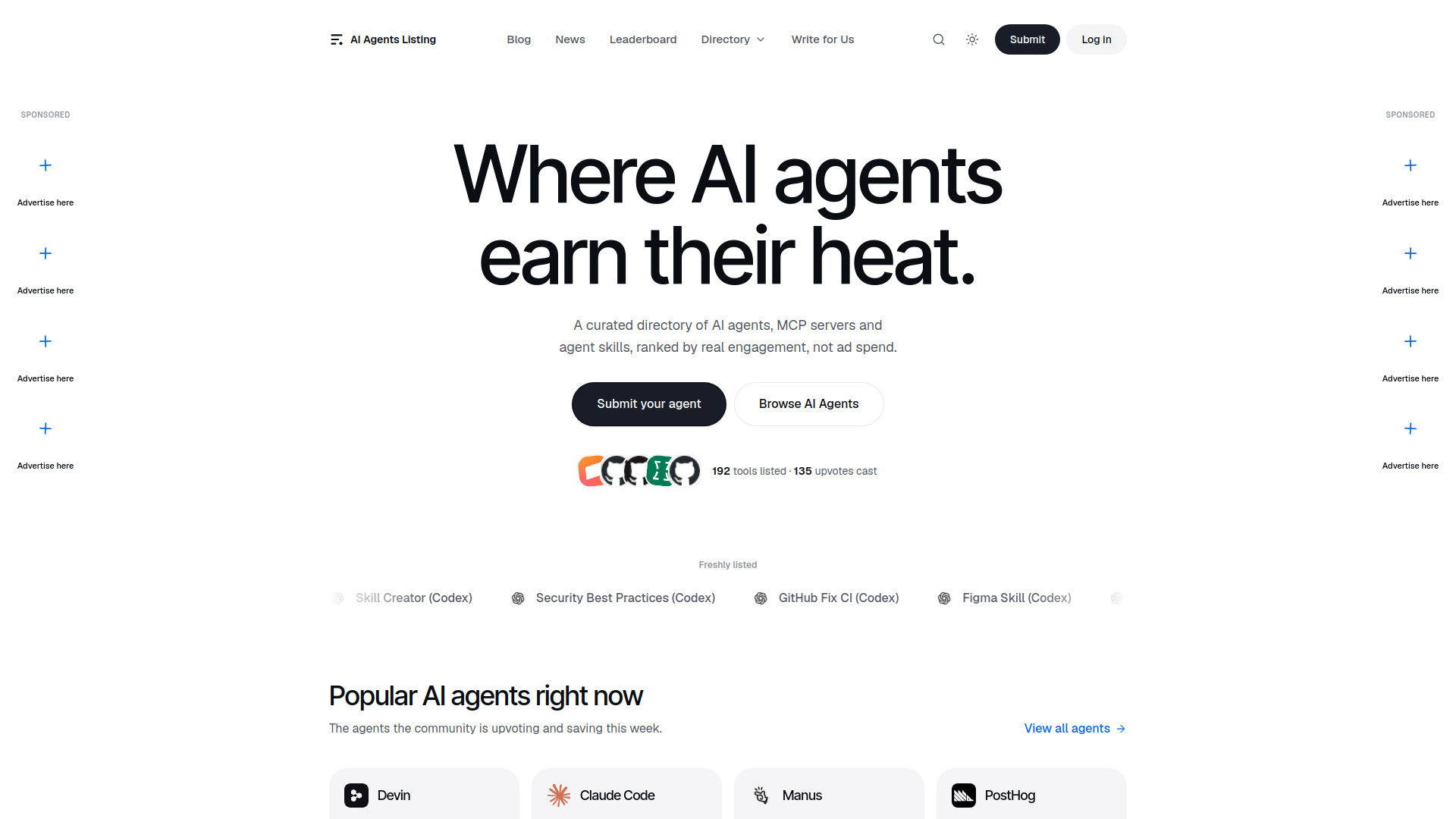
This listing describes a general-purpose autonomous agent for web browsing, research, report writing, and multi-step task planning. That broad task handling may suit a researcher who wants to delegate a sequence of information-gathering steps and then review the resulting report.
It is not presented as a software-development agent, and the available details do not describe code editing or performance measurement. The listing identifies Manus as a paid service but does not provide package prices. Autonomous output still needs human review, particularly when a decision depends on reproducible technical measurements rather than a written summary.
Best fit
Researchers who want help with multi-step browsing and report-writing tasks.
Users who can review an autonomous agent's work before relying on it.
Limitations
No documented coding, refactoring, or software-performance benchmarking workflow.
Package prices are not listed, and autonomous output may require substantial review.
Which tool should you try first?
Start with Jcode if you want an open-source terminal coding agent to help implement a refactor. Choose ML.ai if reviewable diffs, approval controls, and a workflow spanning IDE, desktop, CLI, and pull requests matter more. Try Coarena if your real question is how agents compare on computer-use tasks. None of these entries is documented as measuring refactor-related performance changes, so keep your existing profiler, test suite, and benchmark harness in the loop.
Full comparison table
The eight product rows are followed by two category-fit rows so the table distinguishes agent capability from the specific benchmark this search calls for. Scores are shortlist scores, not measured speedups or code-quality results.
| Tool | Score | Best for | Relevant strength | Fit for refactor-performance benchmarking | Starting price |
|---|---|---|---|---|---|
| Coarena | 91 | AI researchers | Side-by-side real computer-task agent battles | Low: computer-use evaluation, not code benchmarks | Check vendor pricing |
| Jcode | 91 | Software developers | Open-source terminal coding agent with semantic memory | Low: coding agent, but no documented performance-impact benchmark | $0 software; hosted inference extra |
| ML.ai | 87 | Software developers | Reviewable coding tasks across several surfaces | Low: testing and diffs described; no performance benchmark documented | Check vendor pricing |
| AI Humanizer Benchmark | 87 | Content writers | Consistent tests across seven AI detectors | None: evaluates writing tools | Check vendor pricing |
| AI Agent Readiness Check for Moving Companies | 87 | Moving company owners | 28 website-side AI visibility checks | None: checks websites, not code | Free: $0 |
| EvalCore | 87 | LLM engineers | Deterministic offline replay for AI behavior tests | Low: useful for AI regressions, not code runtime | Check vendor pricing |
| InfuseBI | 86 | Data analysts | AI-guided data analysis and forecasting | None: BI analysis, not refactoring | Free trial: 15 days |
| AI Agents Listing | 86 | Researchers | Autonomous browsing and multi-step research | None documented for code or performance testing | Check vendor pricing |
| Category requirement: autonomous code changes | - | Developers | Jcode and ML.ai are the clearest coding workflows here | Partial: implementation is not proof of a measured improvement | Varies |
| Category requirement: before-and-after performance evidence | - | Engineering teams | Requires a repeatable benchmark and performance metric | Not documented for any listed tool | Varies |
Best by use case
| Use case | Pick | Why it fits |
|---|---|---|
| Open-source terminal coding agent | Jcode | Rust-based terminal agent, project memory, background tasks, and model flexibility. |
| Guarded coding across IDE and pull requests | ML.ai | Shared agent engine, reviewable diffs, approval controls, and multiple workflow surfaces. |
| Comparing agents on real computer tasks | Coarena | Side-by-side battles, blind human voting, and task-completion signals. |
| Deterministic AI application regression tests | EvalCore | Record-and-replay evaluation runs with offline deterministic CI. |
Coarena vs Jcode vs ML.ai
| Coarena | Jcode | ML.ai | |
|---|---|---|---|
| Main job | Compare computer-use agents | Help developers work in a terminal | Carry coding tasks across IDE, desktop, CLI, and PR workflows |
| Evidence of agent evaluation | Side-by-side battles and blind votes | Not a stated core feature | Reviewable diffs and approval controls |
| Performance-refactor benchmark documented | No | No | No |
| Notable constraint | Google sign-in; task and agent selection may be limited | Hosted inference and provider setup can add cost or configuration | Private beta, India first; pricing may change |
Choose Jcode to make code changes, ML.ai to put stronger review boundaries around an end-to-end coding task, and Coarena to compare agents on computer-use work. They solve different problems, and none is documented as benchmarking refactor impact on performance. For that final measurement, run the same representative workload before and after the change, control the environment, and review both test results and profiles.
Best free coding agents
Jcode is the strongest free coding-agent starting point in this shortlist: its software is open source and MIT licensed, though hosted inference can cost extra. ML.ai has no clearly stated free plan or quota here, and its beta pricing may change. EvalCore is free and requires no login, but it tests AI behavior rather than coding or application performance. Verify current access and terms before adopting any tool.
Pricing: what you actually pay for
Jcode's software is listed at $0, but hosted inference requires a recurring subscription and additional usage billing. ML.ai pricing is not clear and its private-beta launch prices may change. EvalCore is described as free; InfuseBI offers a 15-day trial and quote-based paid plans. Coarena, AI Humanizer Benchmark, and AI Agents Listing need vendor or service-specific pricing confirmation. The moving-company readiness check has a free scan; broader services may require custom quotes.
When to skip these tools
Skip this shortlist if your requirement is a verified, automated report showing that a particular refactor improved latency, throughput, or memory use. No listed product is documented as providing that benchmark. Also skip the adjacent marketing, humanizer, BI, and general research tools if you need code changes. Use Jcode or ML.ai for coding assistance, then validate the result with your own tests, profiler, and controlled benchmark.
How we scored the list
We ranked the eight candidates by fit to the search intent, depth of relevant agent or evaluation features, workflow usefulness, and clarity about limitations and cost. The scores are shortlist ratings, not measured coding performance. Because the listed capabilities do not establish a dedicated refactor-impact benchmark, we call out that gap rather than treating agent autonomy or general evaluation as proof of speed improvements.
Who reviewed this guide
FAQ
None is documented as a dedicated tool for that job. Jcode and ML.ai support coding workflows, while EvalCore focuses on repeatable AI behavior tests. Use a separate, reproducible performance benchmark to verify code changes.